How to Cook Tri-Tip
Tri-tip cooks like a large steak. The complication is at the board: the grain changes direction partway through the cut.
Tri-tip is the triangular muscle at the bottom front of the sirloin. It is lean, it cooks fast for a roast, and almost every complaint about it traces to one thing.
Cooking it
- Salt it and let the surface dry for an hour.
- Sear the whole piece hard on all sides.
- Finish it in a moderate oven or on the cooler side of a grill.
- Pull it at medium rare. It is lean and there is no fat cap to cover for you.
- Rest fifteen minutes. It is a roast, not a steak.
The grain changes direction
This is the whole thing. A tri-tip is triangular, and the muscle fibers run one way in one lobe and a different way in the other. There is a point, usually near the middle, where they pivot.
Cut the roast in two at that pivot first. Then slice each half across its own grain. Slicing the whole roast in one direction means half of it is cut correctly and half of it is rope.
“This is one thing that I've never figured out how to crack it to do it really well is meatloaf. If I've got my grandmother or my mom doing a meatloaf, that's fantastic.”
Gray Shipley
“We used to just kind of not try to outsmart God, let the animal do what it's supposed to do and stay out of the way.”
Gray Shipley
“But, well, they don't cooperate. It's not in your control the weather and the animals staying in their fencing where they're supposed to be. And predators and all kinds of hiccups that make it more challenging than you think.”
Gray Shipley
How it compares to the cut it sits beside is in picanha against tri-tip.
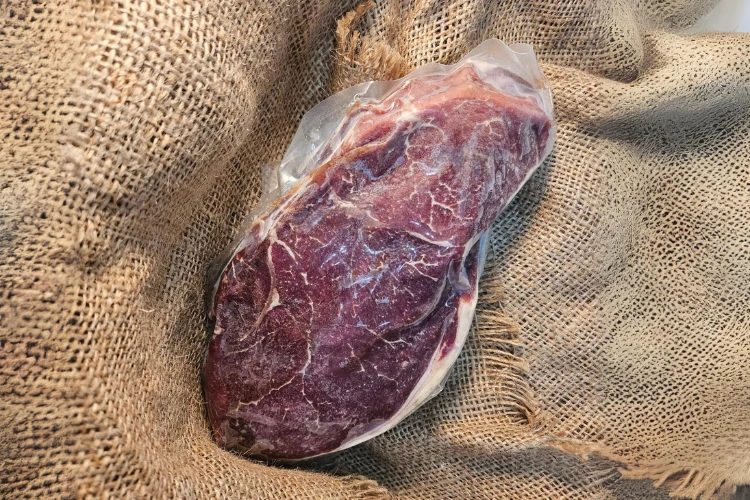
Top sirloin, lean and from the same part of the animal.
View ProductHow do I cook a tri-tip roast?
Roast or grill it whole to medium rare, then slice across a grain that changes direction halfway.
- Cook to a Safe Minimum Internal Temperature, FoodSafety.gov
- Food Thermometers, USDA FSIS
Food-safety temperatures and storage times on this page are cited to the agencies above rather than to us.
Written at Shipley Farms in Vilas, North Carolina: a family cattle farm raising and dry-aging beef in the Appalachian Mountains, now in its fifth generation. No shortcuts since 1872.
Every quote on this page is Gray Shipley talking, the man who runs this farm. We sat down with him, turned on a recorder, and kept his own words. Hesitations are trimmed so they read on the page. Nothing else is added or reworded, except where Gray revised his own words in review.
Nobody knows this beef better than we do. On food safety we leave it to USDA FSIS and FoodSafety.gov, and we have linked their pages above. Reviewed 3 October 2026.
Shipley Farms
Stories, recipes and news from Shipley Farms.