Picanha vs Tri-Tip: What Is the Difference?
Both are sirloin cuts with devoted followings. The difference is a fat cap, and it changes how you cook each one.
These two get confused constantly, and it is a fair confusion: they are neighbors on the animal and they look similar once trimmed.
Where each one sits
Both come off the sirloin, which on our cut map sits just behind the short loin. Picanha, also sold as coulotte or sirloin cap, is the cap muscle that sits on top. Tri-tip is the triangular muscle at the bottom front of the sirloin.
The fat cap is the whole difference
Picanha is traditionally sold with a thick layer of fat still attached. That cap is not trim to be removed, it is the cooking mechanism: it renders slowly and bastes the meat underneath. Tri-tip is normally sold trimmed close, so it has no equivalent layer and nothing to self-baste with.
“We used to just kind of not try to outsmart God, let the animal do what it's supposed to do and stay out of the way.”
Gray Shipley
Which means they want different handling
- Picanha. Score the fat cap in a diamond pattern, start it fat side down over moderate heat to render, then finish hot. Slice against the grain, which runs across the cut.
- Tri-tip. Cook it fast and hot like a steak, or roast it whole to medium rare. It is leaner, so it punishes overcooking in a way picanha does not.
- Both. Have a grain direction that changes partway through the cut. Look before you slice.
Which to buy
If you want the more forgiving of the two, picanha, because the fat cap buys you time. If you want something leaner that carves into neat slices for a crowd, tri-tip.
“There's a saying that farming isn't rocket science. It's way more complicated than that.”
Gray Shipley
“Yeah, no shortcuts just means, you know, it's a mindset, the mindset of looking for a shortcut. You know, it doesn't mean that we don't look for improvement. It doesn't mean we don't look for ways to do things better.”
Gray Shipley
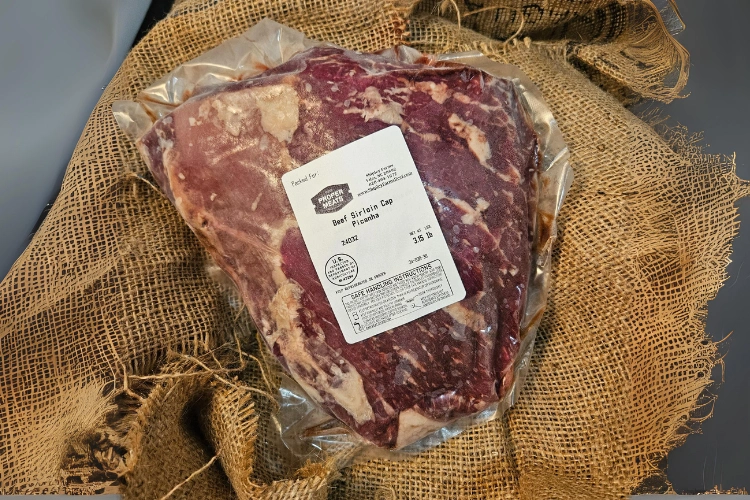
Dry-aged, fat cap on, which is the point of the cut.
View ProductCoulotte, the same muscle, without the dry aging.
View Product- Cook to a Safe Minimum Internal Temperature, FoodSafety.gov
- Grades and Standards: Beef, USDA AMS
Food-safety temperatures and storage times on this page are cited to the agencies above rather than to us.
Written at Shipley Farms in Vilas, North Carolina: a family cattle farm raising and dry-aging beef in the Appalachian Mountains, now in its fifth generation. No shortcuts since 1872.
Every quote on this page is Gray Shipley talking, the man who runs this farm. We sat down with him, turned on a recorder, and kept his own words. Hesitations are trimmed so they read on the page. Nothing else is added or reworded, except where Gray revised his own words in review.
Nobody knows this beef better than we do. On food safety we leave it to FoodSafety.gov, and we have linked their pages above. Reviewed 3 October 2026.
Shipley Farms
Stories, recipes and news from Shipley Farms.