Old Fashioned Christmas Dinner Menu: Grandmother's Long Table
An old fashioned Christmas dinner menu from a mountain farm grandmother who fed sixteen at one table, and what her cooking still teaches.
Gray Shipley's grandmother kept the leaves for her dining room table in the coat closet by the front door.
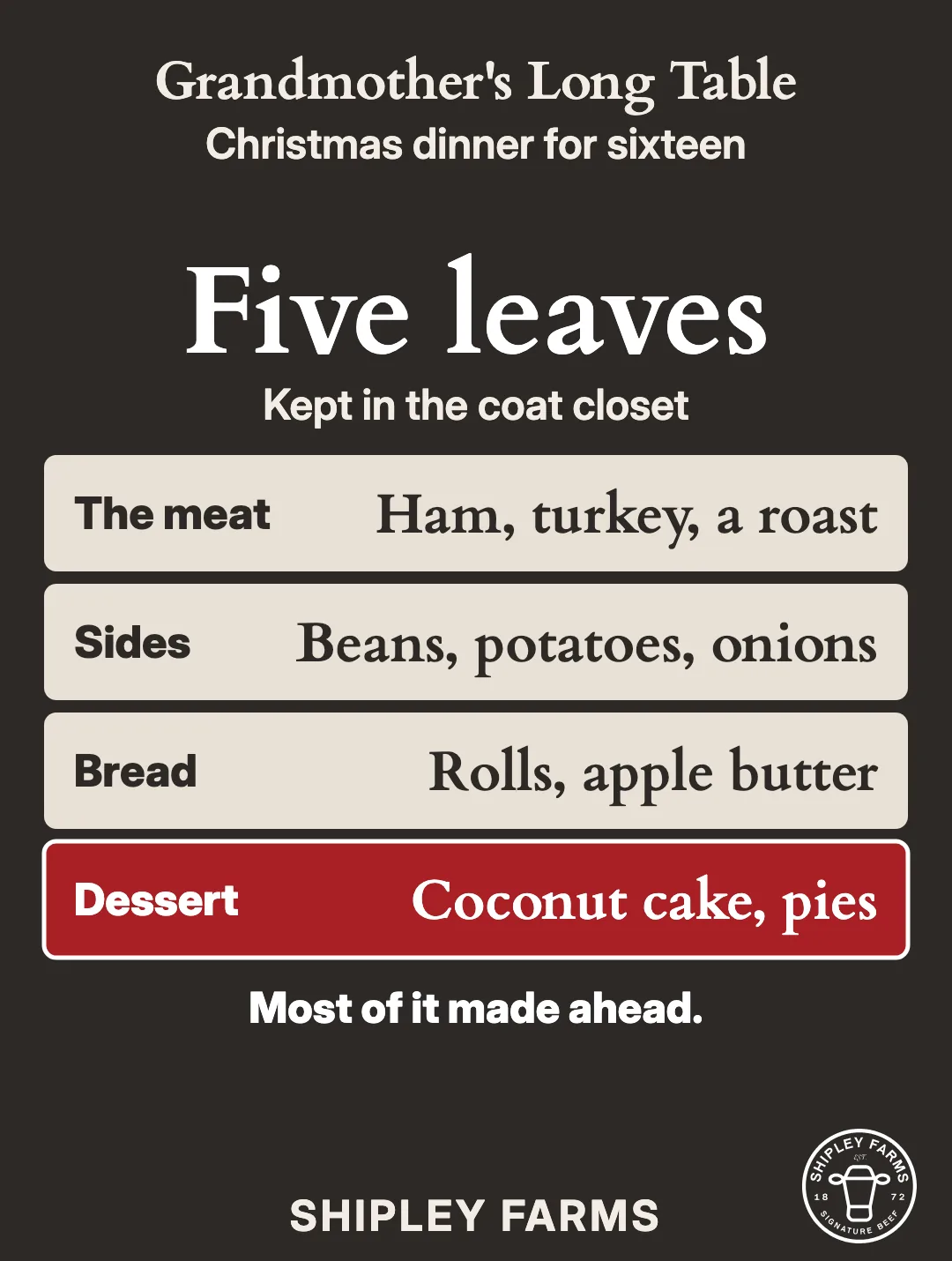
As family arrived through the holiday week, she would send Gray, a cousin or his dad to the closet for two more, and the table would get longer. With all five leaves in, it sat about sixteen. Granddad sat at the far end by the window, where he could lean back and stretch out his legs.
“Grandmother always sat on the end closest to the kitchen, because she would be up and down the whole meal refilling the basket with biscuits and rolls.”
Gray Shipley
Word for word, as recorded
Grandmother always sat on the end closest to the kitchen because she would be up and down the whole meal refilling the basket with biscuits and rolls.
She was a petite woman, Gray says, and often sat on a little stool instead of a chair, so it was easier to get back to the kitchen for refills.
Everybody had a seat, and the far side was the one to avoid.
“And the people that had to sit on the other side of the of the table were committed, because it was squeezed in there. You had to get in in order, and once you were in, you you weren't getting out.”
Gray Shipley
Word for word, as recorded
And the people that had to sit on the other side of the of the table were committed because it was squeezed in there you had to get in in order and once you were in you you weren't getting out.
The old fashioned Christmas dinner menu
Gray says he has forgotten some of the dishes, but this is what he remembers from his grandmother's table:
- The meat. A ham, often a turkey, and some years a roast. Beef was less common at holiday meals than you might expect on a cattle farm.
- The sides. Green bean casserole, mashed potatoes, stuffing, corn she grew herself and cut off the cob, and her pearl onions in cheese sauce, Grandmother's onions.
- The bread. Homemade rolls, with butter, her apple butter and her blackberry jam.
- Gravy, passed around the table, and tea or water to drink.
- The desserts. A strawberry pretzel dessert, a coconut cake, pound cakes, and apple, pumpkin and pecan pies.
Some years there was an oyster dressing too, because she loved oysters.
“And there used to be a tradition in the mountains to, you would order oysters and they would come in to the general store at a certain time, and you have to get your orders in.”
Gray Shipley
Word for word, as recorded
And there used to be a tradition in the mountains to you would order oysters and they would come in to the general store at a certain time and you have to get your orders in.
How far ahead to start an old fashioned Christmas dinner
By the time the family arrived, most of it was already done.
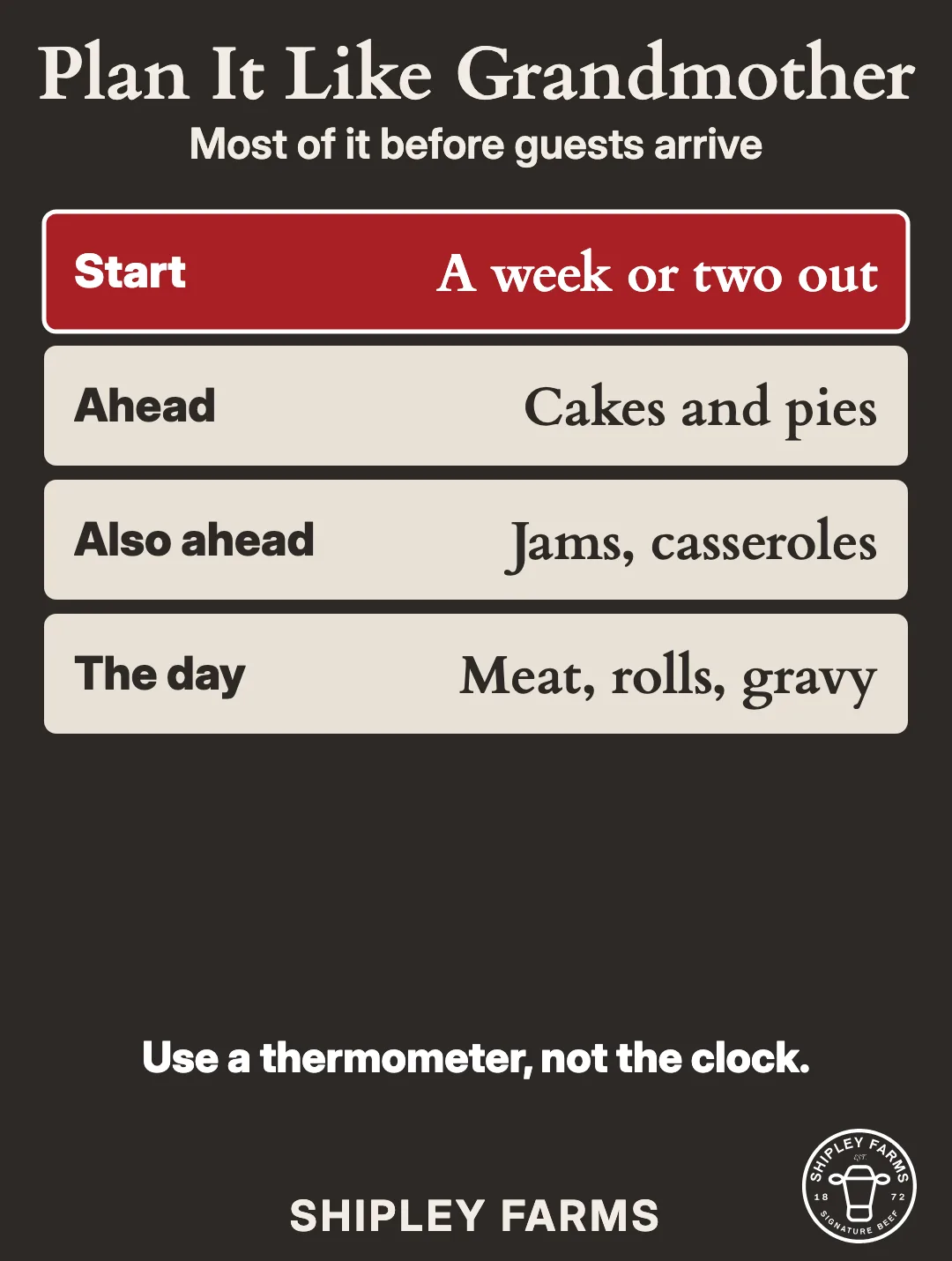
“So my suspicion is that she would spend at least a week and probably two by the time you tally up all of the cakes that she baked and the pies.”
Gray Shipley
Word for word, as recorded
So my suspicion is that she would spend at least a week and probably two by the time you tally up all of the cakes that she baked and the pies.
She never sat down the whole time they were there, Gray says. His aunts and his mother helped where they could, but mostly she took care of it herself.
Asked what he learned watching her feed that many people, Gray said:
“I'm still baffled at how she did it. I get frustrated and antsy and stressed when I'm trying to feed a fraction of that many people.”
Gray Shipley
Word for word, as recorded
I'm still baffled at how she did it uh i get frustrated and antsy and stressed when i'm trying to feed a fraction of that many people.
What she knew is the lesson for anybody hosting a big Christmas dinner: do most of it before the guests arrive. Cakes, pies, jams and casseroles can all be made ahead, which leaves the day itself for the meat, the rolls and the gravy.
If you put a roast in the middle
Gray's family rarely had a standing rib roast, because his granddad had the rib section cut into steaks. But his advice for anybody cooking one for the first time is short. Get help from somebody who has done it before, because it is a precious piece of meat to experiment on. And don't overcook it: you can always cook it a little longer, but you can never uncook it.
- 145°F is the safe minimum inside a whole cut of beef, with a three-minute rest. Use a thermometer, not the clock.
- How to Cook a Standing Rib Roast has sizes and times, and How Much Beef Per Person helps you buy the right size.
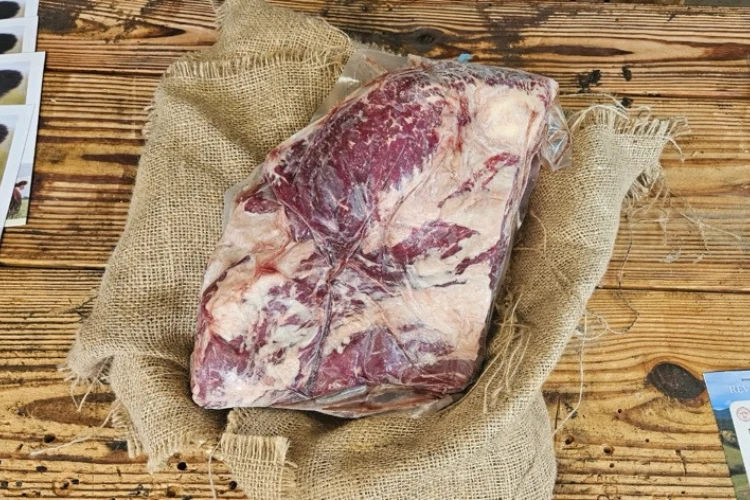
A dry-aged standing rib roast, raised and aged here in the mountains.
View Product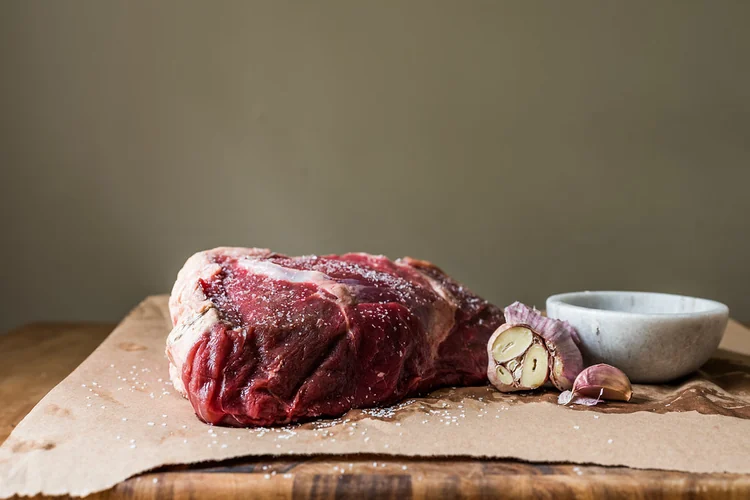
A roast feeds a table and asks very little of you once it is cooking.
View Product- Cook to a Safe Minimum Internal Temperature, FoodSafety.gov
Food-safety temperatures and storage times on this page are cited to the agencies above rather than to us.
Written at Shipley Farms in Vilas, North Carolina: a family cattle farm raising and dry-aging beef in the Appalachian Mountains, now in its fifth generation. No shortcuts since 1872.
Every quote on this page is Gray Shipley talking, the man who runs this farm. He recorded these answers himself, at the farm, in the autumn of 2026. The play button under each quote is that recording, exactly as he said it, and the words under it are a word-for-word transcript. In the written quotes, hesitations are trimmed so they read on the page. Nothing else is added or reworded, except where Gray revised his own words in review.
On food safety we leave it to USDA FSIS and FoodSafety.gov, and we have linked their pages above. Reviewed 9 November 2026.
Shipley Farms
Stories, recipes and news from Shipley Farms.