Reopening After Helene
The farm store took six or eight inches of water and had to come apart. Rebuilding it properly would have been the better-looking decision and the slower one.
A flooded building presents a choice that looks obvious from the outside and is not. You can repair it properly, which takes months, or you can get trading again and deal with the building later.
“So we had water in every basement, you know, and every building got flooded at least a little bit. Our store and office had about six or eight inches of water, and we had to take that apart. Of course, the barn was full of water.”
Gray Shipley
The decision
“Well, the farm store got, with the flood damage, we decided we needed to get back up and running quickly, and so we brought in a modular building because we could be using that more quickly than tearing apart the old building and redoing it. So we kept using the old farm store as an office. We actually had the office set up in the yard for about a month. The weather was perfect and dry for about a month after the storm, so we just had some tents and a desk and some power run out in the yard, and had an outdoor office for that all of October until we were able to kind of put stuff back inside.”
Gray Shipley
A modular building is not the version anybody draws on a plan. It was the version that could be standing and working while a proper repair was still being quoted, and for a farm with customers and an income to protect, that is the whole argument.
Why being open mattered more than being finished
A farm store is not only a shop. It is where people in the valley come, and after a storm that matters more rather than less. Closing for a season would have been easier and it would have taken something out of the place at exactly the wrong moment.
“I want people to think of Shipley Farms as a great member of the community, as somebody in some place that they can enjoy and appreciate and feel welcome and feel connected. And I want them to think of Shipley Farms as a place they can trust to know that if our name is on it, they can count on it being food worth eating.”
Gray Shipley
What the old buildings taught us in the meantime
“The older buildings really fared better, it seemed. So the ones that had been there for 150 years were less affected than the ones that were built more recently.”
Gray Shipley
While the newer building was being dealt with, the hundred-and-fifty-year-old ones were mostly fine. It is a useful corrective to the assumption that newer is sturdier.
Where it stands now
Open, trading, and considerably better understood than it was. The storm forced a lot of decisions about this place that would otherwise have been put off for another decade.
The damage itself is set out in eight mudslides, and what the store became for the neighborhood afterwards is here.
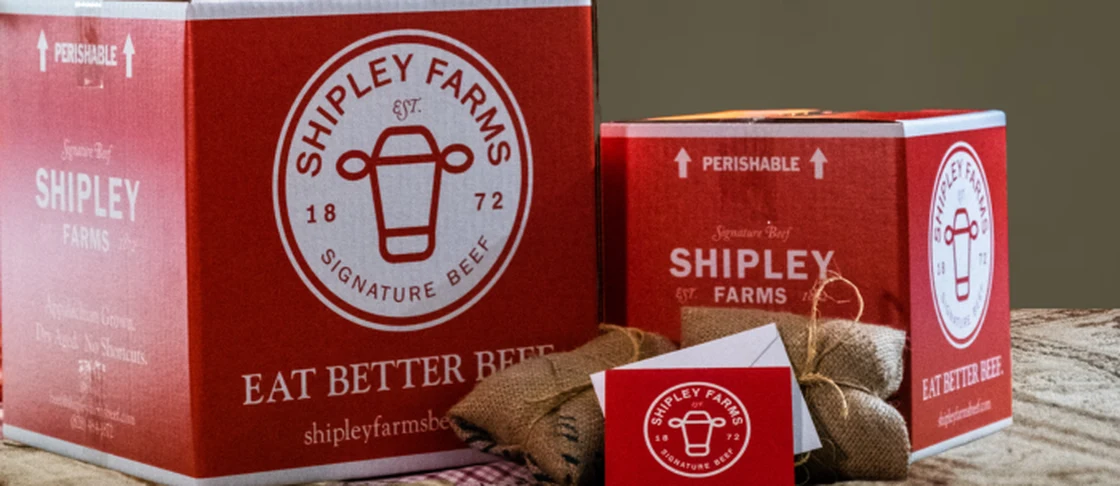
The cuts the store sells week in and week out, modular building and all.
View ProductWritten at Shipley Farms in Vilas, North Carolina: a family cattle farm raising and dry-aging beef in the Appalachian Mountains, now in its fifth generation. No shortcuts since 1872.
Every quote on this page is Gray Shipley talking, the man who runs this farm. We sat down with him, turned on a recorder, and kept his own words. Hesitations are trimmed so they read on the page. Nothing else is added or reworded, except where Gray revised his own words in review.
This is a first-hand account rather than guidance. Reviewed 3 October 2026.
Shipley Farms
Stories, recipes and news from Shipley Farms.