Eight Mudslides: What Helene Did to the Farm
People ask whether the farm was destroyed. It was not. What Helene did was get into everything: water in every basement, every building touched, and something nobody here had seen before on this land.
The short version is that the farm was lucky, in the specific sense that everything here can be repaired and that is not true everywhere in these mountains.
“Yeah, we had nothing destroyed, but damage everywhere. You know, mudslides are not a thing that we deal with on the East Coast. We found eight mudslides just on our property from the storm.”
Gray Shipley
Mudslides are not part of the vocabulary here. A farm in the Appalachians expects hard winters, late frosts and the occasional flood in the bottoms. Eight slides on one property in one night is outside what the place was built to expect.
Water in everything
“So we had water in every basement, you know, and every building got flooded at least a little bit. Our store and office had about six or eight inches of water, and we had to take that apart. Of course, the barn was full of water.”
Gray Shipley
Six or eight inches does not sound like much until it is in a room with a floor, shelving and a point-of-sale system in it. The store and office had to be stripped back before they could be anything again.
The oldest buildings did best
“The older buildings really fared better, it seemed. So the ones that had been there for 150 years were less affected than the ones that were built more recently.”
Gray Shipley
That is the detail worth sitting with. The buildings that have been standing here for a century and a half came through better than things put up in the last few decades.
There is a reason, and it is not sentiment. Old farm buildings were sited by people who had watched water move across this ground for years before they built anything. They are up out of the bottoms, often on stone, and they were put where they are on purpose.
What that changes going forward
It makes you listen to the siting of the old buildings before putting up a new one. That is the practical lesson, and it is the kind of knowledge that is difficult to write down and easy to lose.
“And so, it's thinking of our responsibility as not just serving ourselves, but serving our community, leaving people better off than we found them, helping people to learn and improve themselves and always be curious.”
Gray Shipley
The full account of the week the valley was cut off is here, and what it took to open the store again is here.
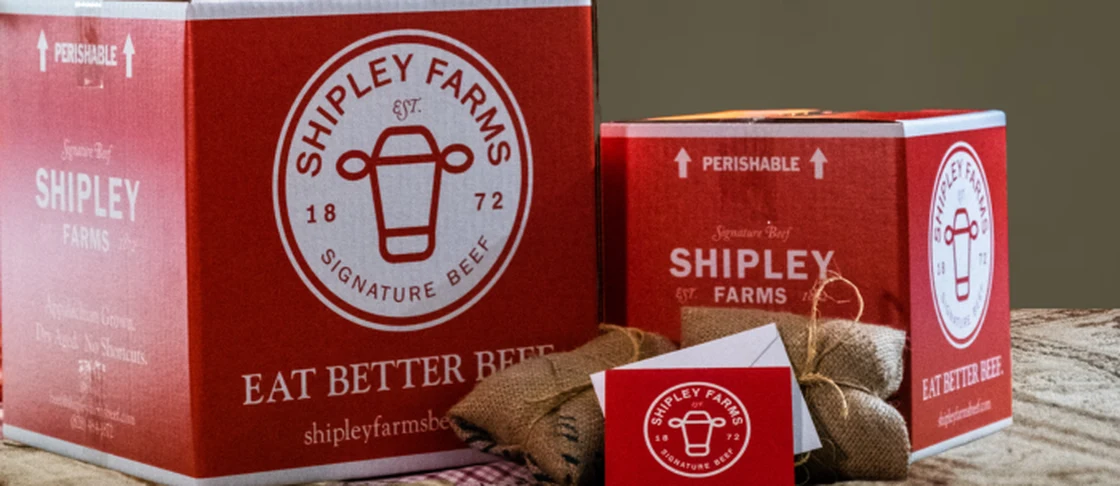
What the farm sells week to week, which is what paid for the rebuilding.
View ProductWritten at Shipley Farms in Vilas, North Carolina: a family cattle farm raising and dry-aging beef in the Appalachian Mountains, now in its fifth generation. No shortcuts since 1872.
Every quote on this page is Gray Shipley talking, the man who runs this farm. We sat down with him, turned on a recorder, and kept his own words. Hesitations are trimmed so they read on the page. Nothing else is added or reworded, except where Gray revised his own words in review.
This is a first-hand account rather than guidance. Reviewed 3 October 2026.
Shipley Farms
Stories, recipes and news from Shipley Farms.