When Hurricane Helene Cut Off the Valley
Hurricane Helene reached the North Carolina mountains in September 2024. At the farm in Vilas the damage was real but survivable. What people here remember most is not the water.
The storm itself was one night. What people in the valley talk about is the week that came after it.
“Yeah, we, after, so right after Helene, well, for about a week, or for several days at least, we were isolated in the valley by ourselves. No electric, trees down, everything dead. Three roads in and out, and they were all blocked. Two washed out, one covered with a mudslide.”
Gray Shipley
Three roads out of the valley, and all three of them gone at once. No electricity to fall back on and no phone to find out whether anybody else was in the same position.
It felt like a different century
“And at first, I tell people it felt like the 1800s. I feel like I imagined what the 1800s were like because, like, you'd finally get a road cleared, and there was no phone, there was no electricity. You didn't have any cell signal. You didn't have any modern convenience.”
Gray Shipley
That is the detail that stays with people. Not the water, which drained, and not the damage, which could be repaired. The silence, and the sudden realization of how much of ordinary life runs on a road being open.
The first person to make it to town
“And then finally, you know, a road would get cleared and somebody would make it into town, and they would almost, like, have almost a little bit of like a celebrity status. Like, Oh, you've been to town. Ooh, that person has been to town.”
Gray Shipley
There is something worth noticing in that. When information is scarce, the person carrying it becomes important in a way that has nothing to do with who they are. For a few days the news arrived the way it used to, which is to say in person, from somebody who had been there.
What a valley turns into
A rural road is not a neighborhood in the way a street is. People live along it rather than on it, and you can go years without meeting someone who lives two miles up.
“And so, you know, we, I mean, it's a rural place, and so it doesn't really feel like a neighborhood. So we hadn't really met some of the people up and down the valley, but once we were all stuck in the valley together, it started to become kind of a neighborhood. We started meeting each other.”
Gray Shipley
That is the part of Helene that is worth writing down. Being cut off together did something that ordinary life had not managed, which is that everyone finally met.
Afterwards
The farm came through with damage everywhere and nothing destroyed. The store and office had to be taken apart and put back together. There is more on what the storm actually did to the place, on getting the store open again, and on what the farm turned into for a few weeks.
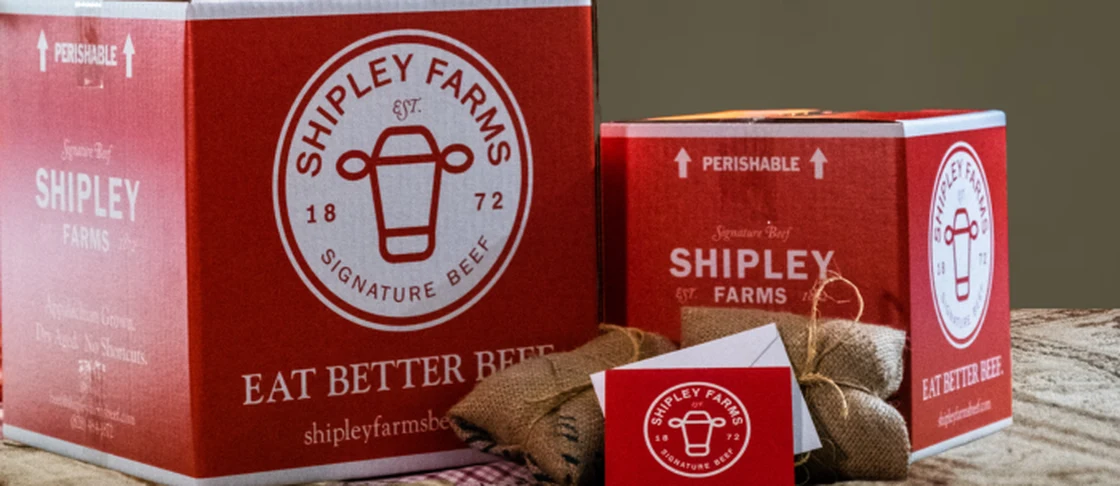
The everyday cuts the farm has sold through every version of itself, including that autumn.
View ProductWritten at Shipley Farms in Vilas, North Carolina: a family cattle farm raising and dry-aging beef in the Appalachian Mountains, now in its fifth generation. No shortcuts since 1872.
Every quote on this page is Gray Shipley talking, the man who runs this farm. We sat down with him, turned on a recorder, and kept his own words. Hesitations are trimmed so they read on the page. Nothing else is added or reworded, except where Gray revised his own words in review.
This is a first-hand account rather than guidance. Reviewed 3 October 2026.
Shipley Farms
Stories, recipes and news from Shipley Farms.