Beef Bone Broth Recipe
The best recipe for beef bone broth is mostly patience. Roast five pounds of beef bones until they are deep brown, cover them with cold water and a splash of vinegar, and keep the pot at a bare simmer for 12 to 24 hours, adding onion, carrot and celery for the last few. Strain it, chill it and lift off the fat, and you have three to four quarts of dark, rich broth that sets to a soft jelly in the fridge.
There is almost nothing to it except time and a low flame. The steps below cover the parts that make a difference: browning the bones well, keeping the pot from boiling, and cooling the broth quickly once it is done.
At a glance: makes 3 to 4 quarts. Prep 15 minutes, roast 1 hour, simmer 12 to 24 hours, chill at least 6 hours.
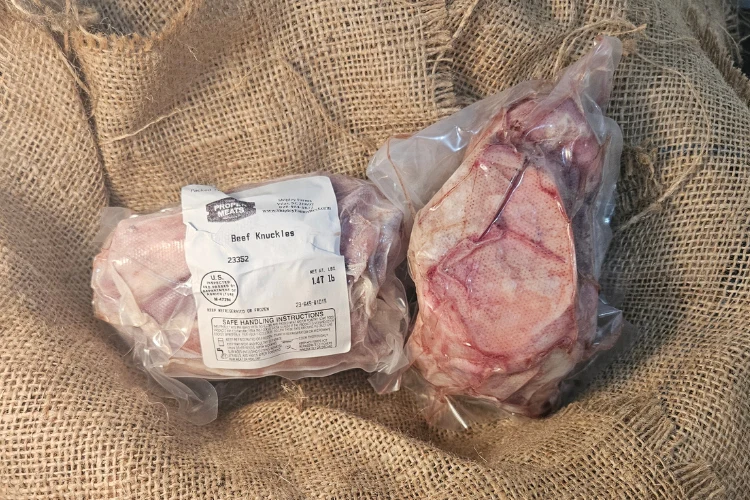
This recipe uses 5 pounds of beef broth bones, for 3 to 4 quarts of broth.
Add 5 lb beef broth bones to cartView ProductCooking for a full freezer instead? See the 1/8 beef share subscription.
Gray Shipley, who runs the farm, was talking about cooking from real ingredients:
“when you prepare something out of real food ingredients, it can just taste the difference.”
Gray Shipley
Bone broth is about the plainest example there is: bones, water, a few vegetables and a long, quiet simmer. With so few ingredients, the browning and the slow simmer are where the taste comes from, which is why the steps below matter.
Ingredients
- 5 pounds beef broth bones
- 2 tablespoons apple cider vinegar
- 4 to 5 quarts cold water, enough to cover the bones by 2 inches
- 2 onions, quartered (no need to peel)
- 2 carrots, cut into chunks
- 3 celery ribs, cut into chunks
- 1 head garlic, halved crosswise
- 2 bay leaves
- 1 teaspoon black peppercorns
- 1 small handful parsley stems
Instructions
- Heat the oven to 425 degrees. Spread the bones in a single layer on one or two rimmed sheet pans and roast for 45 minutes to 1 hour, turning them once, until deep brown all over.
- Move the bones to a stockpot of 8 quarts or more. Pour the fat from the sheet pans into a jar and save it. Add 1 cup of the water to each hot pan, scrape up the browned bits, and pour it into the pot.
- Add the vinegar and enough cold water to cover the bones by about 2 inches. Bring it slowly to a simmer over medium heat, skimming off the gray foam that rises in the first 30 minutes.
- Turn the heat down until the surface barely trembles, with a bubble breaking every few seconds. Do not let it boil, which makes the broth cloudy and greasy.
- Simmer, partly covered, for 12 to 24 hours, topping up with hot water whenever the bones start to poke above the surface. If you would rather not leave a burner on overnight, use an ovenproof pot, cover it, and move it to a 200 degree oven, where it will stay just below a simmer.
- For the last 3 hours, add the onions, carrots, celery, garlic, bay leaves, peppercorns and parsley stems.
- Strain the broth through a fine-mesh sieve, lined with cheesecloth if you want it clear, into a large bowl or a second pot. Throw away the bones and vegetables.
- Cool the broth quickly: set the bowl in a sink of ice water and stir it for 10 to 15 minutes, then divide it into shallow containers, cover and refrigerate for at least 6 hours.
- Lift off the layer of fat that sets on top and save it for cooking. The broth underneath should be set like a soft jelly. It is unsalted, so season it when you use it.
Add 5 lb beef broth bones to cart
Why roast the bones first?
Raw bones make a pale, mild broth. Roasted bones make a dark, deep-flavored one, because the browning on the bones and in the pans dissolves into the water. Roast them hard, until they are a rich brown rather than golden, and scrape up every browned bit from the pans. Do not let anything blacken, though: burnt bits make the whole pot bitter.
How long to simmer bone broth
Twelve hours gives a full, beefy broth. Twenty-four gives a deeper one that sets more firmly when cold. Beyond that there is little to gain. The vegetables go in only for the last few hours, because after that they turn to mush and can make the broth taste stewed and sweet.
A splash of vinegar at the start is traditional in bone broth recipes. It is not essential, and at this amount you will not taste it.
Beef soup bones: what to use
This recipe is written for the broth bones above, but it works with any mix of beef bones. Knuckle and joint bones give the broth its body, because their connective tissue is what makes it set. Marrow bones add richness. Meaty soup bones such as neck or shank add flavor, and you can pick the meat off after a few hours to use in soup. If you are working from a recipe for beef broth with soup bones, the method here is the same; only the mix changes.
Stock, broth or bone broth?
The names overlap, and cooks use them loosely. Bone broth usually means bones simmered for much longer than a classic stock, which is what gives it its depth and its set. The guide below sorts out the differences.
Saving the fat
The fat that sets on top of the chilled broth is beef fat, and it is good for roasting potatoes or frying eggs. Lift it off in pieces, warm it gently, strain it, and keep it in a jar in the fridge.
Storing and using the broth
Keep the broth in the fridge for a few days, or freeze it in pint or quart containers, leaving an inch of room at the top for it to expand. Use it in soups, stews, braises and pan sauces, or warm a mug of it with a pinch of salt. If you would rather not keep a pot going overnight, the shop also sells a ready-made Beef Bone Broth.
Food safety
Broth simmered for hours is far past any FSIS cooking temperature. The care is in what happens afterward: cool it quickly and refrigerate it, and when you reheat stored broth, bring it to 165 degrees F, the FSIS figure for leftovers, which in practice means bringing it back to a simmer. See the FSIS Safe Minimum Internal Temperature Chart.
- Safe Minimum Internal Temperature Chart, USDA FSIS
Food-safety temperatures on this page are cited to USDA FSIS rather than to us.
Published by Shipley Farms. The quote on this page is Gray Shipley, who runs the farm, in his own words from a recorded interview, quoted exactly, or as he revised it in review.
On food safety we follow USDA FSIS, linked above.