Bratwurst Skewers
Bratwurst skewers turn two packs of brats into a full cookout dinner on a stick. Simmer baby potatoes until almost tender, poach the bratwurst in the same pot for a few minutes so it firms up, then cut everything into chunks and thread it onto skewers with bell peppers and red onion. Grill over medium heat for 10 to 12 minutes and brush with a honey mustard glaze at the end.
This recipe is written for beef garlic bratwurst, and any raw bratwurst works the same way. The short poach is the step that keeps the sausage on the skewer. Firm, set sausage cuts cleanly and holds its shape, while raw sausage cut into chunks tends to split, crumble and slide.
At a glance: makes about 12 skewers, enough for 6. Prep 25 minutes, cook about 35 minutes.
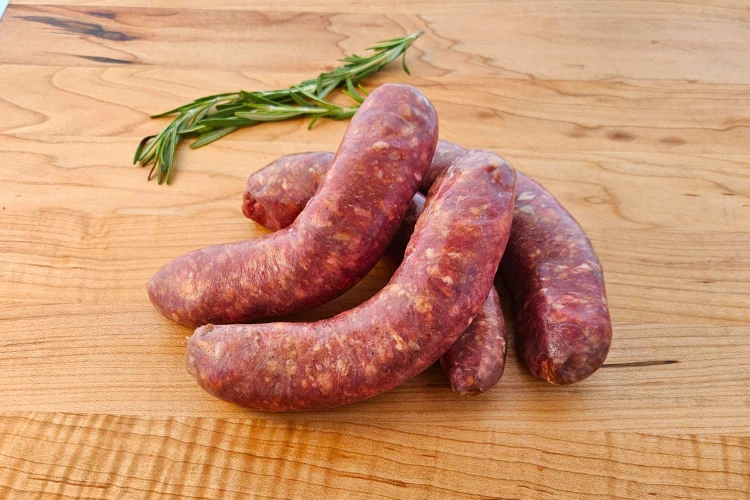
This recipe uses 2 packs of beef garlic bratwurst, 2 to 2 1/2 pounds in all, for about 12 skewers.
Add 2 packs of beef garlic bratwurst to cartView ProductCooking for a full freezer instead? See the 1/8 beef share subscription.
Asked whether a steak belongs on the grill or in a cast iron pan, Gray Shipley, who runs the farm, said:
“to me, that's a question of weather more than anything else.”
Gray Shipley
He was answering about steak, not sausage, but the same answer holds for these skewers. On a good evening, light the grill. When it is raining or too cold to stand outside, the oven method further down gets you most of the way there.
Ingredients
- 2 packs beef garlic bratwurst links, 2 to 2 1/2 pounds
- 1 1/2 pounds baby potatoes, about 1 1/2 inches across
- 1 tablespoon kosher salt, for the cooking water
- 2 bell peppers, red, orange or yellow, cut into 1 1/2-inch squares
- 1 large red onion, cut into 1 1/2-inch chunks
- 2 tablespoons olive oil
- 1/2 teaspoon freshly ground black pepper
- 1/4 cup whole-grain or Dijon mustard
- 2 tablespoons honey
- 1 tablespoon cider vinegar
- 12 metal skewers, or wooden skewers soaked for 30 minutes
Instructions
- If you are using wooden skewers, soak them in water for 30 minutes. Put the potatoes in a large pot, cover with cold water by an inch, add the salt, and bring to a boil. Simmer for 10 minutes.
- Turn the heat down until the water barely bubbles and add the bratwurst links. Poach them with the potatoes for 8 to 10 minutes, until the sausages feel firm and the potatoes are just tender when pierced. Do not let the water boil hard, or the casings may split. Drain, and let everything sit for 5 minutes, until you can handle it.
- Meanwhile, heat a grill for medium heat, about 375 to 400 degrees with the lid closed, and clean and oil the grates. Whisk the mustard, honey and vinegar in a small bowl, and pour half of it into a second bowl to serve at the table.
- Cut each bratwurst into 4 or 5 pieces, about 1 1/4 inches long. Leave the potatoes whole, or halve any larger than 1 1/2 inches. Thread the skewers, alternating sausage, potato, pepper and onion, and push the skewer through the side of each piece of sausage so a cut face lies flat on the grill.
- Brush the skewers all over with the olive oil, and season the vegetables with the pepper and a pinch of salt.
- Grill, turning every 3 minutes or so, until the sausage is browned, the peppers and onion are soft and charred at the edges, and a thermometer in the center of a piece of sausage reads 160 degrees F, 10 to 12 minutes in all. Brush with the glaze in the first bowl during the last 2 to 3 minutes, turning once so it sets without burning.
- Move the skewers to a platter and serve hot, with the second bowl of glaze for dipping.
Add 2 packs of beef garlic bratwurst to cart
Why poach bratwurst before grilling
Fresh bratwurst is raw sausage in a casing. Cut into chunks while raw, it is soft at the cut ends, it tends to crumble as the skewer goes through, and its fat runs out onto the fire and flares. A short, gentle poach sets the meat, so the pieces cut cleanly and grip the skewer. It also means the sausage only has to brown and finish cooking on the grill, which takes about as long as the peppers and onion need to soften.
Go straight from the pot to the grill, rather than poaching ahead and refrigerating half-cooked sausage to finish later. If you want to get ahead, cut the vegetables and mix the glaze in the morning instead.
Grilling bratwurst skewers over medium heat
Medium heat is the right setting for sausage. High heat splits the casings, flares the fat and burns the outside before the middle catches up, and the honey in the glaze scorches in seconds. On a gas grill, run the burners at medium with the lid down. On charcoal, spread the coals so you can hold your hand about 5 inches above the grate for 5 to 7 seconds, and keep one side of the grill without coals so you can move any skewer that flares.
Cut the vegetables to about the same size as the sausage so everything cooks together, and do not pack the skewers tightly. A little space between pieces lets the heat reach every side. Two parallel skewers through each row stop the pieces from spinning when you turn them.
Bratwurst skewers in the oven
When the weather will not cooperate, heat the oven to 425 degrees and line a rimmed sheet pan with foil. Lay the oiled skewers on it in a single layer and roast for 18 to 22 minutes, turning once halfway, until the vegetables are tender and browned at the edges and the sausage reads 160 degrees F. Brush with the glaze and run the pan under the broiler for 2 to 3 minutes, watching closely, for some color. If your skewers are too long for the pan, the same mix roasts just as well loose on the sheet.
For a cookout or a tailgate
Skewers are easy food for a crowd, because each one is a portion and nobody needs a knife. Serve them with soft buns and extra mustard, or slide everything off onto a platter for people to help themselves. Leftovers make a good cold lunch, or slice them into a skillet with a couple of eggs the next morning. The cookout and tailgate guides below have more on planning food for a gathering.
Food safety
USDA FSIS lists 160 degrees F as the safe minimum internal temperature for ground meats, and bratwurst is ground meat in a casing. The color inside a garlic sausage is no reliable guide, so check a piece from the thickest part of a skewer with an instant-read thermometer. Keep the serving glaze away from the brush that touched the sausage, wash your hands and board after handling raw sausage, and refrigerate leftovers within two hours. Reheat leftovers to 165 degrees F. See the FSIS Safe Minimum Internal Temperature Chart.
- Safe Minimum Internal Temperature Chart, USDA FSIS
Food-safety temperatures on this page are cited to USDA FSIS rather than to us.
Published by Shipley Farms. The quote on this page is Gray Shipley, who runs the farm, in his own words from a recorded interview, quoted exactly, or as he revised it in review.
On food safety we follow USDA FSIS, linked above.