An Appalachian Thanksgiving on a Family Farm
An Appalachian Thanksgiving on a fifth-generation cattle farm in the North Carolina mountains: chores first, then a long table.
On a cattle farm, Thanksgiving starts in the same place every other day does.
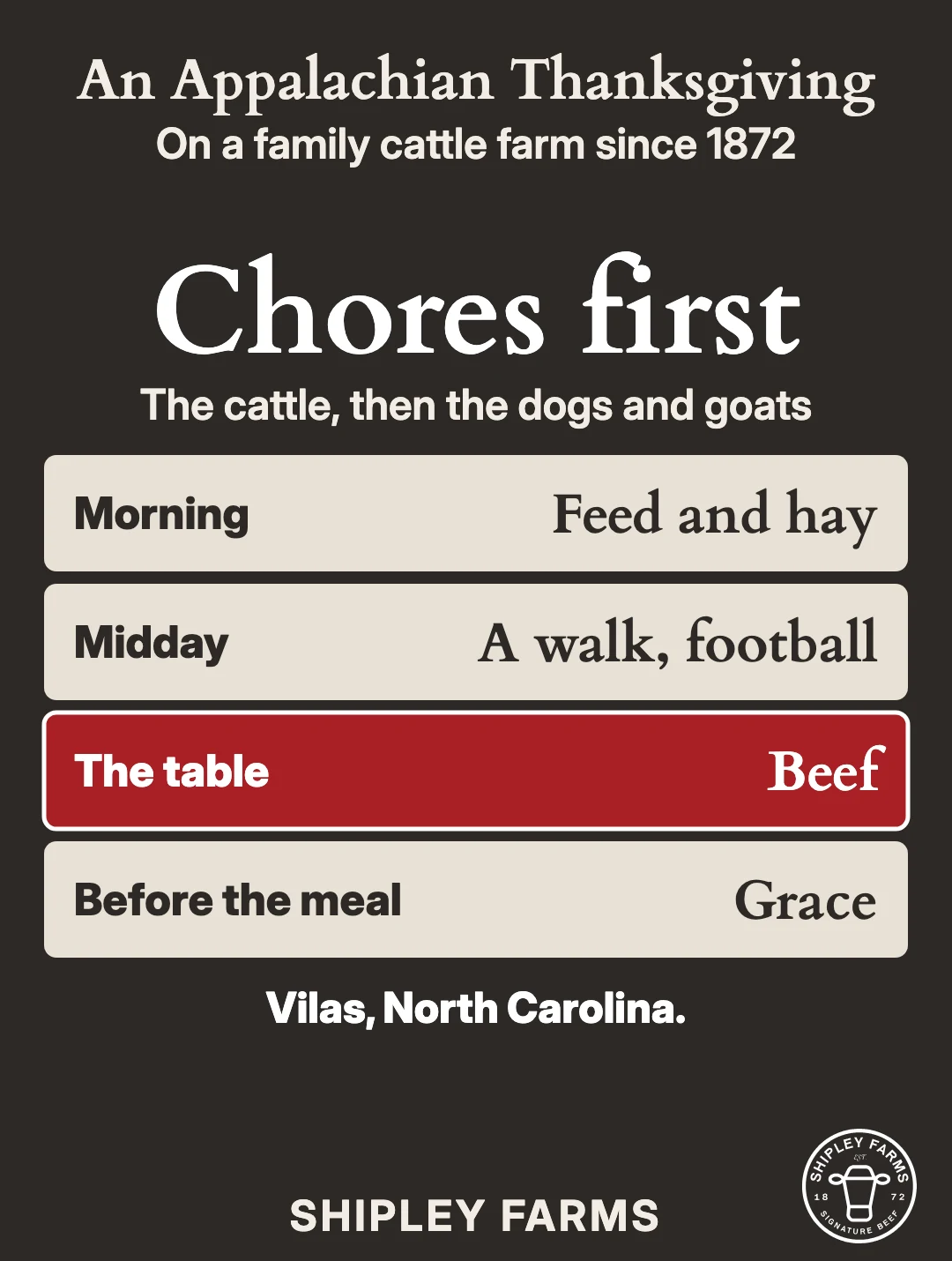
Asked what still has to be done on the farm on Thanksgiving morning, Gray Shipley said:
“Livestock always have to be cared for, and so feed and hay, and depending on the weather other things that may need attention. Just making sure the cattle are taken care of first, and the dogs and the goats get what it is that they need.”
Gray Shipley
Word for word, as recorded
Livestock always have to be cared for and so feed and hay and depending on the weather other things that may need attention just making sure the cattle are taken care of first and the dogs and the goats get what it is that they need.
Then the day turns over to family. When the Shipleys are on the farm, Gray says, it is a mix of football, time outside walking the farm, and helping his granddad and his dad with whatever project was going, all of it organized around the meals. Breakfast is often his mother's sausage and egg casserole, the one her grandmother used to make. If you make one for your own Thanksgiving morning, pasture-raised pork sausage from the farm is what we would use.
An Appalachian Thanksgiving table, off this land
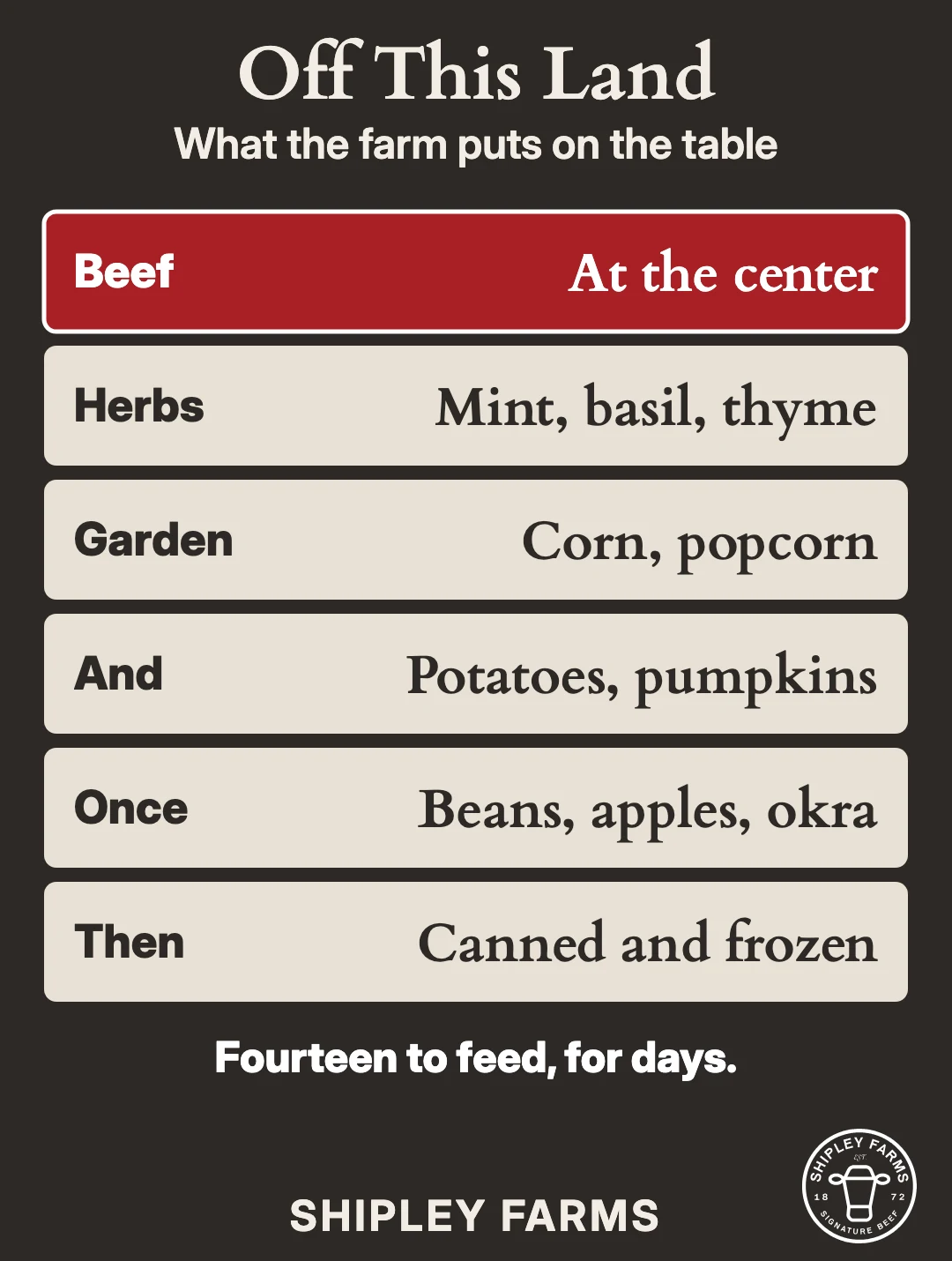
All the proteins on the table come from the farm, with beef at the center. Around it, the herb garden gives mint, basil, oregano and thyme. This year it also gave a little corn and popcorn, a few potatoes and some pumpkins. He is hoping next year's garden produces more.
It used to produce a great deal. When his grandmother ran Thanksgiving, there were fourteen people to feed for three, four or five days at a time, and nobody left the farm to eat. She spent the spring, summer and fall growing beans, apples, corn, potatoes, tomatoes and okra, then canning and freezing them, and by Thanksgiving there were three or four refrigerators and freezers in the garage, organized and labeled. Gray still makes her pearl onions in cheese sauce most years: Grandmother's onions is the recipe.
A seat for people a long way from home
The table has grown since Gray was at the kids' end of it. The grandchildren are grown and starting to bring people of their own, and friends who are away from their own families often find a place.
One guest is always especially welcome:
“Our friend Herman, Herman Trojnowski, who grew up here on the farm, came here from Poland with his family after World War II in 1952 and spent his early years growing up here on the farm.”
Gray Shipley
Word for word, as recorded
Our friend Herman Herman Trojnowski who grew up here on the farm came here from Poland with his family after World War II in 1952 and spent his early years growing up here on the farm.
He still lives down the mountain and still comes up to visit when he can. Gray says he has always felt like part of the family.
What gets said before the meal
“The tradition was always for Granddad would give thanks, or would say grace, he would call it, and he would end every prayer of thanksgiving expressing gratitude for the meal, and he would thank the Lord for all of our many many blessings.”
Gray Shipley
Word for word, as recorded
The tradition was always for granddad would give thanks or would say grace he would call it and he would end every prayer of thanksgiving expressing gratitude for the meal and he would thank the Lord for all of our many many blessings.
Thankful to still be here
Gray is plain about it: it has been a tough year in a lot of ways, and farming keeps getting harder. What he is thankful for is that the farm is still operating, and that more people want to know where their food comes from. The farm has been in the family since 1872, and Shipley Farms since 1872 tells the longer story.
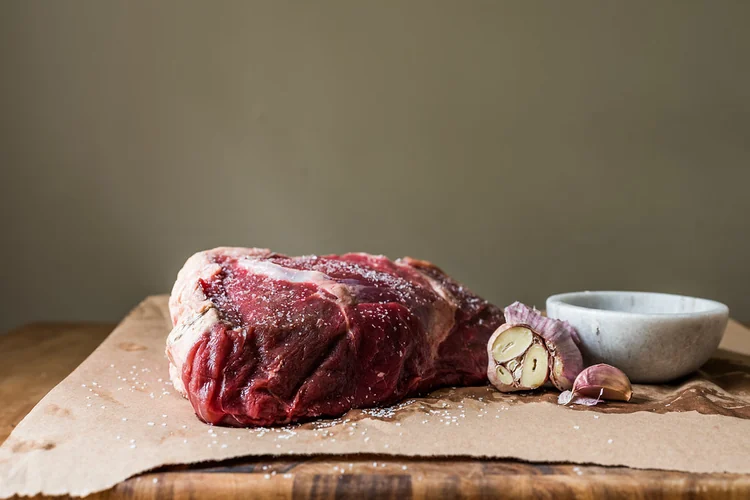
A roast feeds a table and asks very little of you once it is cooking.
View Product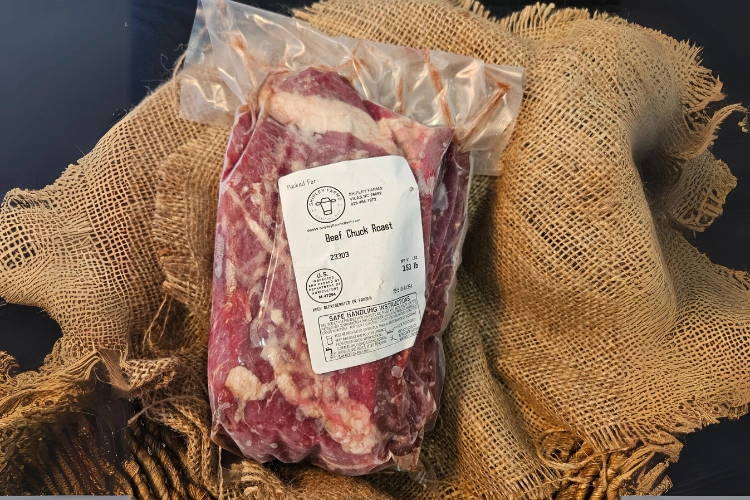
Dry-aged boneless chuck roast, raised and aged here in the mountains.
View ProductWritten at Shipley Farms in Vilas, North Carolina: a family cattle farm raising and dry-aging beef in the Appalachian Mountains, now in its fifth generation. No shortcuts since 1872.
Every quote on this page is Gray Shipley talking, the man who runs this farm. He recorded these answers himself, at the farm, in the autumn of 2026. The play button under each quote is that recording, exactly as he said it, and the words under it are a word-for-word transcript. In the written quotes, hesitations are trimmed so they read on the page. Nothing else is added or reworded, except where Gray revised his own words in review.
Reviewed 8 November 2026.
Shipley Farms
Stories, recipes and news from Shipley Farms.