Boone NC Flooding: A Farm Valley Cut Off by Helene
Boone NC flooding from Helene, seen from a cattle farm in the Linville Creek valley: roads gone, no signal, and a month before town.
The Shipley farm sits in the Linville Creek valley in Vilas, about ten minutes west of Boone. Three roads lead in and out.
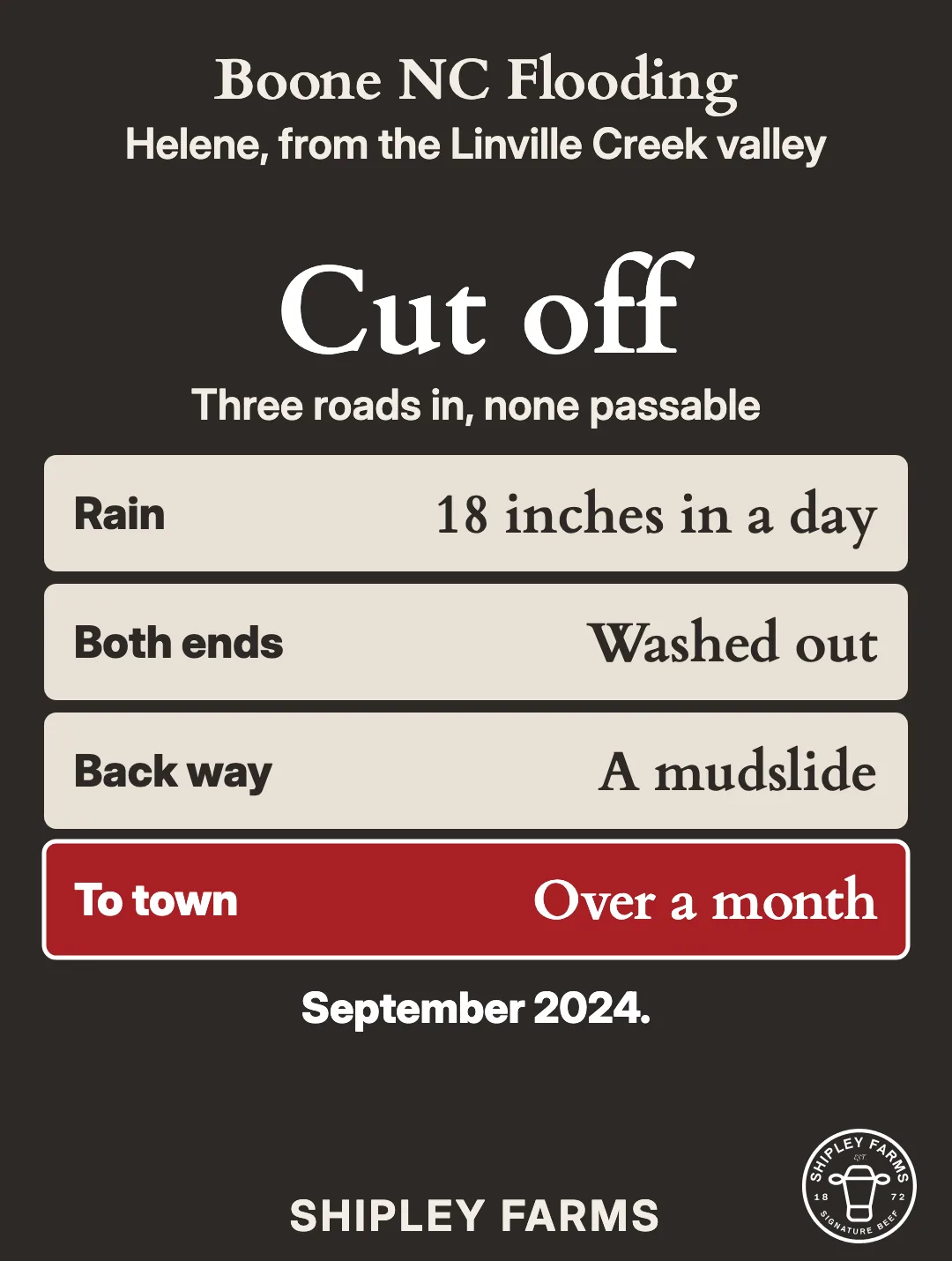
When Hurricane Helene reached the North Carolina mountains in September 2024, Gray Shipley remembers 18 inches of rain in a day. It washed out both ends of Linville Creek Road and brought trees down across it. The back way out, through Vanderpool, was buried under a mudslide that had come down the mountain.
The farm, Vilas and Boone are all in Watauga County, one of the western North Carolina counties Helene flooded.
“And so for the first few days, those of us in the valley here were just stuck in here together and couldn't get in, couldn't get out.”
Gray Shipley
Word for word, as recorded
And so for the first few days those of us in the valley here were just stuck in here together and couldn't get in couldn't get out.
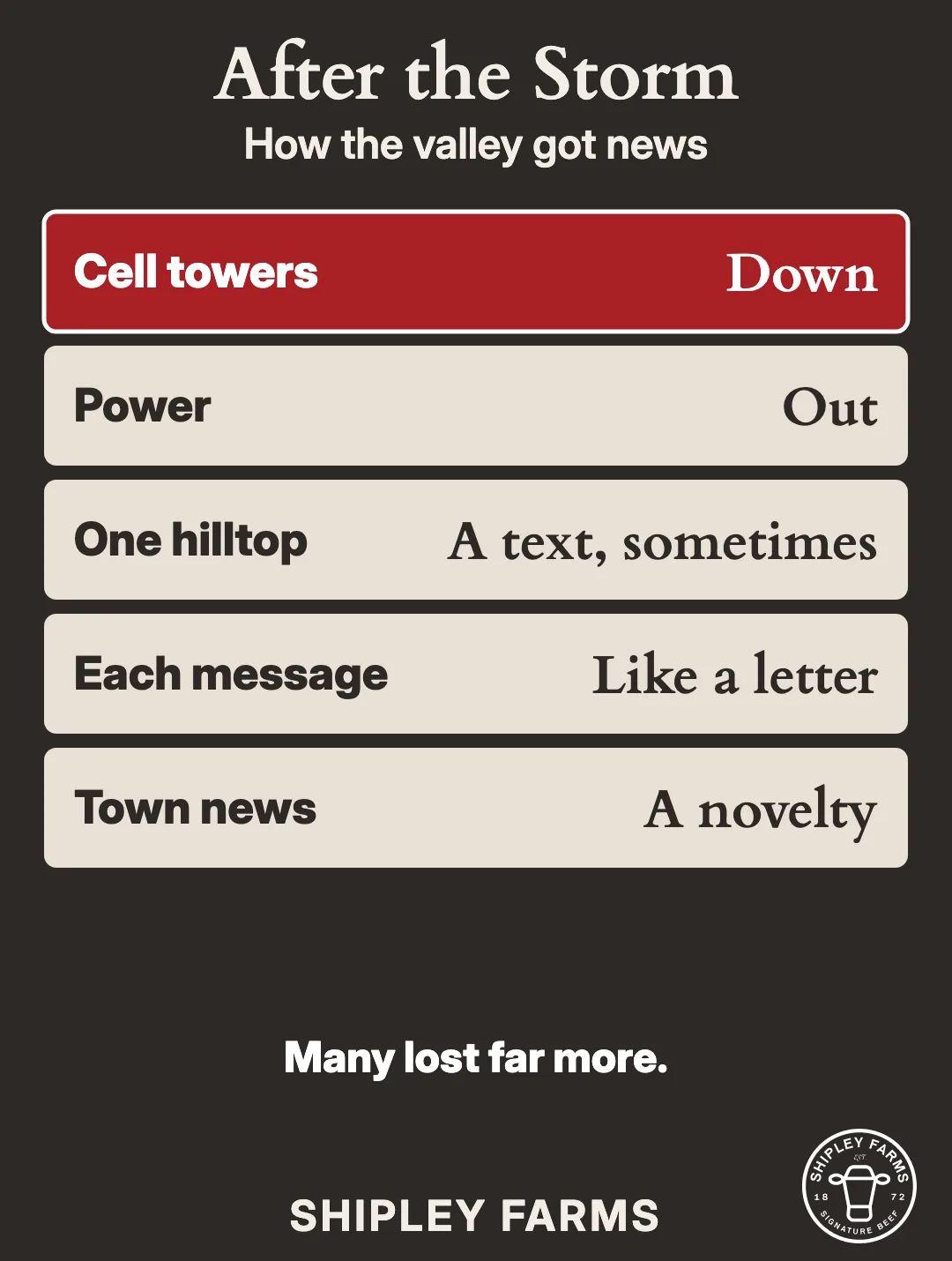
Even once the valley opened, the road to Boone stayed washed out for several more days, and the roads to Tennessee were gone too. Cell towers were down. The power was out.
“And it seemed like what it must have been like back in the 1800s, because we were all isolated in here together.”
Gray Shipley
Word for word, as recorded
And it seemed like what it must have been like back in the 1800s because we were all isolated in here together.
News by the hilltop
As things started to open up, there was one way to reach the outside world:
“There was one spot on top of the hill that you could go to get enough of a cell signal to send a text, and so you would just get them one little message and it would be like getting a letter.”
Gray Shipley
Word for word, as recorded
There was one spot on top of the hill that you could go to get enough of a cell signal to send a text and so you would just get them one little message and it would be like getting a letter.
Messages connected sometimes and sometimes did not. Meeting somebody who had been to town became an event. Is the power on? Do they have supplies? Which stores are open? Going to town turned into a novelty.
A month on the farm
“I went probably over a month before I left the farm and got into town.”
Gray Shipley
Word for word, as recorded
I went probably over a month before I left the farm and got into town.
Even after the roads were passable, there was more to do on the farm than in town, Gray says, and other people were making the trips. The cattle still needed feeding, and the farm still needed tending.
Asked what the farm does on a day the road is impassable, he described the trade that comes with living where you work. You can always walk to the office and the animals:
“And so the inclement weather doesn't slow things down as much, it just kind of gives you more that you got to deal with.”
Gray Shipley
Word for word, as recorded
And so the inclement weather doesn't slow things down as much it just kind of gives you more that you got to deal with.
What the valley learned
Helene took far more from many families in these mountains than it took from this farm, and the region is still rebuilding. For the Shipleys, it was a lesson in how connected a valley ten minutes from town really is, and how quickly that can change. The farm has been in this valley since 1872. Why Farming in These Mountains Is Different tells more about the place.
For current flood warnings and road closures around Boone, check the National Weather Service and NCDOT's DriveNC.
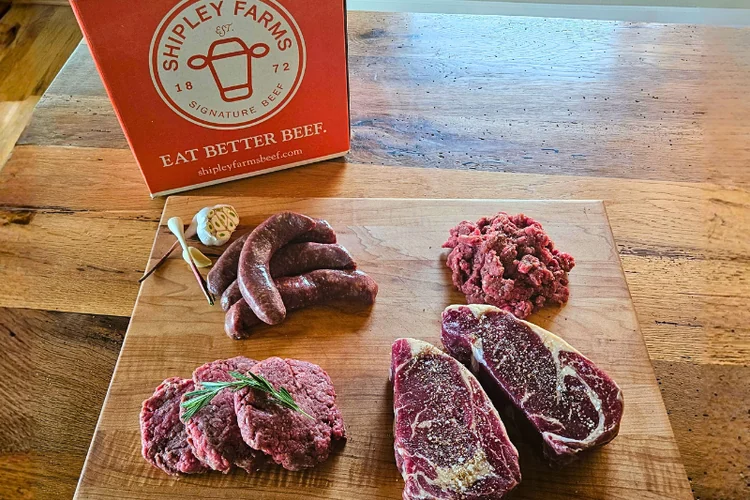
The easiest way to try beef raised here: one eighth of an animal.
View Product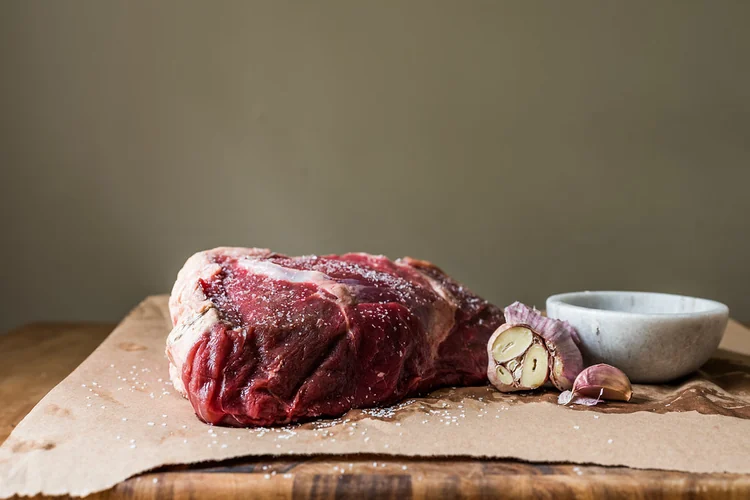
A roast feeds a table and asks very little of you once it is cooking.
View ProductWritten at Shipley Farms in Vilas, North Carolina: a family cattle farm raising and dry-aging beef in the Appalachian Mountains, now in its fifth generation. No shortcuts since 1872.
Every quote on this page is Gray Shipley talking, the man who runs this farm. He recorded these answers himself, at the farm, in the autumn of 2026. The play button under each quote is that recording, exactly as he said it, and the words under it are a word-for-word transcript. In the written quotes, hesitations are trimmed so they read on the page. Nothing else is added or reworded, except where Gray revised his own words in review.
Reviewed 9 November 2026.
Shipley Farms
Stories, recipes and news from Shipley Farms.