Cattle on the Road: What a Farmer Does When Cows Get Out
Cattle on the road: what a mountain farmer does when cows get out, why you never chase them, and what to do if you meet them driving.
Every cattle farmer has a story about the day the cows got out.
Gray Shipley's best one involves two dairy cows the farm had bought from a friend's dairy in the Piedmont. They had not been on the farm long and were not settled yet. Somehow they got out and headed up the road.
Nobody panicked at first. Cows on a mountain road do not usually go far, and there are not many places for them to go.
“I saw them walking up the road and saw them kind of stop and talk to some other animals.”
Gray Shipley
Word for word, as recorded
I saw them walking up the road and saw them kind of stop and talk to some other animals.
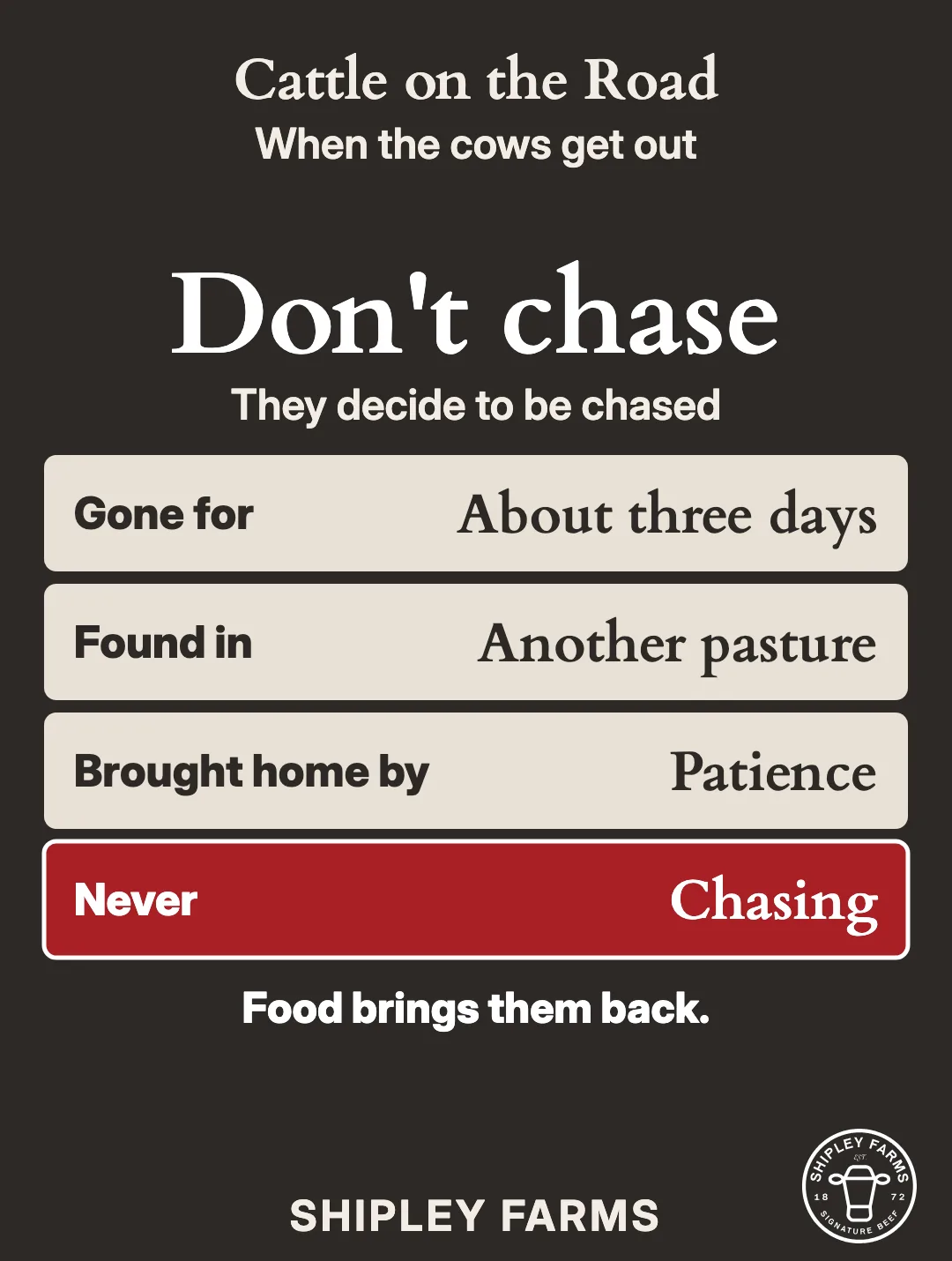
So he went back down for the truck and some help. When he came back up, the cows were gone. The family drove to the top of the ridge and looked across the whole valley, and saw nothing.
“And they were gone for about three days.”
Gray Shipley
Word for word, as recorded
And they were gone for about three days.
They had found their way into another farm's pasture. Eventually that farmer noticed he had more cattle than he was supposed to, and the two cows came home.
Never chase a cow
Asked what he has had to chase and how it ended, Gray gave his rule for every animal on the farm:
“It's never gone well for me to chase any animal. As soon as you chase them, they decide to be chased.”
Gray Shipley
Word for word, as recorded
It's never gone well for me to chase any animal as soon as you chase them they decide to be chased.
So he stops, gives them a little time to roam and enjoy their freedom, and waits. Before long they get bored or hungry and come back toward the feed. A bucket of feed and patience bring cattle home far more reliably than running at them, which only pushes them farther and faster.
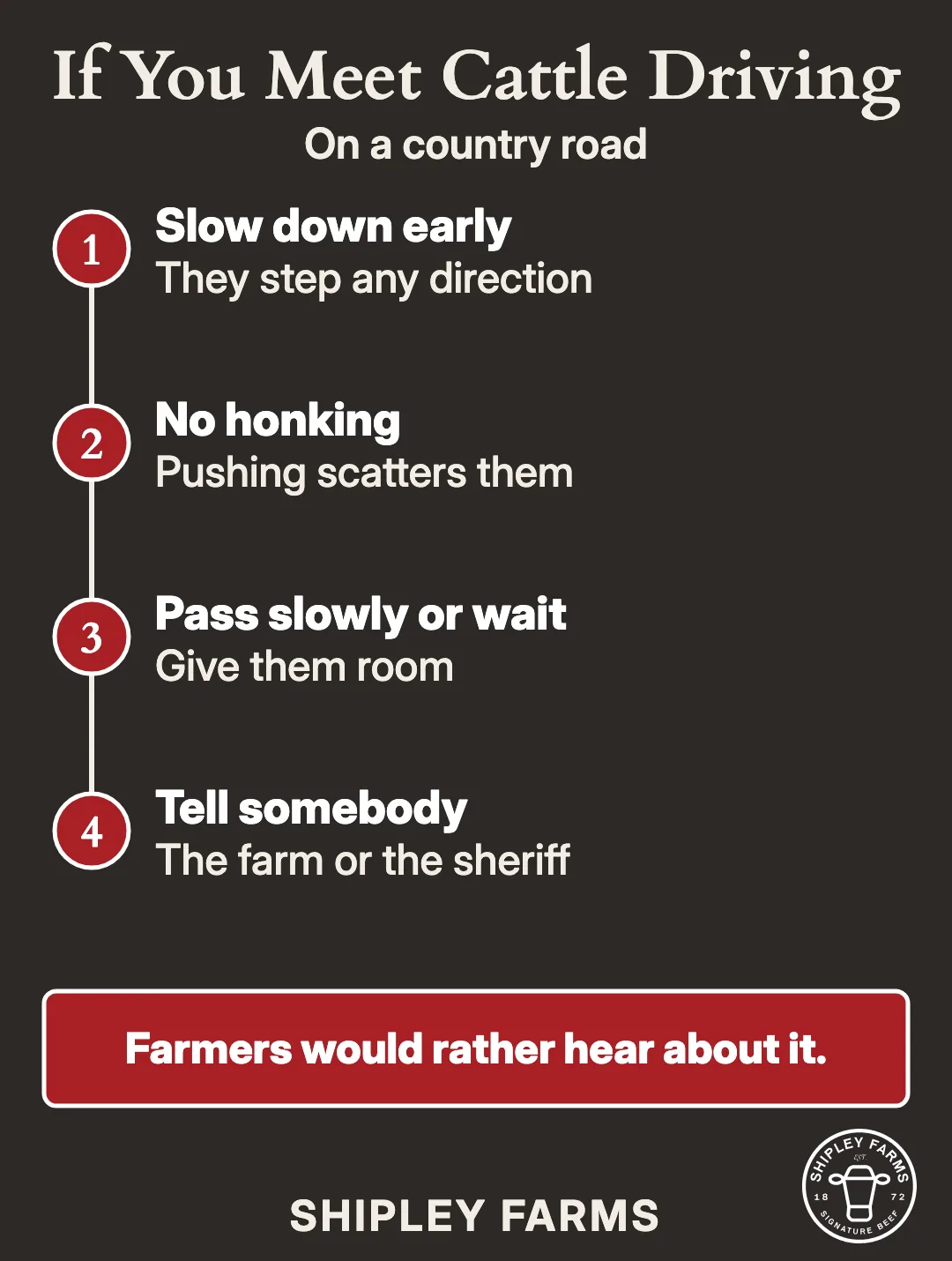
If you meet cattle on the road
- Slow down early. Cattle on the road can step in any direction, and a startled cow does not look before she moves.
- Do not honk or try to herd them. Pushing them only scatters them, maybe into traffic.
- Pass slowly if you can, or wait. Give them room and let them move off on their own.
- Tell somebody. If you know whose they are, call the farm. If you do not, call the local sheriff's office non-emergency line, and give the road and the nearest landmark.
- On a highway, call 911. If cattle are on a highway or any fast road, call 911 instead of the non-emergency line, and give the road and the nearest exit or mile marker.
- Some are crossing on purpose. Not every cow on the road is loose. Farmers sometimes walk cattle across a road from one pasture to another, so stop, wait for the herd to pass, and follow any signals from the people moving them.
Farmers would always rather hear about loose cattle than not. A quick call can keep the cattle, and the next driver, out of trouble.
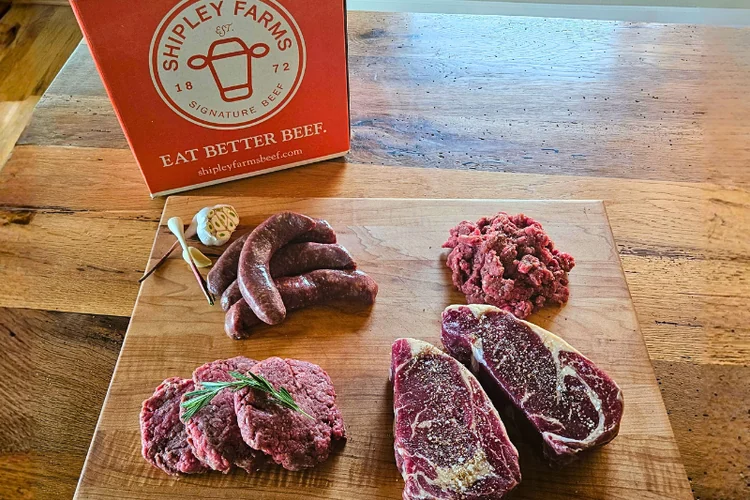
The easiest way to try beef raised here: one eighth of an animal.
View Product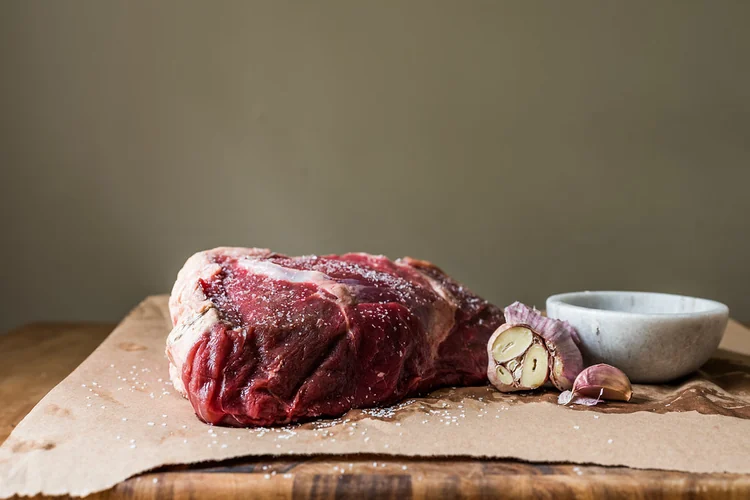
A roast feeds a table and asks very little of you once it is cooking.
View ProductWritten at Shipley Farms in Vilas, North Carolina: a family cattle farm raising and dry-aging beef in the Appalachian Mountains, now in its fifth generation. No shortcuts since 1872.
Every quote on this page is Gray Shipley talking, the man who runs this farm. He recorded these answers himself, at the farm, in the autumn of 2026. The play button under each quote is that recording, exactly as he said it, and the words under it are a word-for-word transcript. In the written quotes, hesitations are trimmed so they read on the page. Nothing else is added or reworded, except where Gray revised his own words in review.
Reviewed 9 November 2026.
Shipley Farms
Stories, recipes and news from Shipley Farms.