Great Pyrenees Escape: Our Farm Dog Wayo and the Fence
A Great Pyrenees escape story from a cattle farm: Wayo the farm dog, the fence and a months-long chess match with Gray's dad.
Asked which animal has outsmarted him, Gray Shipley named the farm's Great Pyrenees, Wayo, without a pause.
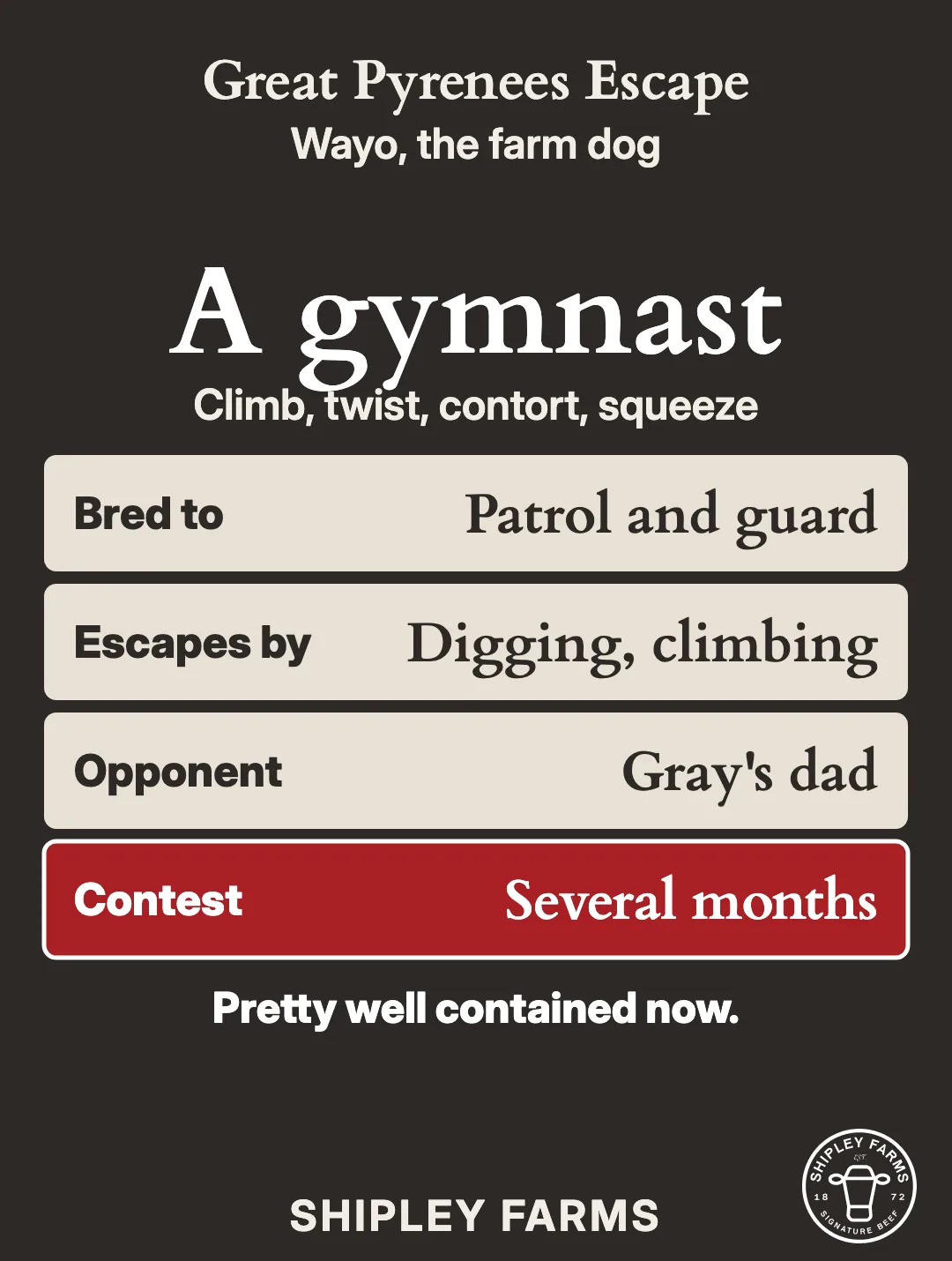
Great Pyrenees are livestock guardian dogs, bred to roam a territory and protect the animals in it. That instinct to patrol is exactly what makes them famous escape artists. Wayo, Gray says, simply believes he should be out roaming free, and that fences do not apply to him.
“He would climb, he would twist, he would contort his body. He's a gymnast. I'd see him squeeze through some things that I wouldn't think any animal could squeeze through.”
Gray Shipley
Word for word, as recorded
He would climb he would twist he would contort his body he's a gymnast I'd see him squeeze through some things that I wouldn't think any animal could squeeze through.
A chess match with Dad
When Wayo first arrived, keeping him in became a project for Gray's dad.
“And so he and Dad had kind of a chess match for several months, as he kept finding new ways to get out and Dad kept finding new ways to keep him in.”
Gray Shipley
Word for word, as recorded
And so he and dad had kind of a chess match for several months as he kept finding new ways to get out and dad kept finding new ways to keep him in.
Every escape meant working out how he had done it: where he had dug, what gap he had found. Wayo is pretty well contained now, Gray says, but it was an interesting contest to watch.
Why a Great Pyrenees escapes
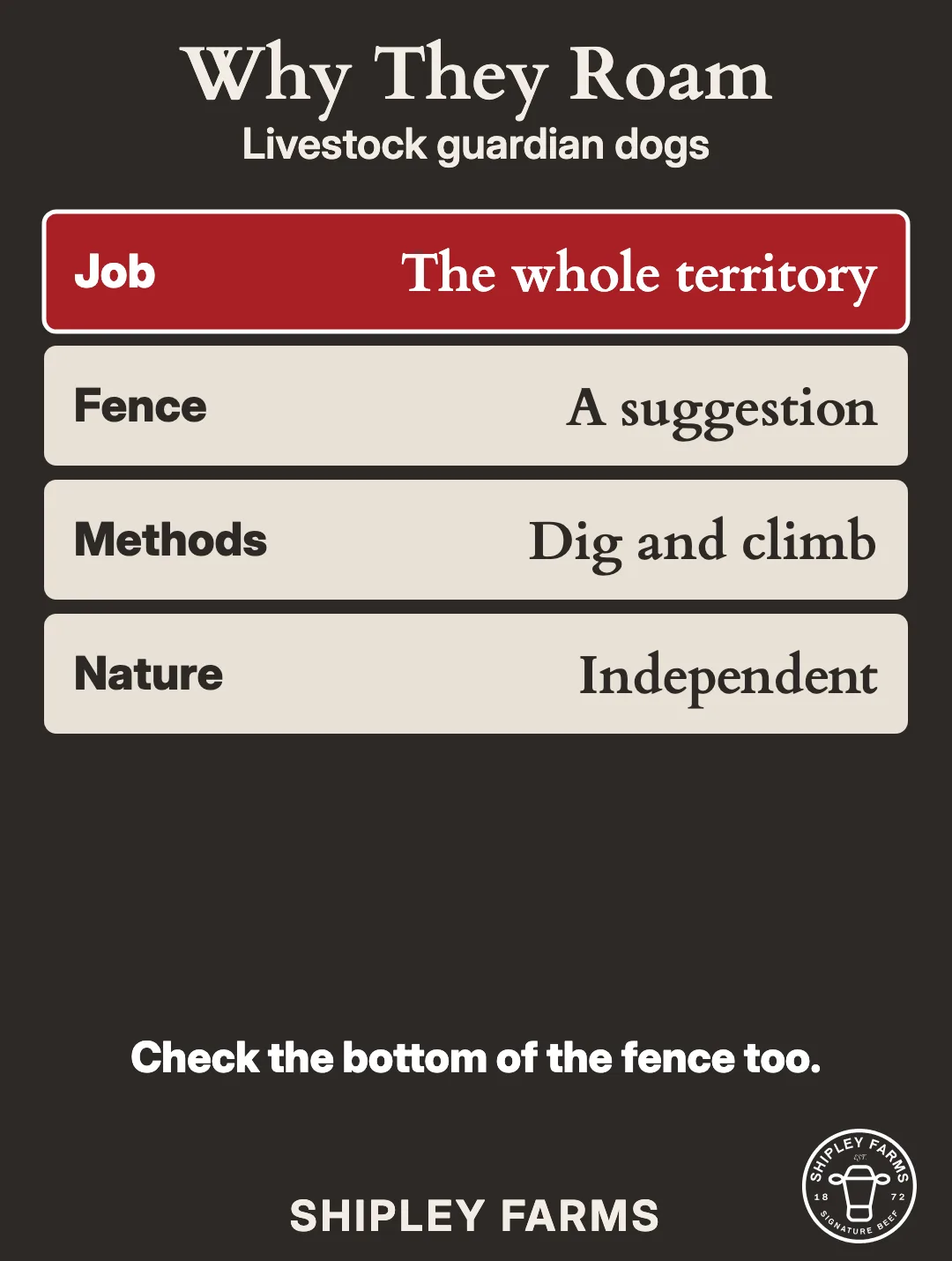
- They are bred to patrol. A guardian dog's job is the whole territory, not the inside of one pen, and many treat the fence line as a suggestion.
- They dig and they climb. Expect both, and check the bottom of the fence as often as the top.
- They are independent. These dogs were bred to make their own decisions out with the flock, which is why they do not always come when called.
- Some jump, too. Some will jump a low fence, but climbing, digging and squeezing through gaps are just as common. Wayo climbed, twisted and squeezed through openings Gray would not have thought any animal could fit.
- Digging has two reasons. Many dig to get under a fence, and many also dig a shallow hole to lie in and keep cool.
They are protective by design: the breed was made to guard livestock from predators, and most are just as watchful over their family and property. They are intelligent but independent, which can look like stubbornness, and many bark at night, when predators are moving.
How do you keep a Great Pyrenees from roaming?
There is no single trick. Owners generally rely on a tall, sturdy fence with no gaps, reinforce the bottom against digging, walk the whole line often, and give the dog what it was bred for: animals inside the fence to guard. With Wayo it took several months of fixes, one escape route at a time.
How to get a roaming dog back
Not by chasing. Gray's rule holds for every animal on the farm: as soon as you chase them, they decide to be chased. With Wayo, he says, if the dog knows you want him back in, he works all the harder to get out. If he thinks he will not be fed until he comes back, that gets his attention.
Training a Great Pyrenees to come when called takes patience, because the breed is independent by design. Food and a calm wait work better than calling louder.
The same rule brought two runaway cows home, in Cattle on the Road.
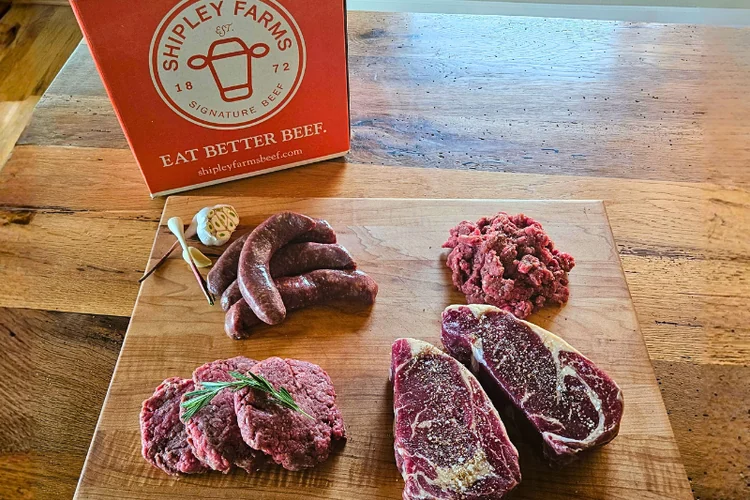
The easiest way to try beef raised here: one eighth of an animal.
View Product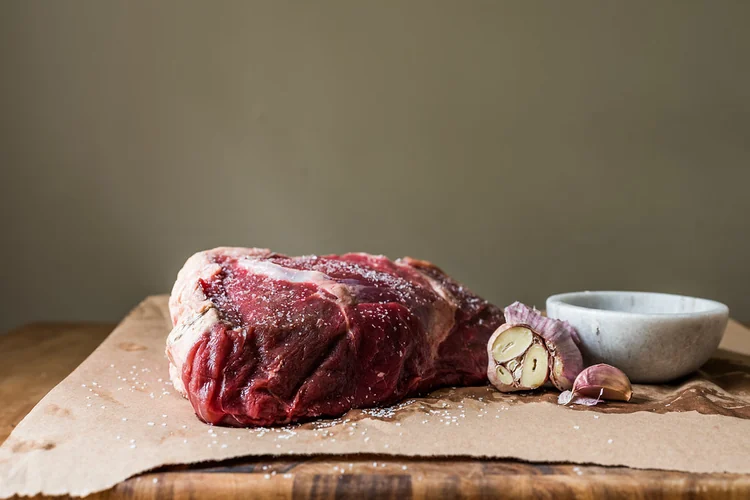
A roast feeds a table and asks very little of you once it is cooking.
View ProductWritten at Shipley Farms in Vilas, North Carolina: a family cattle farm raising and dry-aging beef in the Appalachian Mountains, now in its fifth generation. No shortcuts since 1872.
Every quote on this page is Gray Shipley talking, the man who runs this farm. He recorded these answers himself, at the farm, in the autumn of 2026. The play button under each quote is that recording, exactly as he said it, and the words under it are a word-for-word transcript. In the written quotes, hesitations are trimmed so they read on the page. Nothing else is added or reworded, except where Gray revised his own words in review.
Reviewed 9 November 2026.
Shipley Farms
Stories, recipes and news from Shipley Farms.