Barbecue Sauce Recipe for Beef Brisket
A good barbecue sauce recipe for beef brisket should taste as if it belongs to the brisket. This one starts with tomato paste and tomato sauce, gets its tang from cider vinegar and its bite from plenty of black pepper, and then takes half a cup of the brisket's own drippings, so the sauce and the meat share the same deep, beefy flavor.
Below is the sauce and an oven brisket to make it with: a seasoned brisket point or flat, covered and cooked low until it is tender enough to pull apart. Slice it for plates or pull it for sandwiches. If you smoke your brisket instead, the sauce works the same way.
At a glance: serves 8, with about 2 1/2 cups of sauce. Prep 20 minutes, bake 4 to 5 hours, then 30 minutes to rest the brisket and make the sauce.
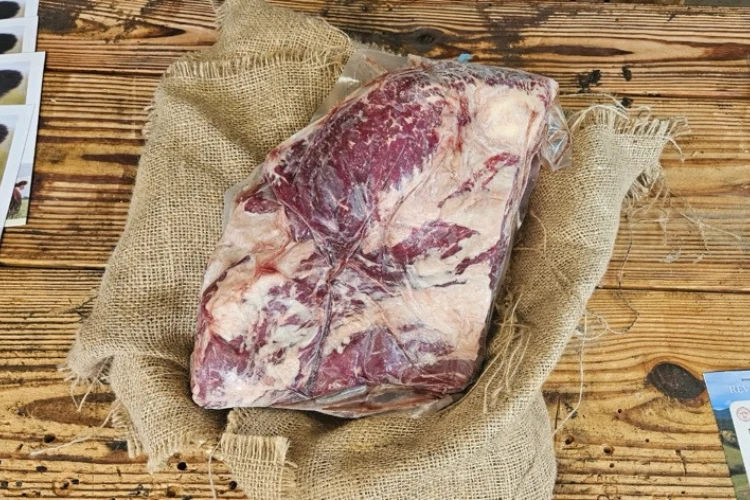
This recipe uses the point or the flat from 1 whole brisket. Freeze the other half, or smoke it.
Add 1 whole brisket to cartView ProductCooking for a full freezer instead? See the 1/8 beef share subscription.
Talking about condiments, Gray Shipley, who runs the farm, put it plainly:
“I don't like just like low-grade store-bought condiments.”
Gray Shipley
He was talking about condiments in general, not brisket sauce in particular, but it is the reason this page gives you a sauce to make rather than a bottle to buy. It takes about 25 minutes while the brisket rests, and it tastes of the brisket because part of it is the brisket.
Ingredients
- 1 brisket point or flat, 4 to 5 pounds, cut from a whole brisket
- 1 tablespoon plus 1 teaspoon kosher salt, divided
- 4 teaspoons coarsely ground black pepper, divided
- 1 tablespoon smoked paprika, divided
- 1 teaspoon garlic powder
- 1 large onion, thickly sliced, plus 1 small onion, finely chopped
- 1 cup beef stock or water
- 2 tablespoons butter, or fat skimmed from the drippings
- 3 cloves garlic, minced
- 1 can (6 ounces) tomato paste
- 1 can (15 ounces) tomato sauce
- 1/2 cup apple cider vinegar
- 1/4 cup packed dark brown sugar
- 2 tablespoons molasses
- 1 tablespoon Worcestershire sauce
- 1 teaspoon dry mustard
- 1/4 to 1/2 teaspoon cayenne pepper (optional)
- 8 soft buns, with pickles and coleslaw, to serve
Instructions
- If you are starting with a whole brisket, separate the point from the flat by following the seam of fat between them with a sharp knife. Use the point for pulled brisket or the flat for neater slices, and freeze the other half. Trim the hard fat, leaving about 1/4 inch.
- Heat the oven to 300 degrees. Mix 1 tablespoon of the salt, 1 tablespoon of the pepper, 2 teaspoons of the paprika and the garlic powder, and rub it all over the brisket.
- Scatter the sliced onion in a roasting pan or baking dish just big enough to hold the brisket. Set the brisket on top, fat side up, and pour the stock around it. Cover the pan tightly with a lid or two layers of foil.
- Bake for 4 to 5 hours, until a fork or thermometer probe slides into the thickest part with almost no resistance. That usually happens somewhere between 195 and 205 degrees F inside.
- Move the brisket to a board, cover it loosely with foil and rest it for 30 minutes. Strain the pan juices into a measuring cup and let the fat rise. Spoon off 2 tablespoons of the fat for the sauce if you like, and skim off the rest. Keep 1/2 cup of the juices for the sauce and the remainder for the meat.
- Make the sauce while the brisket rests. Melt the butter or brisket fat in a saucepan over medium heat. Cook the chopped onion for 5 to 6 minutes, until soft, then add the garlic and tomato paste and cook for 2 minutes, stirring, until the paste darkens.
- Whisk in the tomato sauce, vinegar, the 1/2 cup of juices, brown sugar, molasses, Worcestershire, dry mustard, cayenne, and the remaining 1 teaspoon each of salt, pepper and paprika. Simmer gently for 20 to 25 minutes, stirring often, until the sauce coats a spoon. Taste and adjust the salt, vinegar or sugar, and blend it smooth if you prefer.
- For sliced brisket, slice the flat across the grain about 1/4 inch thick and serve the sauce on the side. For pulled brisket, pull the point into shreds with two forks, discarding any large pieces of fat, then toss it with about 1 cup of the sauce and a few spoonfuls of the reserved juices.
- Pile the brisket onto the buns with pickles and coleslaw, and pass the rest of the sauce at the table.
What makes a good BBQ sauce recipe for beef brisket
Brisket is rich, so its sauce needs acid and pepper more than it needs sugar. Pork shoulder can carry a very sweet sauce; brisket tends to taste heavy under one. This beef brisket BBQ sauce recipe keeps the sugar moderate and leans on cider vinegar and black pepper, with smoked paprika for a little smoke when the brisket has come out of an oven rather than a smoker.
The drippings are what make it a sauce for this brisket rather than for anything at all. Half a cup of the defatted juices adds a beefy depth that no bottle has. If you have no drippings, use beef stock and the sauce is still good.
Beef brisket with BBQ sauce: on the meat or on the side?
For sliced brisket, serve the sauce on the side. A well-cooked brisket flat is good on its own, and a spoonful of sauce at the table lets everyone decide how much they want. For pulled or chopped brisket, toss the meat with the sauce while it is warm, so the shreds soak it up. Vinegar against tomato is one of the oldest arguments in barbecue, and this sauce sits somewhere in the middle.
A recipe for pulled brisket of beef
The point is the better half for pulling. It has more fat running through it, so it stays moist and falls into tender shreds. Cook it until it is fully tender, which usually means past 200 degrees F inside. If it resists the forks, it needs more time, not more sauce. Pull it while it is warm, toss it with sauce and a little of the juices, and keep it covered in a low oven until you serve.
For chopped brisket, cut the meat into 1/2-inch pieces on the board instead of pulling it, then sauce it the same way.
Smoked brisket instead
If you would rather smoke the brisket, the sauce does not change. Use the juices from the foil wrap or the drip pan in place of the oven drippings, or beef stock if you have none. The guides below cover smoking a whole brisket, and what to do when it stalls.
Making the sauce ahead
If you are cooking ahead, make the sauce the same day as the brisket and refrigerate the two separately; the sauce tastes even better the next day. Because it contains the brisket juices, treat it like leftovers: keep it covered in the fridge and use it within a few days. Warm it gently before serving. Leftover sauced brisket reheats well, covered, in a 300 degree oven with a splash of the juices.
Food safety
USDA FSIS lists 145 degrees F, followed by a rest of at least 3 minutes, as the safe minimum internal temperature for whole cuts of beef. Brisket cooked until it pulls apart is far past that figure, but confirm it with an instant-read thermometer. Reheat leftover brisket to 165 degrees F, the FSIS figure for leftovers. See the FSIS Safe Minimum Internal Temperature Chart.
- Safe Minimum Internal Temperature Chart, USDA FSIS
Food-safety temperatures on this page are cited to USDA FSIS rather than to us.
Published by Shipley Farms. The quote on this page is Gray Shipley, who runs the farm, in his own words from a recorded interview, quoted exactly, or as he revised it in review.
On food safety we follow USDA FSIS, linked above.