Beef Stew With Tomato Sauce
A beef stew with tomato sauce is brighter than a brown, flour-thickened stew, and every bit as filling. Brown cubes of chuck roast, soften onions with garlic and paprika, then simmer everything in crushed tomatoes, tomato sauce and beef stock with bay leaves. Carrots and potatoes go in for the last hour. After about 2 1/2 hours the beef is tender and the sauce is thick enough to coat a spoon.
The tomato does two jobs. Its acidity cuts through the richness of the chuck, and as it cooks down it thickens the stew on its own, so there is no flour to brown and no gravy to fuss over. Paprika gives it a deep red color and a gentle, sweet warmth.
At a glance: serves 6. Prep 25 minutes, cook about 2 3/4 hours, rest 10 minutes.
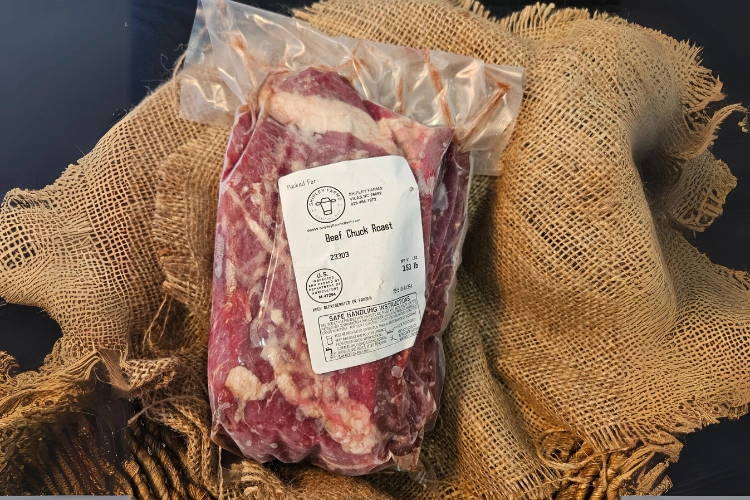
This recipe uses 1 chuck roast, cut into cubes at home, which makes a big pot of stew for six.
Add 1 chuck roast to cartView ProductCooking for a full freezer instead? See the 1/8 beef share subscription.
Gray Shipley, who runs the farm, was talking about old ways of making food, such as fermentation and sourdough bread, when he said:
“there's no substitute for the time that goes into doing something well.”
Gray Shipley
A stew is not a sourdough loaf, but it works on the same principle. Chuck roast is full of connective tissue that only softens with time at a gentle heat. Turn the burner up to hurry it and the meat tightens and dries out instead. Two and a half hours at a bare simmer is the recipe.
Ingredients
- 1 boneless chuck roast, about 3 pounds
- 2 teaspoons kosher salt, plus more to taste
- 1 teaspoon freshly ground black pepper
- 3 tablespoons olive oil, divided
- 2 medium yellow onions, chopped
- 4 cloves garlic, minced
- 1 tablespoon sweet paprika
- 1 teaspoon smoked paprika (optional)
- 1 can (28 ounces) crushed tomatoes
- 1 can (15 ounces) tomato sauce
- 2 cups beef stock
- 2 bay leaves
- 1 teaspoon dried thyme
- 4 medium carrots, cut into 1-inch pieces
- 1 1/2 pounds Yukon Gold potatoes, cut into 1 1/2-inch pieces
- 1 teaspoon sugar (optional)
- 2 tablespoons chopped fresh parsley
Instructions
- Trim off any large pieces of hard fat and gristle and cut the chuck roast into 1 1/2-inch cubes. Pat them dry and season with the salt and pepper.
- Heat 1 tablespoon of the oil in a large Dutch oven over medium-high heat. Brown the beef in three batches, without crowding, 5 to 6 minutes per batch, adding more oil as needed. Move each batch to a bowl.
- Lower the heat to medium. Add the onions and a pinch of salt and cook, scraping up the browned bits, until soft and golden, 6 to 8 minutes. Stir in the garlic and both paprikas and cook for 30 seconds, no longer, since paprika scorches quickly.
- Add the crushed tomatoes, tomato sauce, stock, bay leaves and thyme. Scrape the bottom of the pot, then return the beef and its juices and bring to a simmer.
- Cover and cook for 1 1/4 hours, either at a bare simmer over low heat on the stove or in the oven at 325 degrees. On the stove, stir now and then and scrape the bottom, since tomato can catch.
- Stir in the carrots and potatoes, pushing them under the liquid. Cover and cook for 1 to 1 1/4 hours more, until the beef is tender and the potatoes are cooked through.
- Remove the bay leaves and skim any fat from the surface. Taste, and add salt and pepper, plus the sugar if the tomatoes taste sharp. Rest the stew for 10 minutes, then serve scattered with parsley.
Why tomato sauce and crushed tomatoes
Crushed tomatoes give the stew texture and a fresh tomato taste. Tomato sauce, which is smoother and cooked down further, gives it body, so the liquid thickens into a sauce rather than staying brothy. With the beef stock, they make a balanced base. In a pinch, tomato paste can stand in for the tomato sauce: use 3 tablespoons and an extra cup of stock.
Taste the stew near the end. Some canned tomatoes are sharper than others, and a teaspoon of sugar rounds them off.
Cut your own stew meat from a chuck roast
Stew meat sold ready-cut can come from more than one cut, depending on who did the cutting, and different cuts cook at different speeds. In the same pot, some cubes turn tender while others are still tough. A single chuck roast, cubed at home, gives pieces of the same cut and the same size that finish together.
It takes about 10 minutes. Cut the roast into thick slabs along its natural seams, trim away large pieces of hard fat and the silvery gristle, then cut the slabs into 1 1/2-inch cubes. Leave the soft marbling in; that is what keeps the beef moist. The guide to beef tips and stew meat below explains the difference between the two.
Stovetop or oven?
Both work. The oven heats the pot from all sides, so there is less risk of tomato catching on the bottom, and you can leave it alone. The stovetop is easier to watch and adjust. On the stove, keep the heat as low as it will go while still showing a lazy bubble or two. A rolling boil makes the beef tough and stringy.
Keeping it from turning greasy
Chuck gives off fat as it cooks, and some will collect on top of the stew. Skim it with a wide spoon before serving. If you make the stew a day ahead, which only improves it, the fat sets into a layer in the fridge that you can lift straight off. The guide to greasy braises below explains the rest.
Food safety
USDA FSIS lists 145 degrees F, followed by a rest of at least 3 minutes, as the safe minimum internal temperature for whole cuts of beef. A stew simmered for 2 1/2 hours passes that long before the beef is tender, but check with a thermometer all the same. Refrigerate leftovers promptly and reheat them to 165 degrees F. See the FSIS Safe Minimum Internal Temperature Chart.
- Safe Minimum Internal Temperature Chart, USDA FSIS
Food-safety temperatures on this page are cited to USDA FSIS rather than to us.
Published by Shipley Farms. The quote on this page is Gray Shipley, who runs the farm, in his own words from a recorded interview, quoted exactly, or as he revised it in review.
On food safety we follow USDA FSIS, linked above.