Beef Tongue in the Instant Pot
Beef tongue in the Instant Pot takes about 90 minutes at high pressure, where the stovetop takes the better part of an afternoon. Rinse the tongue, cook it with onion, garlic, bay leaves and peppercorns, let the pressure come down on its own, and peel off the skin while it is still warm. What is left is soft, fine-grained beef that slices cleanly for sandwiches or crisps up in a hot skillet for tacos.
Tongue is one dense, hard-working muscle, so no amount of high heat will make it tender in a hurry. It needs long, moist heat, which is exactly what a pressure cooker does well. The flavor is mild and beefy, closer to pot roast than most people expect, and once it is cooked the texture is smooth and even all the way through.
At a glance: serves 6. Prep 20 minutes, about 20 minutes to come to pressure, 90 minutes at high pressure, 20 to 30 minutes to release, 15 minutes to peel and crisp.
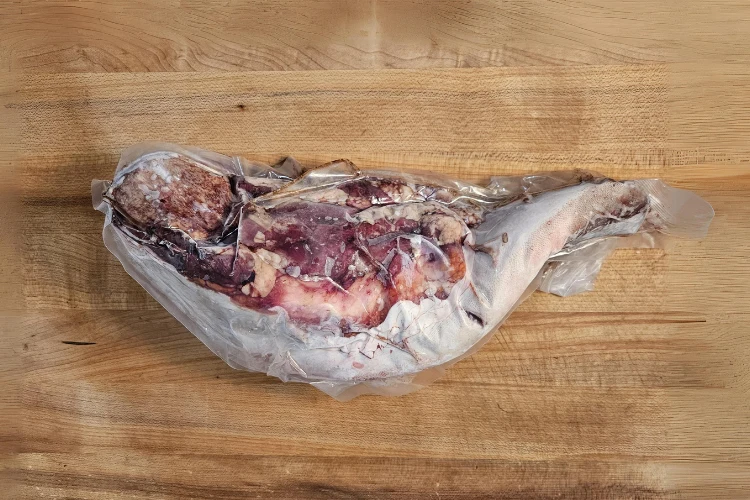
This recipe uses about 3 pounds of beef tongue, enough for six.
Add 3 lb beef tongue to cartView ProductCooking for a full freezer instead? See the 1/8 beef share subscription.
Gray Shipley, who runs the farm, was asked which of the premium steaks he would pick. Part of his answer:
“I like to sell the filets and the ribeyes and then eat the, eat the more lesser-known secondary cuts myself.”
Gray Shipley
He was talking about steaks, and he did not mention tongue. But tongue sits about as far from the filet as a beef cut can, and it is the kind of cut that rewards anyone willing to try it once. The Instant Pot makes that first try a lot less work.
Ingredients
- 1 beef tongue, about 3 pounds, fully thawed
- 1 large yellow onion, peeled and quartered
- 1 head garlic, halved crosswise
- 3 bay leaves
- 1 tablespoon black peppercorns
- 1 tablespoon kosher salt, plus more to season
- About 6 cups water, enough to just cover the tongue
- 2 tablespoons neutral oil or lard, for crisping
- 12 to 18 small corn tortillas, warmed, to serve
- 1/2 white onion, finely diced, and 1/2 cup chopped cilantro, to serve
- 1 cup salsa verde and 2 limes, cut into wedges, to serve
Instructions
- Rinse the tongue under cold running water, rubbing the surface with your hands or a stiff brush. Trim off any loose fat or ragged pieces hanging from the thick back end.
- Put the tongue in the inner pot of a 6-quart or larger Instant Pot, curling it to fit. Add the onion, garlic, bay leaves, peppercorns and salt. Pour in enough water to just cover the tongue without going past the two-thirds line inside the pot. If the tip sits a little above the water, that is fine.
- Lock the lid, turn the valve to Sealing, and cook at high pressure for 90 minutes for a tongue of 3 to 3 1/2 pounds, or 75 minutes for one closer to 2 1/2 pounds.
- When the time is up, let the pressure release naturally, 20 to 30 minutes, until the float valve drops. Open the lid away from your face.
- Push a paring knife into the thickest part of the tongue. It should slide in with almost no resistance. If it does not, lock the lid again and cook at high pressure for 10 to 15 minutes more.
- Lift the tongue onto a cutting board and let it cool for 5 to 10 minutes, just until you can handle it. Slit the skin along the top and the underside with a paring knife, then peel it away with your fingers. Trim off the fatty, gristly part at the back end and throw the skin away.
- Strain the cooking liquid and keep a cup of it. Slice the tongue across into 1/4-inch slices for sandwiches, or cut it into 1/2-inch dice for tacos.
- For tacos, heat the oil in a large skillet over medium-high heat. Add the diced tongue in a single layer, in batches if needed, and leave it alone for 3 to 4 minutes, until browned and crisp underneath, then toss and cook 2 to 3 minutes more. Season with a pinch of salt.
- Pile the tongue into warm tortillas and top with the onion, cilantro, salsa verde and a squeeze of lime.
How long to cook beef tongue in an Instant Pot
Ninety minutes at high pressure suits most tongues of 3 to 3 1/2 pounds, and 75 minutes is usually enough for a smaller one. Add the time it takes the pot to come to pressure and the natural release, and plan on a little over two hours from lid on to lid off. Skip the quick release. With this much liquid in the pot it can spit hot liquid from the valve, and the slow release lets the tongue finish cooking gently.
The real test is the skin. On a tongue that is done, it lifts away in large sheets with almost no help. If it clings and the meat underneath still feels firm, the tongue needs more time, and another 10 or 15 minutes under pressure will get it there.
Why peel beef tongue while it is warm?
The skin on a tongue is thick and rough, with a pebbled surface that nobody wants to eat. While the tongue is warm, the skin comes away almost on its own. Once it cools, it grips the meat, and you end up shaving it off with a knife and losing good meat with it. If you get interrupted, put the tongue back in the hot cooking liquid for a few minutes to loosen it again.
Instant Pot or stovetop?
Both get you to the same place. The stovetop method simmers the same tongue and aromatics gently for several hours, and the guide to cooking beef tongue below covers it in full. The Instant Pot is faster, does not need watching, and keeps the kitchen from filling with steam all afternoon. The stove gives you a little more control near the end, since you can test the tongue and take it out at any point.
Ways to serve beef tongue
Tacos are the classic, and crisping the diced tongue in a hot pan gives you soft centers and browned edges. Thin slices are just as good cold on rye bread with mustard and pickles, or warm with salsa verde spooned over them and rice on the side. Leftover dice makes a good hash with potatoes and onions and a fried egg on top.
Keep the cooked tongue in a little of its strained cooking liquid in the fridge so it stays moist. The two guides below on offal and nose-to-tail cooking cover the other less familiar cuts, if tongue turns out to be your kind of thing.
Food safety
The FSIS chart has no separate line for organ meats such as tongue, so the figure for whole cuts of beef applies: 145 degrees F, followed by a rest of at least 3 minutes. Ninety minutes under pressure takes a tongue far past that long before it is tender, but check the thickest part with an instant-read thermometer all the same. Refrigerate leftovers promptly and reheat them to 165 degrees F, the FSIS figure for leftovers. See the FSIS Safe Minimum Internal Temperature Chart.
- Safe Minimum Internal Temperature Chart, USDA FSIS
Food-safety temperatures on this page are cited to USDA FSIS rather than to us.
Published by Shipley Farms. The quote on this page is Gray Shipley, who runs the farm, in his own words from a recorded interview, quoted exactly, or as he revised it in review.
On food safety we follow USDA FSIS, linked above.