The Best Marinade for Flat Iron Steak, and When to Skip It
The best marinade for flat iron steak is a balanced one: olive oil, a little balsamic or red wine vinegar, Worcestershire, Dijon mustard, garlic and rosemary. It seasons the surface and adds a savory, faintly sweet edge without hiding the beef. One hour in the fridge makes a difference, and up to eight is fine. Then sear or grill the steak hot and slice it across the grain.
Flat iron is cut from the top blade muscle of the shoulder, with a tough seam of connective tissue trimmed out of the middle. What is left is an even, well-marbled steak that is tender on its own. That changes what a marinade is for. On flank or skirt, a marinade helps a lean, long-grained steak. On flat iron it is about flavor, and it is optional.
At a glance: serves 4. Prep 10 minutes, marinate 1 to 8 hours, cook about 10 minutes, rest 5 minutes.
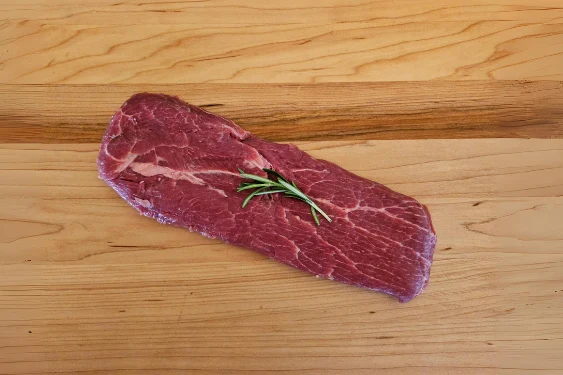
This recipe uses 2 flat iron steaks, about 1 1/2 pounds in all, enough for four.
Add 2 flat iron steaks to cartView ProductCooking for a full freezer instead? See the 1/8 beef share subscription.
Gray Shipley, who runs the farm, was talking about flat iron steak when he said:
“you can grill it, you can pan fry it, and stays tender even if you mess up and overcook it a little bit. All it needs is a little salt and pepper. That's a really easy way to start.”
Gray Shipley
That is the honest case against this page, and it is a good one. If you are cooking flat iron for the first time, start with salt and pepper and taste the steak on its own. Reach for the marinade when you want a change: for guests, for steak that will be sliced over a salad, or when you want garlic and rosemary all the way through.
Ingredients
- 2 flat iron steaks, 11 to 13 ounces each
- 1/4 cup olive oil
- 2 tablespoons balsamic vinegar or red wine vinegar
- 2 tablespoons Worcestershire sauce
- 1 tablespoon Dijon mustard
- 3 cloves garlic, finely minced
- 1 tablespoon finely chopped fresh rosemary, or 1 teaspoon dried
- 1 teaspoon kosher salt
- 1/2 teaspoon freshly ground black pepper
- 1 tablespoon neutral oil, such as canola or avocado, for cooking
Instructions
- Whisk the olive oil, vinegar, Worcestershire, Dijon, garlic, rosemary, salt and pepper in a bowl until the mustard blends in and the marinade thickens slightly.
- Put the steaks in a zip-top bag or a shallow dish, pour the marinade over them and turn to coat. Seal or cover and refrigerate for at least 1 hour and no more than 8, turning once if you can.
- Take the steaks out of the fridge about 30 minutes before cooking. Lift them out of the marinade, let the excess drip off and throw the used marinade away. Pat both sides dry with paper towels.
- Heat a cast-iron skillet over medium-high heat for about 5 minutes and add the neutral oil, or heat a grill to high and brush the oil onto the steaks instead.
- Cook the steaks for 3 to 5 minutes per side, turning once, until well browned and a thermometer in the thickest part reads your target. USDA FSIS sets 145 degrees F with a 3-minute rest as the safe minimum for beef steaks. The vinegar and Worcestershire brown quickly, so turn the heat down a little if the outside darkens before the inside is ready.
- Move the steaks to a cutting board and rest them for 5 minutes.
- Find the direction of the grain and slice the steaks thinly across it. Serve.
Add 2 flat iron steaks to cart
A flat iron steak marinade: how long to leave it
One hour lets the salt, Worcestershire and garlic season the surface. Four to eight hours gives a deeper flavor. Past eight hours the vinegar starts to turn the outside of the steak soft and a little grainy, so this is not a marinade to leave for days. You can mix it a day ahead and keep it in a jar in the fridge, then add the steaks that morning.
Always marinate in the refrigerator. If you want a spoonful of sauce for the sliced steak, set aside 2 tablespoons of the marinade before the raw meat goes in. Swaps that keep the balance: lemon juice for the vinegar, thyme or oregano for the rosemary, a teaspoon of honey if you like it a little sweeter. Keep the oil, the acid and the salt in roughly the same proportions and the marinade will behave the same way.
When to skip the marinade
Skip it when the steak is the point of the meal. A flat iron has enough fat running through it to stay juicy and enough flavor to stand on its own, so salt, pepper, a hot pan and a thin slice across the grain are all it needs. Skip it, too, if you are serving the steak with a sauce such as chimichurri or a pan sauce, which will do the flavor work instead.
Use it when you want a different flavor from the same steak, when you are cooking for a crowd and want the steaks seasoned hours before anyone arrives, or when the steak is headed for salads, tacos or sandwiches where a little extra seasoning helps.
How to prepare flat iron steak without a marinade
Pat the steaks dry and season both sides with about 3/4 teaspoon kosher salt per steak and plenty of black pepper. Salt them at least 40 minutes ahead and leave them uncovered on a rack in the fridge, or salt them right before they go into the pan. Then follow steps 4 to 7 above. Without the marinade the crust browns more slowly, so you can keep the heat a little higher. For more on salt, pepper and timing, see How to Season Steak.
Flat iron, flank or Denver?
Flat iron is often compared with flank, which is leaner and more fibrous and gains more from a marinade, and with Denver steak, another quick-cooking cut from the shoulder. If you are choosing between them, the comparisons below set out the differences in texture, flavor and cooking.
Food safety
USDA FSIS lists 145 degrees F, followed by a rest of at least 3 minutes, as the safe minimum internal temperature for beef steaks. Check it with an instant-read thermometer in the thickest part. Many cooks take flat iron off the heat at 130 to 135 degrees F for medium rare. That is below the FSIS figure, and the choice is yours. Keep raw meat and its marinade apart from food that will not be cooked, and never reuse the marinade the raw steak sat in. See the FSIS Safe Minimum Internal Temperature Chart.
- Safe Minimum Internal Temperature Chart, USDA FSIS
Food-safety temperatures on this page are cited to USDA FSIS rather than to us.
Published by Shipley Farms. The quote on this page is Gray Shipley, who runs the farm, in his own words from a recorded interview, quoted exactly, or as he revised it in review.
On food safety we follow USDA FSIS, linked above.