Flat Iron Steak vs Flank Steak: What's the Difference?
Both are flat, both are cheaper than a ribeye, and they are not interchangeable. Flat iron is tender enough to serve as a steak. Flank needs a marinade and a sharp knife.
These two get confused because they are both flat, both reasonably priced, and both sold as the sensible alternative to a ribeye. Beyond that they have almost nothing in common.
Where they come from
- Flat iron. The shoulder, from the top blade. A worked muscle that nonetheless stays tender once the central sinew is removed.
- Flank. The belly wall, behind the ribs. Thin, very lean, with a long coarse grain running the length of it.
How they differ in practice
- Tenderness. Flat iron is genuinely tender. Flank is not, unless you cut it correctly.
- Fat. Flat iron has fine marbling. Flank has almost none.
- Grain. Flat iron's grain is fine and short. Flank's is long, coarse and obvious.
- Marinade. Flank wants one and takes it well. Flat iron does not need one.
- Doneness. Flank past medium-rare becomes tough. Flat iron tolerates more.
| Flat iron | Flank | |
|---|---|---|
| Where it comes from | The shoulder, from the top blade | The belly wall, behind the ribs |
| Tenderness | Genuinely tender | Not, unless you cut it correctly |
| Fat | Fine marbling | Almost none |
| Grain | Fine and short | Long, coarse and obvious |
| Marinade | Does not need one | Wants one, and takes it well |
| Doneness | Tolerates more | Tough past medium-rare |
| Best for | A steak on a plate | Fajitas, salads, sandwiches — anything sliced |
Cooking flat iron
“You know, you can grill it, you can pan fry it, and stays tender even if you mess up and overcook it a little bit. All it needs is a little salt and pepper. That's a really easy way to start.”
Gray Shipley
Hot and fast, two to three minutes a side, then rest five minutes and slice across the grain. Salt and pepper is enough.
Cooking flank
- Marinate for two to eight hours. Acid, oil, salt, aromatics.
- Pat it dry before it meets the heat, or it will steam instead of searing.
- Very hot grill or pan, two to three minutes a side, no further than medium-rare.
- Rest five minutes.
- Slice thin, across the grain, at an angle. This step is not optional.
“Get the moisture off the surface.”
Gray Shipley
Which to pick
If you want to put a steak on a plate, flat iron. If you want fajitas, a salad, steak sandwiches or anything sliced, flank. The second is a better ingredient and the first is a better steak.
“I like to sell the filets and the ribeyes and then eat the more lesser-known secondary cuts myself.”
Gray Shipley
What to buy
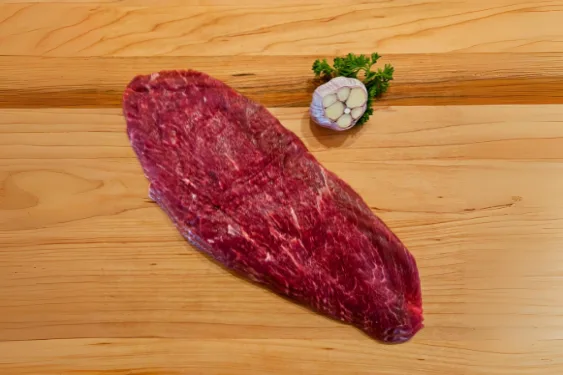
Tender, flat and forgiving. Gray's recommendation for anyone not confident with steak.
View Product
Flank. Leaner and coarser, so marinate it and slice thin across the grain.
View Product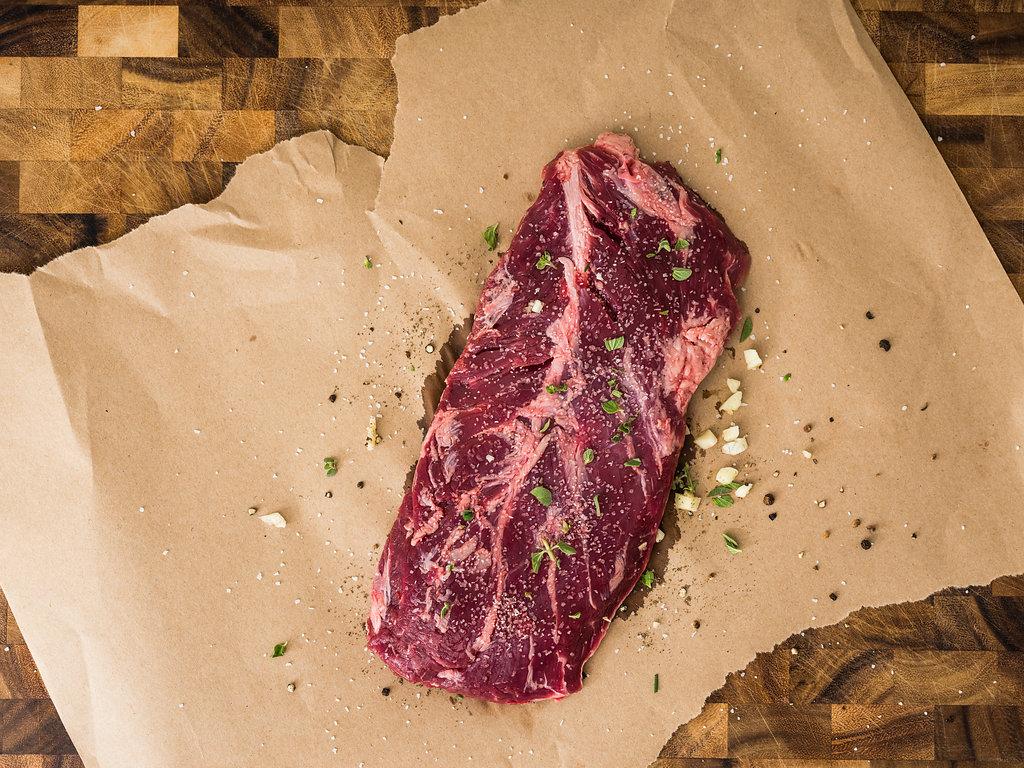
Hanger has flank's deep flavor with more tenderness.
View ProductFor where both sit on the tenderness scale see the most tender cuts, for the surface see getting a great crust, and the best grilling cuts covers both over fire.
One is a steak. One is an ingredient. Buy for which of those you want.
- Cook to a Safe Minimum Internal Temperature, FoodSafety.gov
Food-safety temperatures and storage times on this page are cited to the agencies above rather than to us.
Written at Shipley Farms in Vilas, North Carolina: a family cattle farm raising and dry-aging beef in the Appalachian Mountains, now in its fifth generation. No shortcuts since 1872.
Every quote on this page is Gray Shipley talking, the man who runs this farm. We sat down with him, turned on a recorder, and kept his own words. Hesitations are trimmed so they read on the page. Nothing else is added or reworded, except where Gray revised his own words in review.
Nobody knows this beef better than we do. On food safety we leave it to FoodSafety.gov, and we have linked their page above. Reviewed 3 October 2026.
Quick answers
Is flat iron steak the same as flank steak?
No. Flat iron comes from the shoulder and is naturally tender with fine marbling. Flank comes from the belly wall, is leaner, and has a long coarse grain, so it needs a marinade and should be sliced thin against the grain.
Which is better, flat iron or flank steak?
Flat iron is the better steak -- grill or pan-fry it with just salt and pepper. Flank is the better ingredient for fajitas, salads, and sandwiches, marinated first and sliced thin across the grain.
Shipley Farms
Stories, recipes and news from Shipley Farms.