Braised Beef and Tortellini
Braised beef and tortellini takes one patient step and one quick one. First, a chuck roast braises for about three hours in tomatoes, red wine, garlic and rosemary until it falls apart into a rich, thick sauce. Then cheese tortellini cook for a few minutes and get folded into the beef with a good handful of Parmesan. The braise can be made a day or two ahead, which turns this into a 15-minute dinner on the night.
Chuck roast is the cut for this. It comes from the shoulder, a hard-working part of the animal with plenty of marbling and connective tissue. In a hot pan it is chewy, but after a few hours of gentle simmering in liquid, that tissue softens into gelatin, the fat melts through the meat, and the beef shreds with a fork while staying moist.
At a glance: serves 6 to 8. Prep 25 minutes, braise about 3 hours, finish 20 minutes.
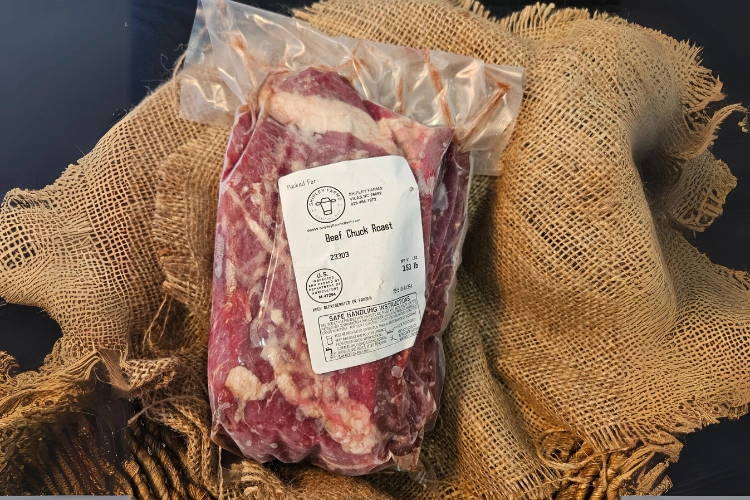
This recipe uses 1 chuck roast, braised in large pieces, which makes enough sauce for 6 to 8 bowls of pasta.
Add 1 chuck roast to cartView ProductCooking for a full freezer instead? See the 1/8 beef share subscription.
Gray Shipley, who runs the farm, was talking about what he hopes to see more of when he said this:
“learning what to do with a, with a roast, um, and getting confident in that”
Gray Shipley
A braised chuck roast is a good place to build that confidence. It is hard to ruin: if it is not tender yet, it simply needs more time. And once you have a pot of it, you have the start of a pasta, a sandwich or a stew.
Ingredients
- 1 boneless chuck roast, about 3 pounds
- 2 teaspoons kosher salt, plus more for the pasta water
- 1 teaspoon freshly ground black pepper
- 2 tablespoons olive oil
- 1 medium yellow onion, finely chopped
- 1 medium carrot, finely chopped
- 1 celery rib, finely chopped
- 5 cloves garlic, minced
- 2 tablespoons tomato paste
- 1/2 teaspoon red pepper flakes (optional)
- 1 cup dry red wine
- 1 can (28 ounces) crushed tomatoes
- 1 cup beef stock
- 2 sprigs fresh rosemary
- 1 bay leaf
- 20 ounces fresh or refrigerated cheese tortellini
- 1 cup finely grated Parmesan, plus more to serve
- 2 tablespoons chopped fresh parsley or basil
Instructions
- Heat the oven to 325 degrees. Pat the chuck roast dry and cut it into 4 large chunks, trimming off any thick pieces of hard fat. Season all over with the salt and pepper.
- Heat the olive oil in a large Dutch oven over medium-high heat. Brown the beef well on all sides, in two batches if needed, 8 to 10 minutes in all. Move it to a plate.
- Lower the heat to medium. Add the onion, carrot and celery and cook, stirring and scraping the bottom, until soft, 6 to 8 minutes. Stir in the garlic, tomato paste and red pepper flakes and cook for 1 to 2 minutes, until the paste darkens.
- Pour in the wine and let it bubble, scraping up the browned bits, until it has reduced by about half, 2 to 3 minutes.
- Stir in the crushed tomatoes and stock, add the rosemary and bay leaf, and return the beef and any juices to the pot. Bring to a simmer, cover and move the pot to the oven.
- Braise for 2 1/2 to 3 hours, turning the beef once halfway, until it falls apart when you press it with a fork.
- Lift the beef onto a board and remove the rosemary stems and bay leaf. Skim the fat from the surface of the sauce. Shred the beef with two forks, discarding any gristle, and stir it back into the sauce. If the sauce is thin, simmer it uncovered on the stove for about 10 minutes.
- Meanwhile, bring a large pot of well-salted water to a boil and cook the tortellini as the package directs, usually 3 to 5 minutes, until tender. Save 1 cup of the cooking water, then drain.
- Fold the tortellini into the beef sauce over low heat with the Parmesan, adding a splash of the pasta water if it needs loosening. Serve with the parsley and more Parmesan at the table.
Tortellini with beef: why a braise works
Tortellini already carry a filling, so they want a sauce that clings rather than one that competes. A shredded braise does that well: the strands of beef catch in the folds of the pasta, and the tomato and wine sauce coats everything. It is softer and silkier than a sauce made with ground beef, with more body from the slow-cooked chuck.
Cheese tortellini are the classic choice here. Meat-filled ones work, but the dish gets heavy. Fresh or refrigerated tortellini cook in a few minutes; dried ones take longer, so follow the package.
Braised beef, Italian style
This is a braise in the Italian manner: a base of finely chopped onion, carrot and celery softened slowly in olive oil, then red wine, tomatoes, garlic and rosemary. In Italy, beef cooked slowly in wine in a covered pot goes by names like brasato and stracotto, and it is served sliced with its sauce or shredded over pasta.
Use a dry red wine you would be happy to drink; Chianti, Sangiovese or Montepulciano all fit. If you prefer not to cook with wine, use an extra cup of stock and add a tablespoon of red wine vinegar at the end for brightness.
Making it ahead
The braise is even better on the second day, and it freezes well. Cool it quickly, cover it and refrigerate it for up to 2 days, or freeze it in containers. Lift off any fat that has set on top, then reheat the sauce on the stove until it is bubbling and reaches 165 degrees F before you cook the tortellini and fold them in. Cook the pasta fresh each time. Tortellini left sitting in sauce soak it up and turn soft.
Why chuck roast
Leaner roasts, such as round, can be braised too, but they come out firmer and drier and need to sit in plenty of liquid. Chuck has enough fat and connective tissue to stay moist even when it is shredded and tossed with pasta. Cutting one whole roast into chunks yourself also means every piece is the same cut and finishes at the same time. The guides below compare chuck with other slow-cooking cuts.
Food safety
USDA FSIS lists 145 degrees F, followed by a rest of at least 3 minutes, as the safe minimum internal temperature for whole cuts of beef. A braise passes that long before the meat is tender, but check with a thermometer all the same. Refrigerate leftovers promptly and reheat them to 165 degrees F. See the FSIS Safe Minimum Internal Temperature Chart.
- Safe Minimum Internal Temperature Chart, USDA FSIS
Food-safety temperatures on this page are cited to USDA FSIS rather than to us.
Published by Shipley Farms. The quote on this page is Gray Shipley, who runs the farm, in his own words from a recorded interview, quoted exactly, or as he revised it in review.
On food safety we follow USDA FSIS, linked above.