Brisket Fried Rice
Brisket fried rice is the answer to the last pound of a brisket. Dice it, crisp it in a very hot pan with a spoonful of its own fat, then fry it with day-old rice, plenty of garlic, eggs and scallions. Soy sauce and black pepper finish it. It takes about 30 minutes, most of it chopping.
Brisket suits fried rice well. The bark turns crunchy again in a hot pan, the fat seasons the rice, and if the brisket was smoked, the smoke carries through every bite. This recipe starts with cooked brisket; the cart below buys a whole one, which makes a feast first and leftovers after. If yours is still raw, the note after the recipe covers cooking it first.
At a glance: serves 4. Prep 15 minutes, cook about 15 minutes, total 30 minutes, with the brisket already cooked.
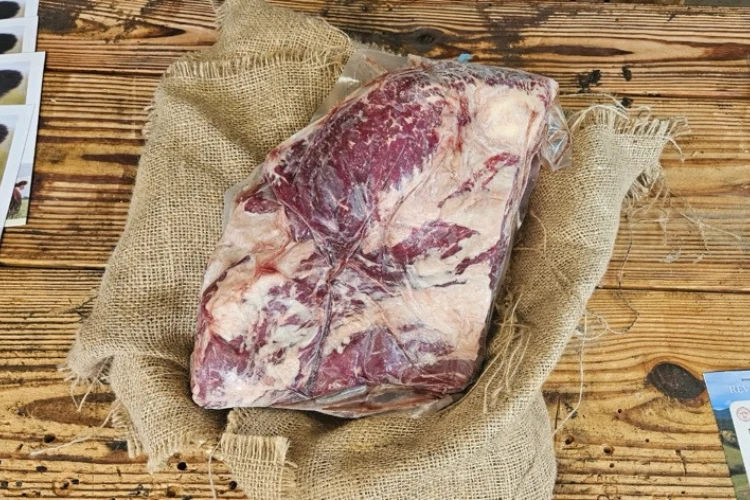
This recipe uses about 2 cups of diced cooked brisket. A whole brisket, cooked first, feeds a crowd and still leaves plenty for the freezer.
Add 1 whole brisket to cartView ProductCooking for a full freezer instead? See the 1/8 beef share subscription.
On the subject of frozen meat, Gray Shipley, who runs the farm, said:
“Very few people have the ability to really tell any difference whatsoever of something that's been frozen.”
Gray Shipley
He was talking about raw meat frozen once with care, not cooked leftovers. The same habit pays off here, though. Brisket frozen in small, flat portions while it is still at its best is ready for a hot pan on a night when nobody wants to cook, and fried rice is a forgiving place to use it.
Ingredients
- 2 cups diced cooked brisket, in 1/2-inch pieces (about 12 ounces)
- 2 tablespoons brisket fat or neutral oil
- 1 tablespoon neutral oil
- 6 cloves garlic, minced
- 4 cups cold cooked long-grain white rice, ideally a day old
- 3 large eggs, beaten with a pinch of salt
- 1 small yellow onion, diced
- 1 jalapeno, seeded and minced (optional)
- 4 scallions, thinly sliced, white and green parts kept apart
- 2 tablespoons soy sauce, plus more to taste
- 1 tablespoon oyster sauce (optional)
- 1/2 teaspoon freshly ground black pepper
- 1 teaspoon toasted sesame oil
- Hot sauce or chili crisp, to serve
Instructions
- Chop and measure everything before you start, because the cooking goes fast. Break up the cold rice with your fingers so no clumps remain.
- Heat a wok or 12-inch skillet over high heat until it just begins to smoke. Add the neutral oil and the eggs and stir until softly set, 30 to 60 seconds. Slide them onto a plate.
- Add 1 tablespoon of the brisket fat and the brisket. Spread it out and let it sizzle without stirring for 2 minutes, until the edges crisp, then toss for 1 minute more. Add it to the plate with the eggs.
- Lower the heat to medium. Add the remaining brisket fat and the garlic and stir until pale golden, about 1 minute. Add the onion, jalapeno and scallion whites and cook for 2 minutes.
- Raise the heat to high and add the rice. Toss it, press it against the pan for 30 seconds, and toss again, for 3 to 4 minutes, until the rice is hot and some grains are lightly toasted.
- Return the brisket and eggs, breaking the eggs into pieces. Pour the soy sauce and oyster sauce around the hot edge of the pan, add the pepper, and toss for 1 to 2 minutes, until everything is steaming hot. The brisket should reach 165 degrees F.
- Off the heat, stir in the sesame oil and scallion greens. Taste for soy, and serve with hot sauce or chili crisp.
No leftover brisket? Cook it first
A whole brisket is a long project, and leftovers are part of the point. Smoke it at 225 to 250 degrees until a probe slides in with almost no resistance, usually around 200 to 205 degrees F, which often takes 1 to 1 1/2 hours per pound; the smoking guide below walks through the whole cook. Without a smoker, braise the flat, covered, at 300 degrees with onions and a cup of stock for 3 1/2 to 4 1/2 hours, until fork-tender.
When it comes off, pour the juices from the wrap or the pan into a jar and refrigerate it. The fat rises and sets on top, and that is the brisket fat this recipe uses. Serve the brisket fresh first, then chill the rest quickly in shallow containers and refrigerate it promptly.
Freezing leftover brisket in portions
Freeze brisket in the amounts you will actually use. For fried rice, that is about 2 cups, or 12 ounces. Leave it in chunks or thick slices rather than dicing it, since smaller pieces dry out faster. Pack each portion into a quart freezer bag with a spoonful of the juices or fat, press out the air, label the bag with the date, and freeze it flat on a sheet pan so it freezes quickly and stacks neatly.
Thaw a bag overnight in the refrigerator. Dice the brisket while it is still cold, when it cuts cleanly without shredding, then go straight to step 3.
Why the rice should be cold
Warm, fresh rice is too soft and steamy to fry; it clumps and turns gummy. Rice cooked a day ahead and kept in the fridge has drier, firmer grains that separate in the pan, soak up the soy and fat, and toast at the edges. If you have only fresh rice, spread it on a sheet pan for a few minutes to let the steam escape, then refrigerate it, uncovered, for an hour.
Point or flat, and other cuts
Both halves of the brisket work. The fatty point crisps beautifully and needs little extra fat. The lean flat is better diced a little smaller and given the full 2 tablespoons of fat. Leftover short ribs or chuck roast make a similar fried rice; the comparison of brisket and short ribs below explains how they differ. If you would rather start with raw beef, slice a stir-fry cut thinly and cook it quickly in step 3; the stir-fry guide below says which cuts work.
Food safety
USDA FSIS lists 145 degrees F, followed by a rest of at least 3 minutes, as the safe minimum internal temperature for whole cuts of beef such as brisket, and a slow-cooked brisket passes it long before it is tender. Leftovers should be reheated to 165 degrees F, so check a pile of brisket in the pan with an instant-read thermometer in step 6. See the FSIS Safe Minimum Internal Temperature Chart.
- Safe Minimum Internal Temperature Chart, USDA FSIS
Food-safety temperatures on this page are cited to USDA FSIS rather than to us.
Published by Shipley Farms. The quote on this page is Gray Shipley, who runs the farm, in his own words from a recorded interview, quoted exactly, or as he revised it in review.
On food safety we follow USDA FSIS, linked above.