Grilled T-Bone Steak
A grilled T-bone steak is two steaks in one: a strip on one side of the bone and a smaller piece of tenderloin on the other. The trick is to cook both well at the same time. Salt the steak ahead, sear it over high heat, then finish it on the cooler side of the grill with the tenderloin turned away from the fire, because it is smaller and cooks faster.
The T-shaped bone that gives the steak its name is part of the backbone. The strip is firm, beefy and edged with fat; the tenderloin is soft and mild. A two-zone fire and an instant-read thermometer take the guesswork out of serving both at their best.
At a glance: serves 4. Prep 10 minutes, salt at least 45 minutes, cook about 15 minutes, rest 10 minutes.
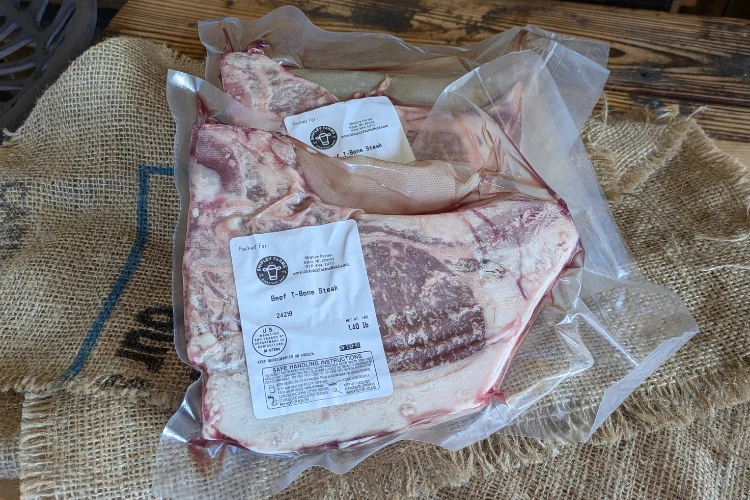
This recipe uses 2 T-bone steaks, about 1 pound each, which carve into enough for four.
Add 2 T-bone steaks to cartView ProductCooking for a full freezer instead? See the 1/8 beef share subscription.
Asked whether to cook a steak on the grill or in a cast-iron pan, Gray Shipley, who runs the farm, said:
“I, to me, that's a question of weather more than anything else.”
Gray Shipley
This is the recipe for a day when the weather says grill. If it says stay in, there is a cast-iron method further down that cooks the same steak indoors. Either way, a T-bone needs little more than salt, pepper and a very hot surface.
Ingredients
- 2 T-bone steaks, 1 to 1 1/4 pounds each and about 1 inch thick
- 2 teaspoons kosher salt
- 1 1/2 teaspoons coarsely ground black pepper
- 1 tablespoon neutral oil, such as canola or avocado
- 2 tablespoons butter, softened (optional)
- Flaky salt, to serve (optional)
Instructions
- At least 45 minutes and up to 24 hours before cooking, pat the steaks dry and season both sides and the edges with the kosher salt. Set them on a rack over a plate and refrigerate, uncovered.
- Set up the grill for two-zone cooking. On charcoal, spread a full chimney of lit coals over one half of the grate and leave the other half empty. On gas, turn half the burners to high and leave the rest off. Close the lid, heat for 10 to 15 minutes, then scrape the grates clean.
- Pat the steaks dry again, rub them lightly with the oil, and season them with the pepper.
- Sear the steaks over the hot side, lid open, for 2 to 3 minutes per side, until well browned. As they sear, keep the tenderloin side of each steak pointed toward the cooler side of the grill.
- Move the steaks to the cool side with the strip facing the fire and the tenderloin facing away. Close the lid and cook, turning once, for 4 to 8 minutes more, until a thermometer in the center of the strip, not touching the bone, reads 125 to 130 degrees F for medium rare, or 145 degrees F to meet the USDA FSIS safe minimum.
- Move the steaks to a cutting board, top each with a tablespoon of butter if you like, and rest them for 5 to 10 minutes. FSIS asks for a rest of at least 3 minutes.
- To carve, run the tip of a sharp knife along the bone to free the strip, then do the same on the other side for the tenderloin. Slice both across the grain about 1/2 inch thick, arrange the slices back around the bone, and finish with a pinch of flaky salt.
Why the tenderloin faces away from the fire
The two muscles on a T-bone do not cook at the same speed. The tenderloin is the smaller piece and carries less fat, so it reaches temperature first and dries out first. The strip is thicker and takes longer. Turning the strip toward the heat and the tenderloin away from it lets the two finish within a few degrees of each other. Check both with your thermometer before the steaks come off; the tenderloin will usually read a little higher.
A porterhouse is the same cut taken a little farther back, where the tenderloin is wider. Everything on this page works for a porterhouse too. Give it a minute or two longer on the cool side.
Grill time and temperature for T-bone steak
For a 1-inch T-bone, plan on 10 to 14 minutes on the grill in all: about 5 minutes of searing and 4 to 8 minutes on the cool side. A thicker steak takes longer, so trust the thermometer over the clock. Take the steak off a few degrees before your target, because the temperature keeps climbing for a few minutes as it rests.
As a guide, take it off at 120 to 125 degrees F for rare, 125 to 130 for medium rare, and 135 to 140 for medium. Rare and medium rare are below the FSIS figure of 145 degrees F with a 3-minute rest, and the choice is yours. The temperature chart linked below covers the full range.
Do you need a T-bone steak marinade?
No. A T-bone has enough fat and flavor to stand on salt and pepper, and the tenderloin side needs no help at all. If you like a marinade anyway, keep it short and savory. Whisk together 1/4 cup olive oil, 2 tablespoons Worcestershire sauce, 1 tablespoon balsamic vinegar, 3 cloves of minced garlic, 1 teaspoon chopped fresh rosemary and 1 teaspoon black pepper. Season the steaks with 1 teaspoon of the kosher salt instead of 2, put them in a zip-top bag with the marinade, and refrigerate for 1 to 4 hours.
Before grilling, lift the steaks out, throw away the used marinade, and pat them very dry so they brown instead of steam. Leave sugar and honey out of a T-bone marinade. On a steak this thick, sugar burns before the middle is cooked.
A T-bone steak recipe for cast iron
When the weather will not cooperate, heat the oven to 400 degrees, and heat a 12-inch cast-iron skillet over medium-high heat for 5 minutes. A skillet that size holds one T-bone comfortably, so sear them one at a time in a thin film of oil, about 3 minutes per side, and move each to a rack set in a sheet pan. Roast both steaks on the pan until the strip reads your target, usually 5 to 8 minutes, then rest and carve them exactly as above.
Food safety
USDA FSIS lists 145 degrees F, followed by a rest of at least 3 minutes, as the safe minimum internal temperature for beef steaks. Measure in the thickest part of the strip, away from the bone, since the meat right against it cooks more slowly. Keep raw meat and any marinade apart from food that will not be cooked, and refrigerate leftovers promptly. See the FSIS Safe Minimum Internal Temperature Chart.
- Safe Minimum Internal Temperature Chart, USDA FSIS
Food-safety temperatures on this page are cited to USDA FSIS rather than to us.
Published by Shipley Farms. The quote on this page is Gray Shipley, who runs the farm, in his own words from a recorded interview, quoted exactly, or as he revised it in review.
On food safety we follow USDA FSIS, linked above.