Winter on the Farm: Do Cows Get Cold?
Winter on the farm in the North Carolina mountains: do cows get cold, what a newborn calf needs, and why mud is worse than snow.
People worry about cattle in the cold far more than the cattle do.
Asked what cattle do in weather people assume they cannot handle, Gray Shipley started with the animals people know best. Pets want to be inside, he says, so we assume every animal does.
“Nobody ever wonders what deer do in winter, what squirrels do in winter. There's nobody bringing deer in from the outside into the barn.”
Gray Shipley
Word for word, as recorded
Nobody ever wonders what deer do in winter what squirrels do in winter there's nobody bringing deer in from the outside into the barn.
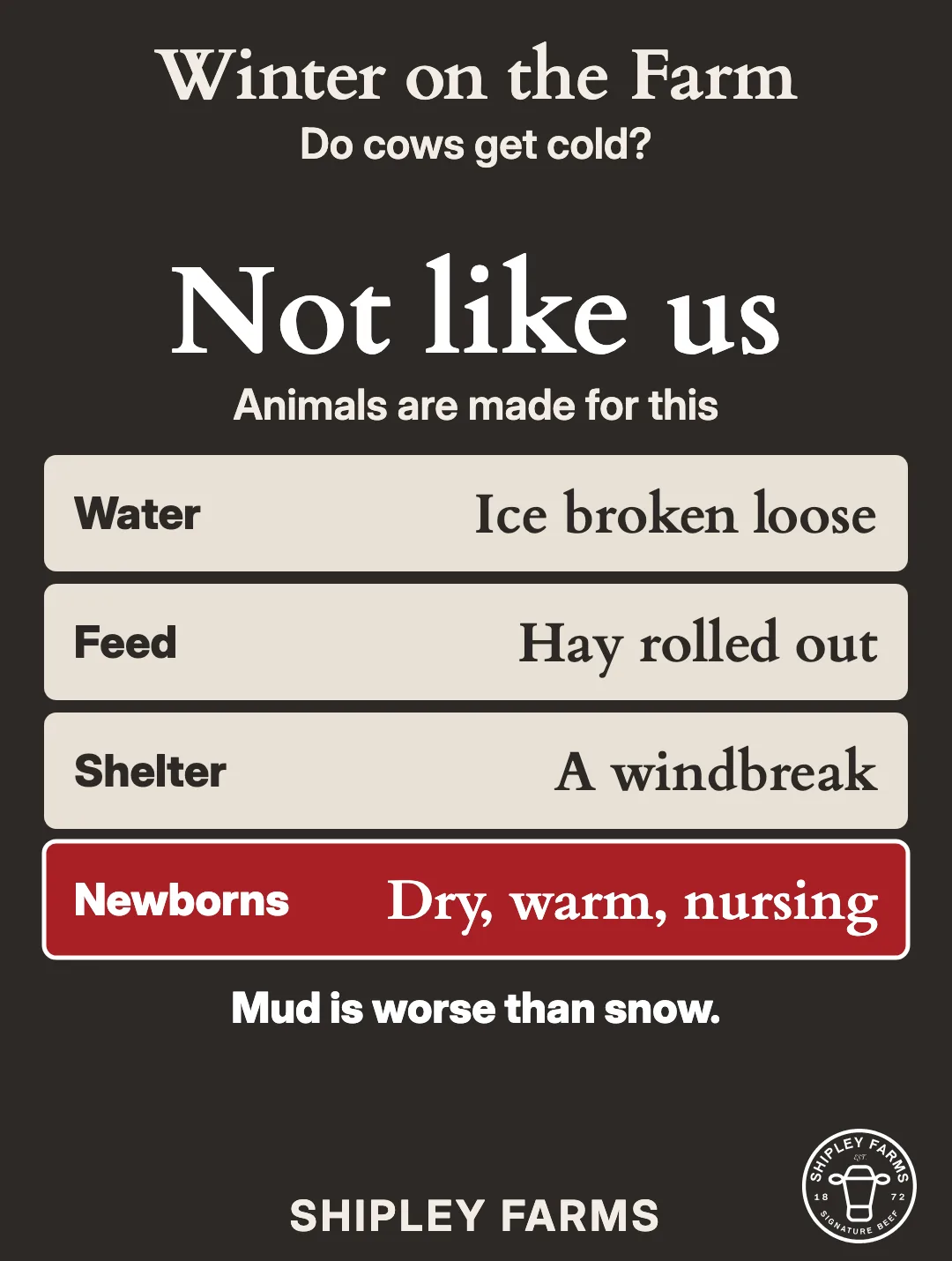
Animals are made for this, he says. On the coldest day of last year he looked out the window at little calves with hardly any fat on them, running and bouncing around in the wind as if nothing was wrong.
Do cows get cold in winter?
Not the way we do. What cattle need in winter is simple:
- Water they can reach. The ice in the troughs is broken loose every cold morning.
- Plenty of hay. It is rolled out in the pasture so the whole herd has plenty to eat.
- A windbreak. They like somewhere out of the wind.
- Some rest for the pasture. The herd still moves in winter, less often, so the grass gets a break.
What a January morning asks of the people
The people have it harder. A winter morning starts with scraping the windshield, warming up the truck and clearing snow, then getting to the office and the farm store early to turn the heat up, so the crew working outside has somewhere to come in and get warm. Gray's dad leads the farm team that breaks the ice and puts out the hay.
The hardest job in the cold, Gray says, is the hay.
“Our tractor doesn't have a cab on it, so getting on the tractor to go put out hay is in the wind and the cold and the rain.”
Gray Shipley
Word for word, as recorded
Our tractor doesn't have a cab on it so getting on the tractor to go put out hay is in the wind and the cold and the rain.
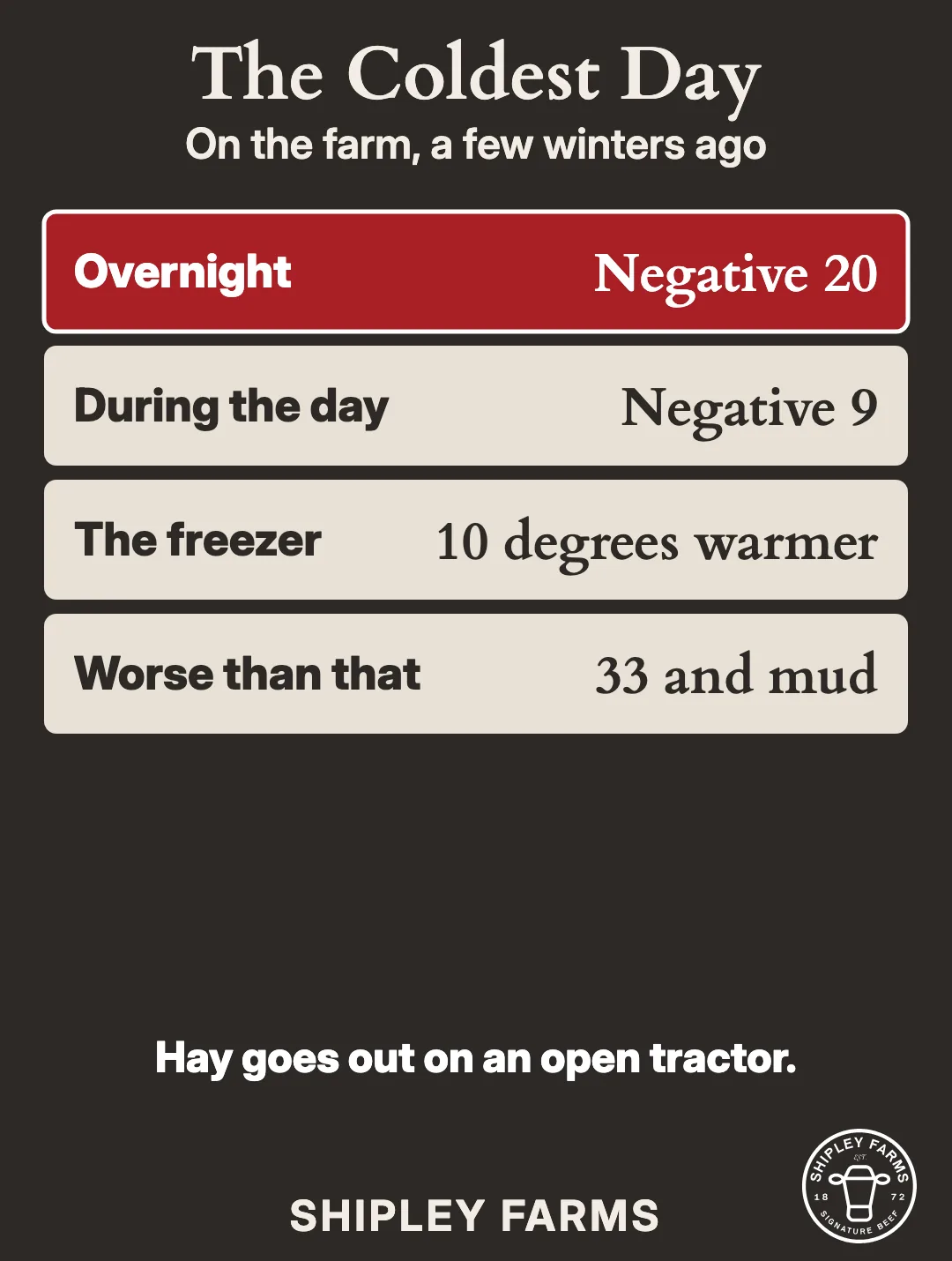
Worse than the cold, though, is the mud. He would take a zero degree day with frozen ground and snow over a 33 degree day of mud and rain.
The coldest day on the farm
Asked about the coldest he has ever been here, Gray did not have to think:
“Well, I remember one winter just a couple of years ago, and it got down to negative 20 overnight, and it was negative 9 during the day.”
Gray Shipley
Word for word, as recorded
Well i remember one winter just a couple of years ago and it got down to negative 20 overnight and it was negative 9 during the day.
He had been out checking on the animals, and when he came back down he had to go into the farm's freezer. It was ten degrees warmer in there than outside.
“It was so cold that I went in the freezer to warm up, and it actually felt nice in there, felt like a place that I can hang out for a minute.”
Gray Shipley
Word for word, as recorded
It was so cold that i went in the freezer to warm up and it actually felt nice in there felt like a place that i can hang out for a minute.
What a calf born in the cold needs
Most of the time, even in snow, the mother looks after her calf. But a cow likes to go off on her own to give birth, and now and then she picks a spot by a creek, where a newborn can slide down the bank into the water. So somebody keeps watch.
What the calf needs is simple:
“Really just getting them dry, getting them safe, and making sure that they're warm and nursing, and as long as they have that, they're good.”
Gray Shipley
Word for word, as recorded
Really just getting them dry getting them safe and making sure that they're warm and nursing and as long as they have that they're good.
Now and then a calf needs a little colostrum or some time in the barn to get its legs under it. Gray remembers one that had to be nursed back to health after it got too cold.
Why winter is worth it
And some mornings are simply beautiful. There are spots on this farm where you cannot see a single sign of anybody else.
“When a blanket of snow lays over the valley and, you know, it's still and nobody's stirring yet, it's a really really special scene.”
Gray Shipley
Word for word, as recorded
When a blanket of snow lays over the valley and you know it's still and nobody's stirring yet it's a really really special scene.
The farm has been in the Shipley family since 1872, through a great many winters. Shipley Farms Since 1872 tells the longer story, and Farm Christmas picks up in December.
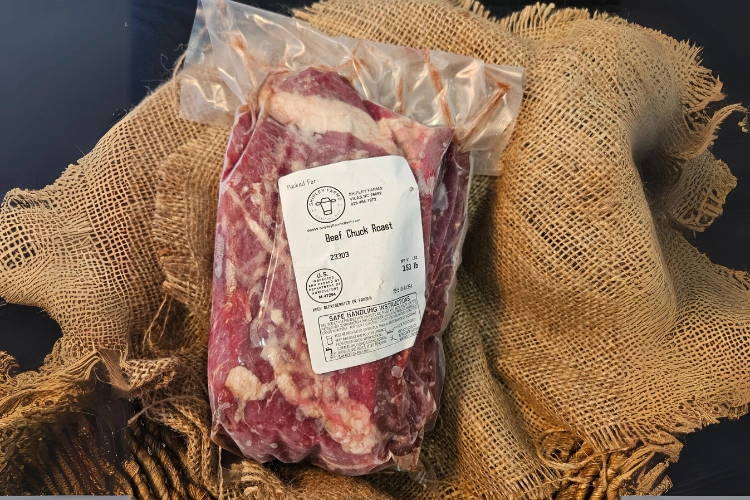
Dry-aged boneless chuck roast, made for a long, slow braise.
View Product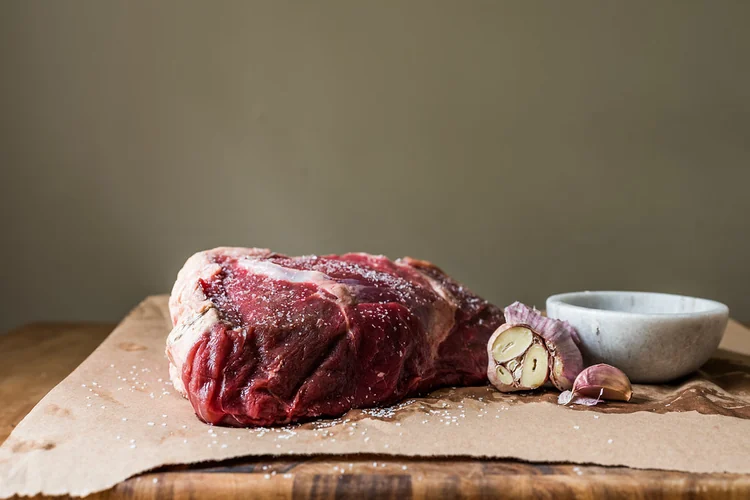
A roast feeds a table and asks very little of you once it is cooking.
View ProductWritten at Shipley Farms in Vilas, North Carolina: a family cattle farm raising and dry-aging beef in the Appalachian Mountains, now in its fifth generation. No shortcuts since 1872.
Every quote on this page is Gray Shipley talking, the man who runs this farm. He recorded these answers himself, at the farm, in the autumn of 2026. The play button under each quote is that recording, exactly as he said it, and the words under it are a word-for-word transcript. In the written quotes, hesitations are trimmed so they read on the page. Nothing else is added or reworded, except where Gray revised his own words in review.
Reviewed 9 November 2026.
Shipley Farms
Stories, recipes and news from Shipley Farms.