Beef Liver Pate Recipe
This beef liver pate recipe turns one pound of liver into about two cups of smooth, buttery spread for toast or crackers. A soak in milk mellows the liver's strong flavor; shallot, garlic, thyme and a splash of brandy round it out; and a generous amount of butter makes it silky. A thin layer of melted butter on top keeps it neat in the fridge.
Beef liver is bolder than the chicken liver in most pates, with a deeper flavor and a firmer, slightly grainy texture once it is cooked. This recipe is built around both: the milk takes the edge off the flavor, and plenty of butter and a fine sieve take care of the texture.
At a glance: makes about 2 cups, enough for 8 to 10 as a starter. Prep 20 minutes, soak 1 to 2 hours, cook 15 minutes, chill at least 4 hours.
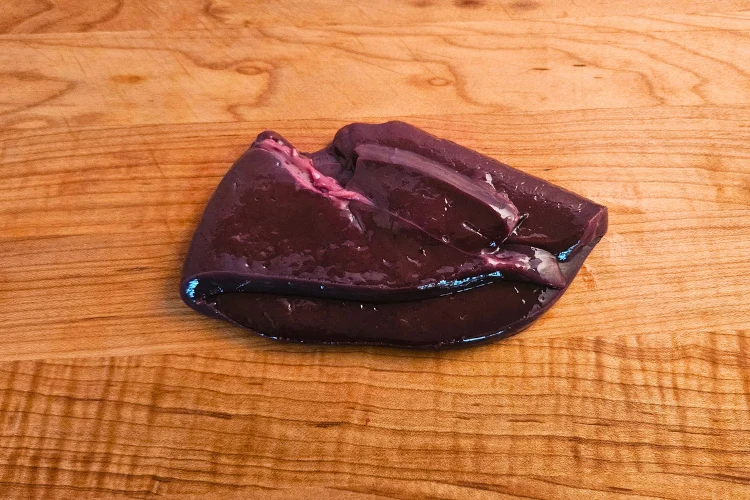
This recipe uses 1 pound of beef liver, which makes about 2 cups of pate.
Add 1 lb beef liver to cartView ProductCooking for a full freezer instead? See the 1/8 beef share subscription.
Gray Shipley, who runs the farm, was talking about donating meat to a cafe, not about cooking, and liver ended up as the punch line:
“farm cafe will just take whatever we take them. Like as long as we don't bring them a pallet of liver”
Gray Shipley
It is a joke, and a fair one. Nobody needs a pallet of liver. A single pound is another matter: it makes a crock of pate that disappears at a party, and it is the friendliest way to serve liver to people who think they do not like it.
Ingredients
- 1 pound beef liver
- 1 cup whole milk, for soaking
- 14 tablespoons (1 3/4 sticks) unsalted butter, divided
- 2 shallots, finely chopped (about 1/2 cup)
- 2 cloves garlic, minced
- 1 teaspoon fresh thyme leaves, or 1/2 teaspoon dried
- 1 teaspoon kosher salt, plus more to taste
- 1/2 teaspoon freshly ground black pepper
- 3 tablespoons brandy, or beef stock
- 1/8 teaspoon ground allspice or nutmeg (optional)
- 1 to 2 tablespoons heavy cream, if needed
- 1 baguette, sliced and toasted, or crackers, with cornichons, to serve
Instructions
- Trim the liver. Peel away the thin outer membrane with your fingers and a small knife, and cut out any large tubes or veins. Cut the liver into 1 1/2-inch pieces.
- Put the pieces in a bowl, cover them with the milk and refrigerate for 1 to 2 hours. Drain, discard the milk, and pat the liver very dry with paper towels.
- Cut 8 tablespoons of the butter into cubes and leave them out to soften. Melt 2 tablespoons of the butter in a large skillet over medium heat and cook the shallots for 3 to 4 minutes, until soft. Add the garlic and thyme and cook for 30 seconds.
- Turn the heat to medium-high and add the liver in a single layer. Season with the salt and pepper. Cook, turning the pieces, for 8 to 10 minutes, until browned outside with no pink left in the center and the thickest piece reads 160 degrees F.
- Take the pan off the heat, away from any flame, and add the brandy. Return it to the heat and let it bubble for about 30 seconds, scraping up the browned bits, until most of the liquid has gone. Let the mixture cool for 10 minutes.
- Scrape everything into a food processor or blender and blend until smooth. With the motor running, add the softened butter a few cubes at a time, then the allspice. Blend until silky, adding a little cream if it is too stiff to move. Taste and add salt.
- For the smoothest pate, press it through a fine sieve with a spatula. Spoon it into ramekins or a small dish, smooth the top and tap the dish on the counter to settle it.
- Melt the remaining 4 tablespoons butter and pour it over the pate in a thin layer to seal the top. Cover and refrigerate for at least 4 hours, until firm. Take it out 20 to 30 minutes before serving, and serve it with the toast or crackers and cornichons.
Why soak beef liver in milk?
A soak in milk mellows beef liver's strong, slightly bitter edge and draws out some of the blood, so the finished pate tastes cleaner and milder. One hour makes a noticeable difference; two is as far as it needs to go. If you like the full flavor of liver, you can skip it.
Why this recipe cooks the liver to 160 degrees F
Many pate recipes leave the liver pink in the middle. This one does not, for a specific reason. USDA FSIS does not list liver separately on its temperature chart. A whole slice of liver seared and served on its own is closest to a whole cut, with a minimum of 145 degrees F and a 3-minute rest. Pate is different because it is blended: whatever was on the outside of each piece ends up mixed through the whole batch, just as it does with ground meat. So this recipe follows the FSIS figure for ground meat, 160 degrees F, and cooks the liver until no pink remains.
Fully cooked liver is a little grainier than pink liver. That is what the butter and the sieve are for, and between them the pate still comes out smooth.
How to get a smooth pate
Three things matter. Blend the liver while it is still warm, so it breaks down completely. Add the butter slowly, so it blends in evenly instead of turning greasy. And if you want a truly silky result, push the pate through a fine sieve. It takes five minutes and catches the last bits of membrane and grain.
Beef liver pate recipes to try next
Once you have the method, it bends easily. Swap the brandy for port or Madeira for a sweeter note. Cook 2 slices of chopped bacon before the shallots and blend them in with the liver. Add 4 ounces of sliced mushrooms with the shallots for an earthier pate. Or stir a tablespoon of chopped capers or green peppercorns into the finished pate before you seal it.
Serving and storing
Serve pate cool but not cold, so it spreads. The butter seal keeps the surface from darkening in the fridge, and the pate is best eaten within a few days of making it. It can be frozen, though the texture loosens slightly as it thaws.
Food safety
USDA FSIS does not list organ meats separately on its chart. For a blended dish like pate, this recipe uses the FSIS figure for ground meat, 160 degrees F, checked with an instant-read thermometer in the thickest piece of liver before blending. Keep raw liver and its soaking milk away from food that will not be cooked, and refrigerate the finished pate promptly. See the FSIS Safe Minimum Internal Temperature Chart.
- Safe Minimum Internal Temperature Chart, USDA FSIS
Food-safety temperatures on this page are cited to USDA FSIS rather than to us.
Published by Shipley Farms. The quote on this page is Gray Shipley, who runs the farm, in his own words from a recorded interview, quoted exactly, or as he revised it in review.
On food safety we follow USDA FSIS, linked above.