Beef Tallow Tortillas
Beef tallow tortillas are soft flour tortillas made with rendered beef tallow in place of lard or shortening. Rub the tallow into flour, salt and baking powder, stir in hot water, knead briefly and let the dough rest for 30 minutes. Then roll each ball thin and cook it on a dry, hot skillet for about a minute, until it puffs and freckles with brown spots.
Tallow is beef fat that has been melted down, strained and left to set. Like lard, it is solid at room temperature, and that is what a flour tortilla needs: solid fat rubbed into the flour keeps the dough tender and the tortillas soft and easy to fold. It also gives them a faint, savory note that suits carne asada, fajitas and breakfast tacos.
At a glance: makes 12 tortillas, 8 inches across. Prep 15 minutes, rest 30 minutes, cook about 25 minutes.
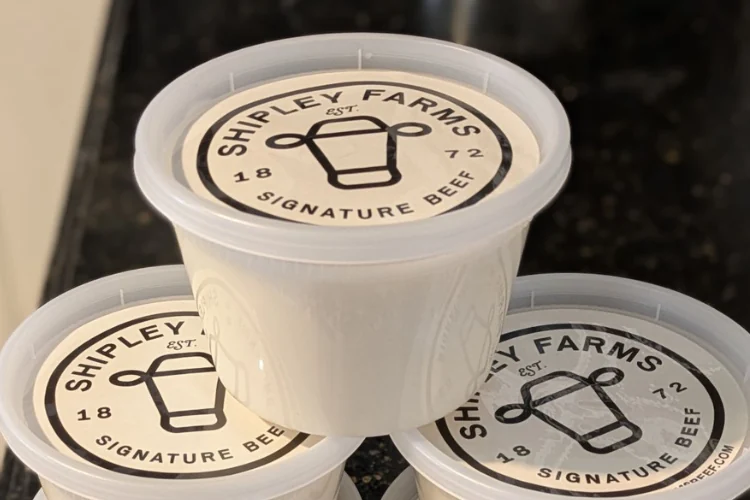
This recipe uses about 1/3 cup of tallow. A pound is a little over 2 cups, so there is plenty left for frying and roasting.
Add 1 lb rendered beef tallow to cartView ProductCooking for a full freezer instead? See the 1/8 beef share subscription.
Gray Shipley, who runs the farm, was asked for his tallow tips. He finished his answer with this one:
“Use it instead of vegetable oil every chance you get.”
Gray Shipley
Flour tortillas are usually made with lard or shortening rather than oil, so this recipe stretches his point a little. The idea carries over, though: where a recipe calls for a cooking fat, tallow can often take its place, and a flour tortilla is one of the places it does the job well.
Ingredients
- 3 cups (about 375 grams) all-purpose flour, plus more for rolling
- 1 1/2 teaspoons kosher salt
- 1 teaspoon baking powder
- 1/3 cup (about 70 grams) rendered beef tallow, at room temperature
- 1 cup hot water, as hot as the tap runs
Instructions
- Whisk the flour, salt and baking powder together in a large bowl.
- Add the tallow in small pieces and rub it into the flour with your fingertips for 3 to 4 minutes, until no lumps bigger than a small pea remain and the mixture looks like coarse, damp sand. Tallow is firmer than lard, so take your time over this.
- Pour in the hot water and stir with a fork until a shaggy dough forms. Turn it out onto the counter and knead for 2 to 3 minutes, until smooth, soft and only slightly tacky. If it sticks to your hands, add flour a tablespoon at a time; if it feels dry and cracks, add water a teaspoon at a time.
- Divide the dough into 12 equal pieces, about 2 ounces each, and roll each into a smooth ball. Set them on a plate, cover with a kitchen towel or plastic wrap, and let them rest for 30 minutes, or up to 2 hours.
- Heat a cast-iron skillet, griddle or comal over medium-high heat for 3 to 4 minutes. Do not add any oil.
- On a lightly floured counter, flatten one ball and roll it into a thin round about 8 inches across, giving it a quarter turn after every pass or two so it stays round.
- Lay the tortilla in the hot skillet and cook for 30 to 45 seconds, until bubbles rise and the underside has light brown spots. Flip it and cook for about 30 seconds more, until the second side is spotted and the tortilla puffs. If the spots turn black before it puffs, lower the heat a little.
- Stack each cooked tortilla in a clean kitchen towel and keep the stack wrapped; the trapped steam keeps them soft. Roll the next tortilla while one cooks. Serve warm.
Add 1 lb rendered beef tallow to cart
Why tallow works in flour tortillas
A flour tortilla is a simple dough, and the fat does most of the work. Rubbed into the flour before the water goes in, it coats the flour and keeps the dough from turning tough and elastic, so the tortillas stay soft and tear cleanly when you bite them. Any fat that is solid at room temperature does this. Tallow behaves much like lard here, with a slightly firmer texture and a mild beef flavor that fades into the background once the tortilla is filled. The guides below explain what tallow is and how it is rendered, if you are new to it.
Swapping tallow for lard or shortening
Use the same amount. Any flour tortilla recipe that calls for lard or vegetable shortening will work with rendered beef tallow measured cup for cup. Some cooks prefer to melt the fat and stir it into the hot water instead of rubbing it in. That works with tallow too, and is quicker, though the tortillas come out a little less flaky.
Rolling them thin and round
The rest is what makes rolling easy. Straight after kneading, the dough springs back; after 30 minutes it stays where you put it. Use only enough flour to stop sticking, roll from the center outward, and turn the dough rather than your rolling pin. A rolling pin works better than a tortilla press for flour dough, which tends to shrink back after pressing. Do not worry about perfect circles; they taste the same.
Keeping and reheating
Once cooled, keep the tortillas in a zip-top bag. They stay soft for a day at room temperature and for a few days in the refrigerator. To freeze them, stack them with parchment between and seal the bag. Warm them for 15 to 20 seconds per side in a dry skillet, or wrap a stack in foil and heat it in a 300-degree oven for about 10 minutes.
What to cook with the rest of the tallow
The recipe uses about a sixth of a pound, and the rest goes a long way. Roast potatoes in it at a high heat, sear steaks with it, fry eggs in it, or use it for shallow-frying chicken or homemade fries. A spoonful is also good in a pot of refried beans. The tallow cooking guide below has more ideas, including frying.
Food safety
Keep the tallow covered, in a cool, dark place or the refrigerator, and use a clean spoon each time you take some out. Cook the tortillas until there are no raw, doughy patches. For fillings, USDA FSIS lists 145 degrees F with a rest of at least 3 minutes for beef steaks and roasts, and 160 degrees F for ground beef. See the FSIS Safe Minimum Internal Temperature Chart.
- Safe Minimum Internal Temperature Chart, USDA FSIS
Food-safety temperatures on this page are cited to USDA FSIS rather than to us.
Published by Shipley Farms. The quote on this page is Gray Shipley, who runs the farm, in his own words from a recorded interview, quoted exactly, or as he revised it in review.
On food safety we follow USDA FSIS, linked above.