Brisket Chili
Brisket chili uses cubes of beef brisket in place of ground beef. The brisket is browned, then simmered with toasted dried chiles, onion, garlic, cumin and tomatoes for about three hours, until each piece breaks apart under a spoon. The result is thick, deep red and full of tender, beefy chunks.
Brisket suits chili because it is made for long cooking. It is a hard-working cut from the chest, full of connective tissue that is tough when cooked quickly and turns soft and rich when it simmers slowly. This recipe uses the flat, the leaner half of a whole brisket.
At a glance: serves 8. Prep 30 minutes, cook 3 1/2 to 4 hours, most of it hands-off.
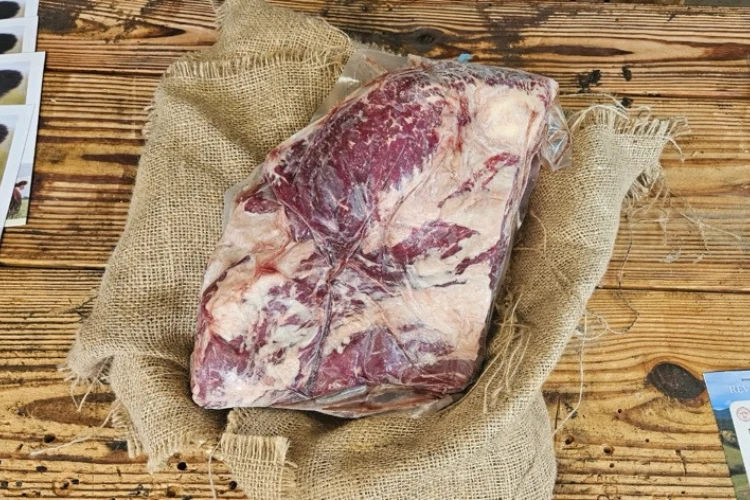
This recipe uses about 3 pounds of the flat from 1 whole brisket. Freeze the rest for another day, or smoke it.
Add 1 whole brisket to cartView ProductCooking for a full freezer instead? See the 1/8 beef share subscription.
Asked about a beef meal he never gets tired of, Gray Shipley, who runs the farm, answered with brisket:
“Love a good, well-done brisket. Not well done, but done well.”
Gray Shipley
The line is a play on words, and it fits a pot of chili as well as anything. Brisket has to be done well: cooked low and slow until it is tender, not just until it is hot. In a pot on the stove, that takes about three hours.
Ingredients
- 3 pounds brisket flat, trimmed of thick fat and cut into 1-inch cubes
- 2 1/2 teaspoons kosher salt, plus more to taste
- 4 dried ancho chiles, stemmed and seeded
- 3 dried guajillo chiles, stemmed and seeded
- 2 cups beef stock, heated until steaming, plus 1 to 2 cups more as needed
- 1 to 2 chipotle chiles in adobo, chopped (optional, for heat)
- 2 tablespoons neutral oil or beef tallow
- 1 large yellow onion, diced
- 6 cloves garlic, minced
- 2 tablespoons tomato paste
- 1 tablespoon ground cumin
- 2 teaspoons dried oregano
- 1 can (15 ounces) crushed tomatoes
- 2 cans (15 ounces each) pinto or kidney beans, drained and rinsed (optional)
- 2 tablespoons masa harina stirred into 1/4 cup water (optional, to thicken)
- 1 tablespoon cider vinegar or fresh lime juice
- Sour cream, shredded cheddar, sliced scallions and chopped cilantro, to serve
Instructions
- Toast the ancho and guajillo chiles in a dry skillet over medium heat, pressing them flat with a spatula, for 20 to 30 seconds per side, until they smell toasty and soften. Do not let them blacken, or the chili will taste bitter. Put them in a heatproof bowl, pour the 2 cups of hot stock over them, and soak for 20 minutes.
- Meanwhile, toss the brisket cubes with the salt. Heat the oil in a 6- to 7-quart Dutch oven over medium-high heat. Brown the beef in three batches, without crowding, for 6 to 8 minutes per batch, turning until two or three sides are well browned. Move each batch to a bowl.
- Lower the heat to medium. Add the onion to the pot and cook, stirring and scraping up the browned bits, for 6 to 8 minutes, until soft and golden. Stir in the garlic, tomato paste, cumin and oregano and cook for 1 to 2 minutes, until the tomato paste darkens.
- Blend the soaked chiles and their stock with the chipotle, if using, until completely smooth.
- Pour the chile puree and the crushed tomatoes into the pot, add the beef and any juices from the bowl, and stir in 1 cup more stock. Bring to a simmer, scraping the bottom of the pot.
- Cover with the lid slightly ajar and keep at a bare simmer over low heat for 2 1/2 to 3 hours, stirring every 30 minutes and adding a splash of stock if it gets too thick, until a cube of beef breaks apart easily with a spoon.
- Skim off any fat pooled on the surface. Add the beans, if using, and simmer for 20 minutes more. For a thicker chili, stir in the masa mixture and simmer for 10 minutes, stirring often so it does not catch.
- Stir in the vinegar or lime juice, taste, and add more salt if needed. Serve hot, with the toppings on the side.
Chili with beef brisket: flat, point or leftovers
A whole brisket has two parts. The flat is long and fairly lean, and it cubes neatly. The point is thicker and fattier, with more marbling; it makes a richer chili, but you will skim more fat off the top. Either works, or use some of each. Trim off the thick, hard fat before cubing, but leave the thinner seams in place, because they melt into the pot.
Leftover smoked brisket makes a very good chili too, and a quicker one. Skip the browning step, cut the brisket into cubes, and add it along with the chile puree. Since it is already tender, it needs only 45 minutes to an hour of simmering to take on the flavor of the pot.
How long to simmer brisket chili
Plan on about three hours once the pot comes to a simmer. Start checking at 2 1/2 hours: lift out a cube and press it with a spoon. If it resists or feels rubbery, keep going. The beef passes 145 degrees F long before it is tender, so tenderness is the test that matters here. You can also cook the chili covered in a 300-degree oven for the same time, which keeps the bottom from catching.
Beans or no beans
Texas-style chili leaves the beans out, and with this much beef the pot needs nothing else. Beans stretch it to feed more people and soak up the sauce. Add them near the end so they hold their shape.
Making it ahead
Like most braises, brisket chili tastes even better the next day. Cool it, refrigerate it promptly, and lift off the fat that sets on top before you reheat it. It freezes well in airtight containers, so a big pot can cover two or three dinners.
Food safety
USDA FSIS lists 145 degrees F, with a rest of at least 3 minutes, as the safe minimum for whole cuts of beef. A long braise like this one passes that figure long before the brisket is tender, but check with a thermometer all the same. Refrigerate leftovers promptly, and reheat them to 165 degrees F, the FSIS figure for leftovers. See the FSIS Safe Minimum Internal Temperature Chart.
- Safe Minimum Internal Temperature Chart, USDA FSIS
Food-safety temperatures on this page are cited to USDA FSIS rather than to us.
Published by Shipley Farms. The quote on this page is Gray Shipley, who runs the farm, in his own words from a recorded interview, quoted exactly, or as he revised it in review.
On food safety we follow USDA FSIS, linked above.