Brisket Stuffed Peppers
Brisket stuffed peppers are one of the best uses for leftover brisket. Chop about 2 cups of it, smoked or braised, and mix it with rice, black beans, corn, tomatoes and a little barbecue sauce. Pack that into bell pepper halves, cover them with cheese, and bake at 375 degrees until the peppers are tender and the filling is hot all the way through.
This recipe starts with brisket that is already cooked, and the cart below buys a whole brisket, which is a big cut that feeds a crowd before it ever becomes leftovers. If yours is still raw, the note after the recipe explains how to cook it first. The job here is to heat the brisket without drying it out: the tomatoes and beans keep the filling moist, foil holds in the steam, and the cheese goes on at the end.
At a glance: serves 4 (8 pepper halves). Prep 20 minutes, cook about 50 minutes, rest 5 minutes, total about 1 1/4 hours, with the brisket already cooked.
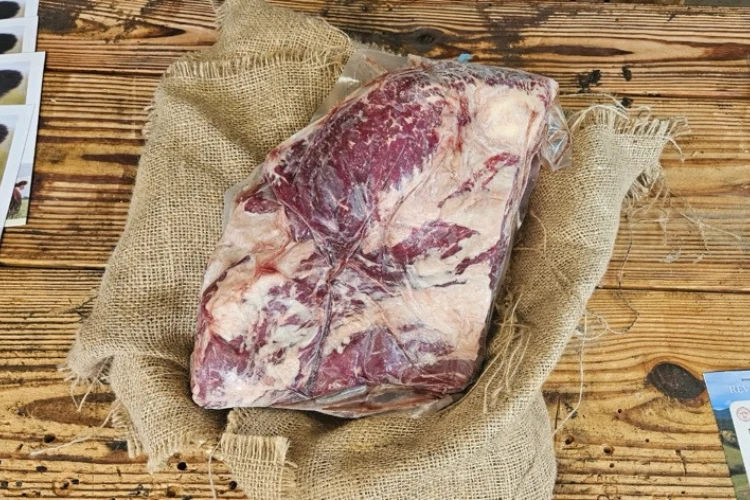
This recipe uses about 2 cups of chopped cooked brisket. A whole brisket, smoked or braised first, gives you that many times over.
Add 1 whole brisket to cartView ProductCooking for a full freezer instead? See the 1/8 beef share subscription.
Asked which beef meal he never gets tired of, Gray Shipley, who runs the farm, said:
“Love a good, well-done brisket. Not well done, but done well.”
Gray Shipley
Leftovers are only as good as the brisket they came from, so the first step is a brisket done well: cooked slowly until its connective tissue has softened, not just until it is safe to eat. After that, this recipe's job is simply not to undo the work, which is why the peppers bake under foil and the filling stays moist.
Ingredients
- 4 large bell peppers, red, yellow or orange
- 1/2 cup water
- 1 tablespoon olive oil
- 1 small yellow onion, diced
- 2 cloves garlic, minced
- 1 teaspoon ground cumin
- 1 teaspoon chili powder
- 2 cups chopped cooked brisket (about 12 ounces)
- 1 cup cooked rice
- 1 can (15 ounces) black beans, drained and rinsed
- 1/2 cup corn kernels, thawed if frozen
- 1 can (14.5 ounces) fire-roasted diced tomatoes, drained
- 1/4 cup barbecue sauce, plus more to serve
- 1 1/2 cups shredded cheddar or Monterey Jack, divided
- Kosher salt, to taste
- Chopped cilantro and sour cream, to serve
Instructions
- Heat the oven to 375 degrees. Cut the peppers in half lengthwise through the stem and scrape out the seeds and ribs. Set them cut side up in a 9-by-13-inch baking dish, pour the water into the dish around them, cover with foil, and bake for 15 minutes to soften.
- Meanwhile, heat the oil in a large skillet over medium heat. Cook the onion until soft, about 5 minutes, then stir in the garlic, cumin and chili powder for 30 seconds.
- Take the skillet off the heat. Stir in the brisket, rice, black beans, corn, tomatoes, barbecue sauce and 1/2 cup of the cheese. Taste, and add salt only if it needs it; brisket is often well seasoned already.
- Take the peppers out of the oven. Spoon the filling into them, pressing it in and mounding it on top. If any filling is left over, bake it alongside in a small greased dish.
- Cover the dish with foil again and bake for 20 minutes.
- Uncover, sprinkle the remaining 1 cup of cheese over the peppers, and bake for 10 to 15 minutes more, until the cheese is melted and browned in spots and a thermometer in the center of the filling reads 165 degrees F.
- Let the peppers rest for 5 minutes, then serve with cilantro, sour cream and more barbecue sauce.
No leftovers yet? Cook the brisket first
A whole brisket has two parts: the lean, even flat and the fattier, thicker point. Both need long, slow cooking before they turn tender. To smoke it, cook it at 225 to 250 degrees and plan on a long day, often 1 to 1 1/2 hours per pound, until a probe slides in with almost no resistance, usually around 200 to 205 degrees F. Expect the temperature to stall for a few hours partway through; the guides below explain both the cook and the stall.
Without a smoker, braise it. Cut the flat from the point, season it, and cook it covered at 300 degrees with sliced onions and a cup of beef stock for 3 1/2 to 4 1/2 hours, until fork-tender. Either way, serve it fresh first, then chill what is left quickly in shallow containers and refrigerate it promptly.
Which part of the brisket to use
The point is fattier and juicier, and it makes the richest filling. The flat is leaner; chop it a little finer and add an extra spoonful of barbecue sauce so it does not dry out. Bark, the dark crust from the smoker, is welcome in the mix, and burnt ends are even better. If you are still deciding between brisket and chuck roast for a slow cook, the comparison below sets out the differences.
Halves or whole peppers
Halved peppers bake faster and more evenly, sit flat in the dish, and give everyone more cheese per bite. For whole, upright peppers, cut off the tops, scoop out the seeds, and trim a thin slice off the bottoms so they stand up. Fill them the same way and add about 10 minutes to the covered bake. Four whole peppers will not hold all the filling, so bake the extra in a small dish alongside.
Making them ahead, and leftovers
You can fill the peppers up to a day ahead, cover the dish and refrigerate it. Bake straight from the fridge, adding about 10 minutes to the covered time, and check that the center reaches 165 degrees F before the cheese goes on. Leftover stuffed peppers reheat well, covered, in a 350-degree oven for 20 to 25 minutes, or in the microwave, until hot through.
Food safety
USDA FSIS lists 145 degrees F, followed by a rest of at least 3 minutes, as the safe minimum internal temperature for whole cuts of beef such as brisket, and a slow-cooked brisket passes it long before it is tender. Leftovers and casseroles, including these peppers, should be reheated to 165 degrees F. Check the center of the filling with an instant-read thermometer. See the FSIS Safe Minimum Internal Temperature Chart.
- Safe Minimum Internal Temperature Chart, USDA FSIS
Food-safety temperatures on this page are cited to USDA FSIS rather than to us.
Published by Shipley Farms. The quote on this page is Gray Shipley, who runs the farm, in his own words from a recorded interview, quoted exactly, or as he revised it in review.
On food safety we follow USDA FSIS, linked above.