How to Cook Fatback on the Stove
Here is how to cook fatback on the stove the Southern way: slice it about 1/4 inch thick, soak it first if it is salted, dredge the slices in seasoned flour, and fry them slowly in a heavy skillet over medium-low heat, turning often, until they are golden and crisp and much of the fat has melted into the pan. Each batch takes 10 to 15 minutes, and you finish with crisp strips for the plate and a skillet of clear pork fat for the rest of the week's cooking.
Fatback is the thick layer of hard fat that runs along a pig's back, just under the skin. It has little or no lean meat in it, which sets it apart from bacon and salt pork; both usually come from the belly and carry streaks of meat. Fatback can be sold fresh or salted, and the two cook a little differently, so check your label before you start.
At a glance: serves 4 as a side. Prep 10 minutes, plus 30 minutes to an hour of soaking if your fatback is salted. Fry 20 to 30 minutes in two batches.
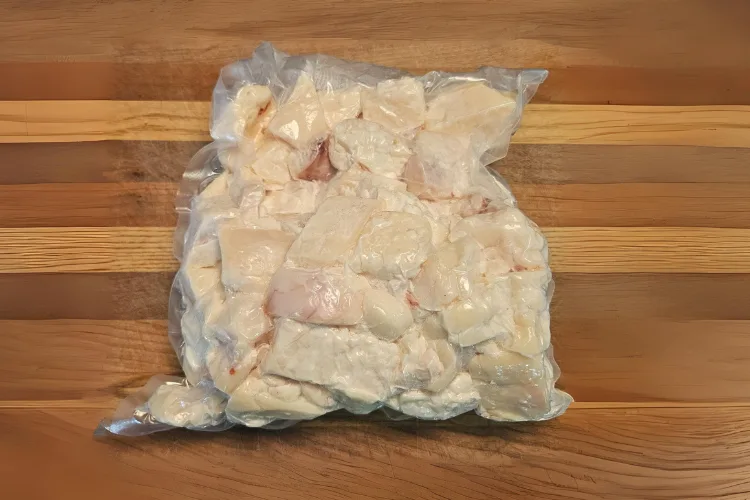
This recipe uses 1 lb pork fatback, enough for four as a side.
Add 1 lb pork fatback to cartView ProductWant beef in the freezer too? See the 1/8 beef share subscription.
Talking about frying, Gray Shipley, who runs the farm, did not leave much room for argument:
“It may be lard, but if it's not lard, it, it, it has to be tallow.”
Gray Shipley
Lard is rendered pork fat, and frying fatback makes some whether you mean to or not. By the time the slices are crisp, the skillet holds a good pool of it. Strain it into a jar and keep it in the refrigerator for frying eggs, cooking greens or making the next round of biscuits.
Ingredients
- 1 pound pork fatback
- 4 cups cold water, for soaking (salted fatback only)
- 1/2 cup all-purpose flour
- 1/2 teaspoon freshly ground black pepper
- 1/2 teaspoon kosher salt (fresh fatback only)
- 1 tablespoon lard or bacon fat, to start the pan
- Hot sauce, a few dashes, to serve (optional)
Instructions
- If the fatback still has its skin, cut it away with a sharp knife. If the fat is soft, 20 minutes in the freezer makes it much easier to slice. Cut it into slices about 1/4 inch thick, then make a few shallow nicks along the edges of each slice so it lies flat as it fries.
- If your fatback is salted, soak the slices in the cold water for 30 minutes to 1 hour, changing the water once, to draw out some of the salt. Fresh fatback needs no soak.
- Pat every slice completely dry with paper towels. Water left on the surface will spatter in the hot fat.
- Mix the flour, pepper and, for fresh fatback only, the salt in a shallow dish. Dredge each slice and shake off the excess.
- Set a heavy skillet, cast iron if you have it, over medium-low heat and melt the tablespoon of lard. Lay in half the slices in a single layer without crowding.
- Fry slowly, turning every 2 to 3 minutes, until the slices are golden brown and crisp all over and have shrunk as their fat melts out, 10 to 15 minutes. If they brown too fast, turn the heat down; the slow pace is what makes them crisp all the way through instead of chewy in the middle.
- Drain on paper towels and repeat with the remaining slices. Taste one and sprinkle with salt only if it needs it. Serve hot, with hot sauce if you like.
- Let the fat in the skillet cool until warm, then pour it through a fine strainer into a clean, dry jar. Cover and refrigerate it for cooking.
What is fatback in cooking?
In Southern kitchens, fatback is less a dish than a seasoning. A piece of it simmered with collards, turnip greens, field peas or pinto beans gives the pot its savory depth, and its rendered fat fries eggs, potatoes and cornbread. Fried crisp, as here, it is served with biscuits, grits or greens. Cooks also grind it into sausage to add richness to lean meat, and render it into lard. Using fat this way is part of cooking with more of the animal; Nose-to-Tail Beef in the reading list below covers the beef side of that idea.
Fresh or salted fatback?
Fresh fatback is raw, unsalted fat, and it tastes mild and porky. Salted fatback has been packed in salt, and it can be very salty indeed. Soaking pulls out some of that salt before frying. For greens and beans, you can skip the soak and simply leave the salt out of the pot until the end, then taste. If you are not sure which you have, fry one thin sliver and taste it before you season anything.
How to cook fatback in the oven
The oven takes less attention and makes less mess. Heat it to 400 degrees, set a wire rack in a rimmed baking sheet, and lay the slices on it in a single layer, without the flour. Bake for 20 to 30 minutes, turning them halfway, until golden and crisp. They will be a little less crunchy than fried slices, and the fat that drips into the pan is just as useful; pour it off and strain it the same way.
How to cook fatback for greens and beans
For a pot of greens or beans, use a 3- to 4-ounce piece rather than slices. Score it, then cook it in the empty pot over medium-low heat for 5 to 10 minutes, until it gives up a few tablespoons of fat. Cook your onion in that fat, then add the greens or beans and their liquid, with the piece of fatback left in to simmer. Fish it out at the end, or chop it and stir it back in. If the fatback was salted, taste before you add any more salt. For the tallow half of what Gray said, see the two tallow guides in the reading list below.
Food safety, and hot fat
The USDA FSIS chart does not list fatback by name. Its figure for fresh pork steaks, chops and roasts is 145 degrees F, followed by a rest of at least 3 minutes, and fatback fried until crisp and golden is far past that. The bigger hazard here is the fat itself. Dry the slices well, keep a lid nearby, never leave the skillet unattended, and never pour water on a grease fire. Let the fat cool before you strain it, and refrigerate it and any leftovers promptly. See the FSIS Safe Minimum Internal Temperature Chart.
- Safe Minimum Internal Temperature Chart, USDA FSIS
Food-safety temperatures on this page are cited to USDA FSIS rather than to us.
Published by Shipley Farms. The quote on this page is Gray Shipley, who runs the farm, in his own words from a recorded interview, quoted exactly, or as he revised it in review.
On food safety we follow USDA FSIS, linked above.