Temperature to Render Pork Fat: Lard From Fatback
The right temperature to render pork fat is low: an oven at 225 to 250 degrees, or the lowest setting on your stove, where the fat bubbles gently and never browns. At that heat, diced fatback slowly melts into a clear, golden liquid over 3 to 5 hours, leaving crisp cracklings behind. Go hotter and it renders faster, but the lard darkens and picks up a roasted flavor you may not want in a pie crust.
Fatback is the hard fat from along a pig's back. It is almost all fat, which makes it the easiest cut to render at home. Leaf lard, from the fat around the kidneys, is softer and milder still and is the one bakers prize, but lard rendered carefully from fatback is clean enough for frying, roasting and most baking.
At a glance: makes about 4 cups of lard from 3 pounds of fatback. Prep 30 minutes, render 3 to 5 hours, strain 10 minutes, then cool until set.
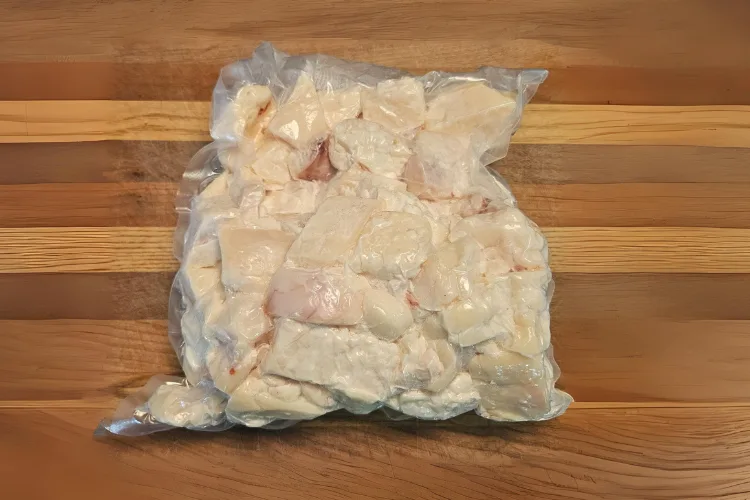
This recipe uses 3 lb pork fatback, which renders down to roughly 4 cups of lard.
Add 3 lb pork fatback to cartView ProductWant beef in the freezer too? See the 1/8 beef share subscription.
Talking about frying, Gray Shipley, who runs the farm, said:
“It may be lard, but if it's not lard, it, it, it has to be tallow.”
Gray Shipley
He was talking about what to fry in, not how to make it. This page is the how. Once you have a jar of lard you rendered yourself, frying the way he describes is the easy part.
Ingredients
- 3 pounds pork fatback
- 1/2 cup water
- 1/2 teaspoon kosher salt, for the cracklings
Instructions
- Trim off any skin and any bits of meat. Meat browns as it renders and can give the lard a stronger flavor.
- Cut the fat into 1/2-inch cubes, or pulse it in batches in a food processor until it looks like coarse crumbs. Smaller pieces render faster and more completely. Fat that has spent 30 minutes in the freezer is much easier to cut.
- Heat the oven to 250 degrees. Put the fat and the water in a large Dutch oven or other heavy pot. The water keeps the fat from scorching before it starts to melt, and it cooks off as you go.
- Set the pot in the oven, uncovered, or over the lowest heat on the stove. Cook, stirring every 30 to 45 minutes, until the fat has melted into a clear liquid and the pieces left behind are light golden, shrunken and sinking to the bottom, 3 to 5 hours. When the water is gone, the bubbling slows to almost nothing. If anything starts to brown early, lower the heat.
- Line a fine-mesh strainer with two layers of cheesecloth and set it over a large heatproof bowl or measuring cup. Carefully ladle the hot fat through it, then lift out the strainer of cracklings.
- Let the lard cool for 10 to 15 minutes, until warm rather than hot, then pour it into clean, completely dry glass jars.
- Spread the cracklings on paper towels and sprinkle them with the salt. For extra crunch, fry them in a dry skillet over medium heat for a few minutes.
- Leave the jars uncovered at room temperature until the lard turns opaque and creamy white, then cap them and refrigerate.
What temp does pork fat render?
Pork fat starts to soften and melt at temperatures well below boiling, which is why it turns liquid in a pan long before anything browns. Rendering is slower than melting, though. The fat sits inside a mesh of connective tissue and has to cook out of it, and that takes steady, gentle heat for hours.
For clean, mild lard, keep the fat itself under about 250 degrees F. An oven set to 225 to 250 degrees does that almost by itself. On the stove, use the lowest heat that keeps a slow, lazy bubble going. If you hear sizzling and frying, see pieces browning in the first hour, or smell anything toasty, the heat is too high.
Pork fat rendering temperature: oven or stove?
Both work at the same low heat. The oven is steadier and needs only a stir every half hour or so, which makes it the better choice for a big batch like this one. The stove is quicker to check on and suits a smaller batch, but it heats from the bottom, so stir more often and keep the burner as low as it goes. If your stove's lowest setting still makes the fat sizzle, use the oven.
How to store lard
Strained well and kept covered, lard keeps for several months in the refrigerator and longer in the freezer. Water and stray bits of crackling are what shorten its life, so strain it carefully and use dry jars and dry spoons. Lard that smells sharp or stale has gone off; throw it away.
Temperature to render beef fat
Beef fat renders the same way, at the same low temperature: 225 to 250 degrees, a little water to start, and a few hours of patience. The result is tallow, which sets firmer than lard and has a beefier flavor. Suet, the hard fat from around the kidneys, gives the cleanest tallow. For the full method and how to keep it, see How Is Beef Tallow Made, and How to Store It in the reading list below, and for cooking with it, the frying guide beside it.
Using your lard
Use it anywhere you would use butter or oil for cooking: frying chicken or potatoes, browning a roast, making biscuits or a pie crust, or greasing a cast-iron skillet. Lard rendered at low heat tastes mild, so it does not take over a dish. Save a darker batch, or the last bit from the bottom of the pot, for savory frying.
Food safety, and hot fat
The USDA FSIS chart does not list fat on its own. Its figure for fresh pork steaks, chops and roasts is 145 degrees F with a rest of at least 3 minutes, and fat held at 225 to 250 degrees for hours goes far beyond that. The real hazards are burns and spatter. Hot fat holds its heat for a long time, so handle the pot with dry oven mitts, ladle rather than pour when you can, and never let water drip into hot fat, which makes it spit. Refrigerate the lard and the cracklings once they have cooled. See the FSIS Safe Minimum Internal Temperature Chart.
- Safe Minimum Internal Temperature Chart, USDA FSIS
Food-safety temperatures on this page are cited to USDA FSIS rather than to us.
Published by Shipley Farms. The quote on this page is Gray Shipley, who runs the farm, in his own words from a recorded interview, quoted exactly, or as he revised it in review.
On food safety we follow USDA FSIS, linked above.