Onion-Braised Brisket in the Oven
Onion braised brisket is one of the easiest big dinners you can make, and one of the most forgiving. You sear a brisket flat, lay it on a deep bed of sliced onions with a little stock, tomato paste, brown sugar and vinegar, cover it tightly, and leave it in the oven at 300 degrees for about four hours. The onions melt into a sweet, savory sauce while the brisket turns tender enough to cut with a fork.
The best part comes the next day. Chilled in its juices, the brisket firms up enough to slice cleanly, the fat sets on top where you can lift it off, and the flavor settles. Slice it cold, lay the slices back in the onions and reheat. That is why so many families make it a day ahead for a holiday table.
At a glance: serves 8. Prep 30 minutes, cook about 5 1/2 hours including reheating, chill at least 4 hours or overnight.
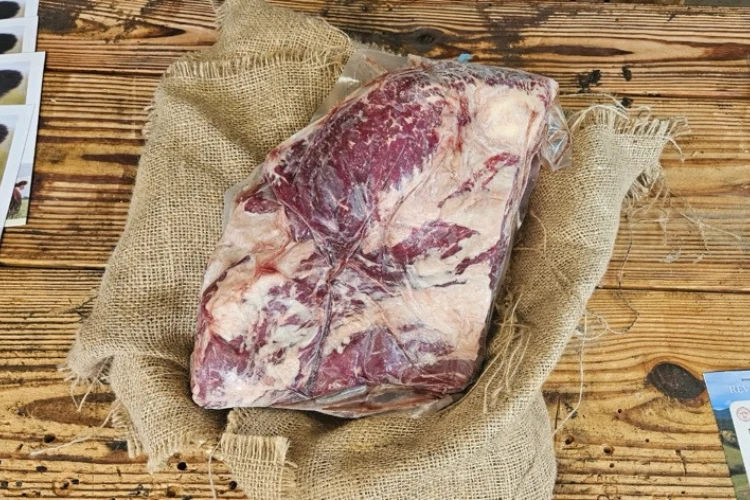
This recipe uses the flat from 1 whole brisket. Freeze the point for another day, or smoke it.
Add 1 whole brisket to cartView ProductCooking for a full freezer instead? See the 1/8 beef share subscription.
Gray Shipley, who runs the farm, has a line about brisket that works as the rule for this recipe:
“Love a good, well-done brisket. Not well done, but done well.”
Gray Shipley
A brisket flat is a hard-working muscle laced with connective tissue. It is safe to eat long before it is good to eat. It is done well when that tissue has softened into the meat and a fork slides in with almost no push, and in a low oven on a bed of onions, that takes time rather than heat.
Ingredients
- 1 brisket flat, 4 to 5 pounds, cut from a whole brisket (see the first step)
- 1 tablespoon kosher salt
- 1 1/2 teaspoons freshly ground black pepper
- 2 tablespoons olive oil or beef tallow
- 4 large yellow onions (about 3 pounds), halved and thinly sliced
- 6 cloves garlic, smashed
- 3 tablespoons tomato paste
- 2 tablespoons brown sugar
- 1/4 cup red wine vinegar or apple cider vinegar
- 2 cups low-sodium beef stock
- 2 bay leaves
- 4 sprigs fresh thyme, or 1 teaspoon dried
- 2 tablespoons chopped parsley, to serve
Instructions
- Separate the flat from the point. Lay the whole brisket fat side down and find the thick seam of fat where the point sits on top of the flat at one end. Slide a sharp knife into that seam and follow it, lifting the point away as you cut. Trim the hard fat from the flat, leaving about 1/4 inch on the fat side. Wrap and freeze the point, or save it for smoking.
- Heat the oven to 300 degrees. Pat the flat dry and season it all over with the salt and pepper.
- Heat the oil over medium-high heat in a large roasting pan set across two burners, or in your widest Dutch oven. If the flat will not fit, cut it in half crosswise. Sear the brisket for 5 to 6 minutes per side, until deep brown, then move it to a plate.
- Turn the heat down to medium. Add the onions and a pinch of salt and cook, stirring and scraping up the browned bits, for 15 to 20 minutes, until soft and golden. Stir in the garlic and tomato paste and cook for 2 minutes more.
- Stir in the brown sugar, vinegar, stock, bay leaves and thyme, and bring to a simmer. Push half the onions to the sides, lay the brisket fat side up in the middle, and spoon the onions over and around it. The liquid will not cover the meat, and it should not: the onions and the brisket release more as they cook.
- Cover the pan tightly with a lid or two layers of foil and braise in the oven for 3 1/2 to 4 1/2 hours. Start checking at 3 hours. The brisket is ready when a fork slides into the thickest part with almost no resistance.
- Let the brisket cool in its juices for about 45 minutes, then cover and refrigerate it for at least 4 hours, or overnight.
- Lift off the fat that has set on the surface. Move the cold brisket to a board and slice it across the grain about 1/4 inch thick.
- Heat the oven to 325 degrees. Lay the slices back in the onions and juices, overlapping, cover, and reheat for 45 minutes to 1 hour, until the juices bubble and the center of the pan reads 165 degrees F.
- Remove the bay leaves and thyme stems. Serve the brisket with the onions and juices spooned over and the parsley scattered on top.
Why chill the brisket before slicing?
Warm braised brisket is soft enough to shred under the knife, so warm slices tend to fall into ragged pieces. Cold, it holds together and you can cut neat slices across the grain. Chilling also does the skimming for you: the fat rises and sets on the surface, and you lift it off in one piece instead of chasing it with a spoon. If a braise of yours has ever come out greasy, this is the fix, and the guide linked below goes further into it.
If you need to serve it the same day, rest it in the juices for 30 minutes, spoon off what fat you can, and slice it as carefully as you can with a long, sharp knife. It will taste just as good. The slices will just be less tidy.
The onions are the sauce
Three pounds of onions sounds like too many until you see them after four hours. They collapse to a fraction of their size and turn sweet and jammy, and the tomato paste and vinegar keep them from tasting flat. Slice them thin and even so they cook at the same rate. If the sauce looks thin when you reheat the brisket, lift the slices out, boil the onions and juices on the stove for a few minutes, and pour them back over.
A brisket for Passover
Many families make a braised brisket like this for Passover, and for Rosh Hashanah and other holiday dinners, because it is made ahead and only gets better overnight. One important note: Shipley brisket is not certified kosher. If you keep kosher, use a certified kosher brisket; the method is exactly the same. If you are cooking for Passover, also check that your stock and other packaged ingredients are labeled for the holiday. The recipe itself uses no flour.
Brisket recipe with ginger ale
Some families swear by ginger ale in their brisket. To try it, leave out the brown sugar and replace 1 cup of the stock with 1 cup of ginger ale. It adds a gentle sweetness and a little spice.
Flat, point, or chuck roast?
A whole brisket is two muscles. The flat is the leaner, more even one, and it slices into long, neat pieces, which is why this recipe uses it. The point is thicker and fattier, and it suits smoking or shredding. A chuck roast braises the same way in about 3 hours and shreds rather than slices; the comparison below explains when to choose each.
Food safety
USDA FSIS lists 145 degrees F, followed by a rest of at least 3 minutes, as the safe minimum internal temperature for whole cuts of beef, including roasts like brisket. A braise passes that figure long before the brisket is tender, but check it with an instant-read thermometer all the same. When you reheat the sliced brisket, bring it to 165 degrees F, the FSIS figure for leftovers. See the FSIS Safe Minimum Internal Temperature Chart.
- Safe Minimum Internal Temperature Chart, USDA FSIS
Food-safety temperatures on this page are cited to USDA FSIS rather than to us.
Published by Shipley Farms. The quote on this page is Gray Shipley, who runs the farm, in his own words from a recorded interview, quoted exactly, or as he revised it in review.
On food safety we follow USDA FSIS, linked above.