Pork Chops With Jalapeno Pepper Jelly Glaze
These pork chops with jalapeno peppers get their heat twice. A glaze of jalapeno pepper jelly, loosened with cider vinegar, turns glossy and sweet-hot in the pan. Then fresh sliced jalapenos go on at the end for a clean, green bite. The chops are thick, bone-in center cuts, seared hard in a skillet, finished in the oven to 145 degrees F, and turned in the glaze while they rest.
Center-cut chops come from the middle of the pork loin. They are lean, with a thin edge of fat and a bone along one side that slows the cooking of the meat next to it, which gives you a little margin. Their one weakness is overcooking: a lean chop goes from juicy to dry in a couple of minutes, which is why this recipe leans on a thermometer.
At a glance: serves 4. Prep 10 minutes, cook about 20 minutes, rest 3 to 5 minutes in the glaze.
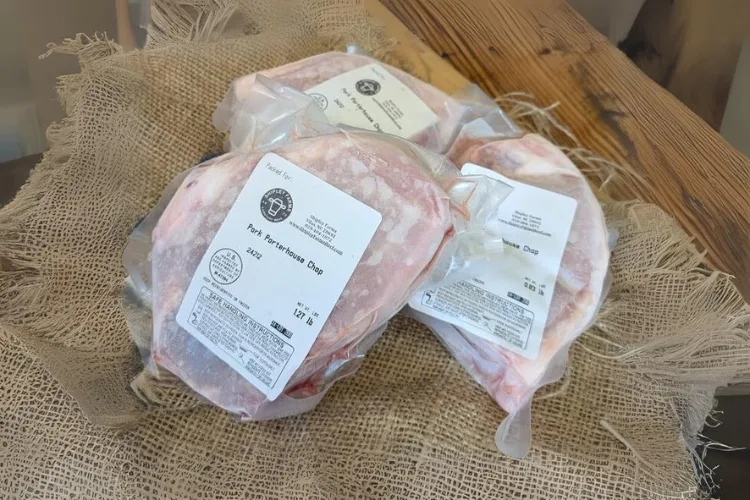
This recipe uses 4 bone-in pork chops, one per person.
Add 4 bone-in pork chops to cartView ProductWant beef in the freezer too? See the 1/8 beef share subscription.
Talking about doneness, Gray Shipley, who runs the farm, named what he thinks is the most common mistake:
“So, I think that's the most common mistake is you're not sure, so you'll cook it a little longer. And you just don't need to.”
Gray Shipley
He was not talking about pork chops in particular, but he could have been. Not being sure keeps a lot of chops in the pan long after they are done. A thermometer takes the guessing away: at 145 degrees F with a 3-minute rest, a chop has reached the USDA FSIS safe minimum, and there is no reason to keep going.
Ingredients
- 4 bone-in center-cut pork chops, 1 to 1 1/4 inches thick
- 1 1/2 teaspoons kosher salt
- 1 teaspoon freshly ground black pepper
- 1 tablespoon lard or neutral oil
- 1/2 cup jalapeno pepper jelly
- 2 tablespoons apple cider vinegar
- 1 tablespoon butter
- 1 to 2 fresh jalapeno peppers, thinly sliced, seeded for less heat
- 2 scallions, thinly sliced
- 1 lime, cut into wedges (optional)
Instructions
- If you have time, salt the chops 45 minutes to a day ahead and refrigerate them, uncovered, on a rack. Otherwise, salt them just before cooking. Either way, pat them dry and season both sides with the pepper.
- Heat the oven to 400 degrees and set a wire rack in a rimmed baking sheet.
- Heat the lard or oil in a 12-inch cast-iron or other heavy skillet over medium-high heat until it shimmers. Sear the chops until deep golden brown, about 3 minutes per side, working in two batches if they will not fit with space between them. Hold each chop on its fat edge with tongs for 30 seconds to brown the fat.
- Move the chops to the rack and roast until a thermometer in the thickest part, not touching the bone, reads 145 degrees F, usually 5 to 10 minutes. Thicker chops can take a little longer, so start checking at 5.
- While the chops roast, pour off all but a thin film of fat from the skillet and let the pan cool for a minute. Set it over medium-low heat, add the pepper jelly and vinegar, and stir, scraping up the browned bits, until the jelly melts and bubbles into a glossy syrup, 1 to 2 minutes. Stir in the butter and half the sliced jalapenos, then take the pan off the heat.
- Add the cooked chops to the skillet and turn them in the glaze to coat. Let them rest in the pan for at least 3 minutes, and up to 5, spooning the glaze over them.
- Serve the chops with the pan glaze spooned over, scattered with the rest of the jalapenos and the scallions, with lime wedges on the side.
Add 4 bone-in pork chops to cart
Pepper jelly pork chops: why the glaze goes on last
Pepper jelly is mostly sugar, and sugar burns quickly in a hot pan. If you brush it on raw chops and sear them, the glaze blackens long before the pork is cooked. Making the glaze in the empty skillet after searing solves that. It picks up the browned bits the chops left behind, the vinegar cuts the sweetness and thins the jelly into something you can spoon, and the chops only meet it once they are already at temperature.
Pork chops with jalapeno jelly: choosing the jelly
Any jalapeno pepper jelly works, green or red, store-bought or homemade. Some are very sweet and some are quite hot, so taste yours first. If it is very sweet, add another tablespoon of vinegar. If it is mild and you want more heat, leave the seeds in the fresh jalapenos or add a pinch of red pepper flakes to the glaze.
Other pork chops with jelly glaze
The same method works with almost any jelly or preserve, which makes jelly glazed pork chops one of the most useful weeknight tricks there is. Try apricot, peach or fig preserves with a teaspoon of Dijon mustard; red currant jelly with a sprig of thyme; or a habanero jelly if you like real heat. Keep the ratio of about 1/2 cup jelly to 2 tablespoons vinegar for 4 chops, melted in the pan after searing.
How to keep pork chops juicy
Buy them thick, at least an inch, so the outside can brown before the inside overcooks. Salt them ahead when you can. Sear hot, finish gently in the oven, and take them out at 145 degrees F. The rest in the warm glaze carries them the last little way. If you are new to a thermometer, the guide to using a meat thermometer in the reading list below shows where to put it; for a chop, go in from the side, into the thickest part, away from the bone.
Bone-in or boneless?
Boneless chops work with the same glaze. They cook a little faster, so start checking them after 3 or 4 minutes in the oven. Thin chops, under 3/4 inch, can be cooked entirely in the skillet: sear them 2 to 3 minutes per side until they reach 145 degrees F, then move them to a plate while you make the glaze and return them to it to rest.
Food safety
USDA FSIS lists 145 degrees F, followed by a rest of at least 3 minutes, as the safe minimum internal temperature for pork chops. Check each chop with an instant-read thermometer in the thickest part, not touching the bone, which can throw off the reading. Keep raw pork away from food that will not be cooked, use a clean plate for the cooked chops, and refrigerate leftovers promptly. See the FSIS Safe Minimum Internal Temperature Chart.
- Safe Minimum Internal Temperature Chart, USDA FSIS
Food-safety temperatures on this page are cited to USDA FSIS rather than to us.
Published by Shipley Farms. The quote on this page is Gray Shipley, who runs the farm, in his own words from a recorded interview, quoted exactly, or as he revised it in review.
On food safety we follow USDA FSIS, linked above.