Tri-Tip Pasta
Tri-tip pasta turns one roast into dinner for four to six. Sear a seasoned tri-tip in a hot skillet, then finish it in a 425 degree oven while a pan of cherry tomatoes and garlic blisters on the rack above. Toss the roasted tomatoes and their juices with pasta, Parmesan and basil, slice the tri-tip thin across the grain, and lay it over the top.
Tri-tip is a triangular roast from the bottom of the sirloin. It is lean but well flavored, cooks in well under an hour, and slices into neat, tender strips as long as you cut across the grain. It is just as good here as leftovers from a cookout.
At a glance: serves 4 to 6. Prep 15 minutes, rest seasoned 30 minutes, cook about 45 minutes, including a 10-minute rest while the pasta cooks.
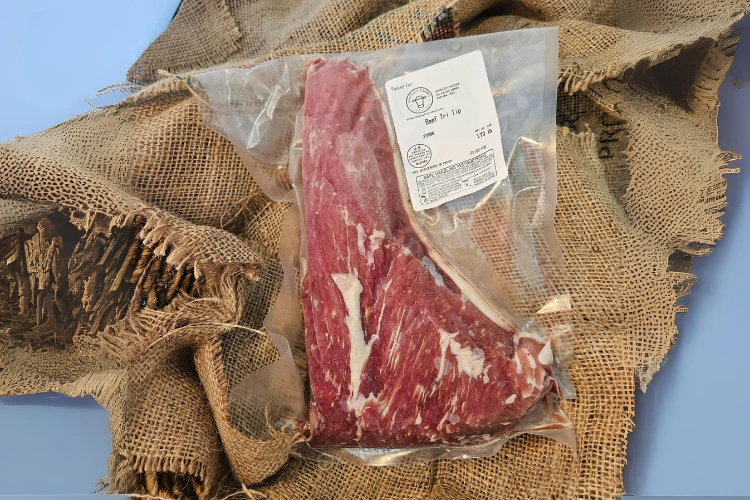
This recipe uses 1 tri-tip roast, sliced over pasta for four to six.
Add 1 tri-tip roast to cartView ProductCooking for a full freezer instead? See the 1/8 beef share subscription.
Gray Shipley, who runs the farm, was talking about people who buy beef in bulk and find cuts in the freezer they have not cooked before. He put the question the way a customer might:
“What am I supposed to do with a picanha or a tri-tip? Uh, you know, I get to go learn and experiment in the kitchen some and figure out how to cook something.”
Gray Shipley
Most people meet tri-tip as a grilled roast, sliced and served on its own. Pasta is another good answer to his question. A single tri-tip, sliced thin, goes a long way over a big bowl of pasta, and it is a fine way to try the cut for the first time.
Ingredients
- 1 tri-tip roast, 1 1/4 to 2 pounds
- 2 teaspoons kosher salt, divided, plus more for the pasta water
- 1 teaspoon freshly ground black pepper
- 1 tablespoon neutral oil, such as canola or avocado
- 2 pints cherry or grape tomatoes (about 4 cups)
- 6 cloves garlic, thinly sliced
- 1/4 cup olive oil, plus more to finish
- 1/4 teaspoon red pepper flakes
- 1 pound rigatoni, penne or spaghetti
- 1/2 cup finely grated Parmesan, plus more to serve
- 1 cup loosely packed fresh basil leaves, torn
Instructions
- Pat the tri-tip dry, season it all over with 1 1/2 teaspoons of the salt and the pepper, and let it sit at room temperature for 30 minutes. Heat the oven to 425 degrees with one rack in the upper third and one in the middle.
- On a rimmed sheet pan, toss the tomatoes, garlic, olive oil, red pepper flakes and the remaining 1/2 teaspoon of salt.
- Heat the neutral oil in a 12-inch ovenproof skillet over medium-high heat until it shimmers. Sear the tri-tip for 3 to 4 minutes per side, until deeply browned.
- Put the skillet on the middle rack and the tomatoes on the upper rack. Roast the tri-tip for 15 to 25 minutes, until an instant-read thermometer in the thickest part reads your target; USDA FSIS sets 145 degrees F with a 3-minute rest as the safe minimum for beef roasts. Roast the tomatoes for 20 to 25 minutes, until blistered and collapsing. Take each out when it is ready. While they roast, bring a large pot of salted water to a boil.
- Move the tri-tip to a cutting board to rest for 10 minutes. Meanwhile, cook the pasta until al dente. Scoop out 1 cup of the pasta water, then drain.
- Return the pasta to its pot. Scrape in the tomatoes, garlic and every bit of their oil and juice from the sheet pan. Add the Parmesan and 1/2 cup of the pasta water and toss over low heat for 1 to 2 minutes, pressing some of the tomatoes so they burst, until the pasta is glossy. Add more pasta water if it looks dry, stir in most of the basil, and taste for salt.
- Find where the two grains of the tri-tip meet, near the bend in the roast, and cut it in two there. Slice each piece thinly across its own grain.
- Divide the pasta among bowls and lay the tri-tip slices on top. Spoon over any juices from the board and finish with a drizzle of olive oil, more Parmesan and the rest of the basil.
How to slice tri-tip for pasta
This is the step that matters most. The grain in a tri-tip runs in two directions: one way through the long, narrow end and another through the wider end, with the change near the bend. Slice the whole roast in one direction and half of it will be cut along the grain, which makes it chewy. Look at the cooked roast before you start, cut it in two where the lines change, then turn each piece so your knife crosses its fibers. Thin slices, about 1/4 inch, sit better on pasta than thick ones.
Doneness
A tri-tip is thick in the middle and thin at the tip, so one roast gives you a range: the thin end comes out more done than the center. That suits a table with mixed tastes. Many cooks take tri-tip out of the oven at 130 to 135 degrees F for medium rare. That is below the FSIS figure, and the choice is yours. Start checking after 15 minutes in the oven, since a small roast gets there quickly.
Tri-tip pasta with leftover tri-tip
This is a good home for leftover tri-tip from a cookout. Skip the searing and roasting, roast the tomatoes on their own for 20 to 25 minutes, and slice the cold tri-tip thin. Toss the slices into the hot pasta right at the end, or lay them on top and let the heat of the pasta warm them through. FSIS advises reheating leftovers to 165 degrees F. Thin slices get there quickly in the hot pasta, and they will be more done than on the first night, which is the trade for using them this way. Leftovers also make a very good steak sandwich, which the guide below covers.
A creamy peppercorn version
For a richer bowl, leave out the tomatoes. While the tri-tip rests, melt 2 tablespoons of butter in the skillet over medium heat, add 2 teaspoons of coarsely cracked black peppercorns and a minced shallot, and cook for 2 minutes. Pour in 1 cup of heavy cream, simmer for 3 to 4 minutes until slightly thickened, then toss with the pasta, the Parmesan and a little pasta water. Lay the sliced tri-tip on top as before.
Grilled instead of roasted
Tri-tip is at home on the grill. Sear it over direct high heat for a few minutes per side, then move it to the cooler side, close the lid, and cook to your target temperature. The guide to cooking tri-tip below has full times for the grill and the oven, and the picanha guide explains how this cut differs from its neighbor in the sirloin.
Food safety
USDA FSIS lists 145 degrees F, followed by a rest of at least 3 minutes, as the safe minimum internal temperature for beef roasts. Check it with an instant-read thermometer in the thickest part of the tri-tip. Refrigerate leftovers promptly. See the FSIS Safe Minimum Internal Temperature Chart.
- Safe Minimum Internal Temperature Chart, USDA FSIS
Food-safety temperatures on this page are cited to USDA FSIS rather than to us.
Published by Shipley Farms. The quote on this page is Gray Shipley, who runs the farm, in his own words from a recorded interview, quoted exactly, or as he revised it in review.
On food safety we follow USDA FSIS, linked above.