Lard Pie Crust Recipe: A Flaky Crust From Scratch
A lard pie crust recipe for a flaky, tender crust: how much lard, how cold to keep it, lard or butter, and rendering your own lard.
In the week before Thanksgiving, some of the first people through the farm store door are not buying a roast. They want fat.
Gray Shipley, who runs the farm, sees it every year. Beef tallow goes out for frying, pork for lard, and a good share of that lard is going into one thing.
Asked what customers come in for the week before Thanksgiving, Gray said:
“We have people that are coming to get beef tallow, and there are all sorts of things that may want to be doing with that, rendering the tallow down to fry things, or pork lard as well, going into people that are making pie crusts and making stuff from scratch.”
Gray Shipley
Word for word, as recorded
We have people that are coming to get beef tallow and there are all sorts of things that may want to be doing with that rendering the tallow down to fry things or pork lard as well going into people that are making pie crusts and making stuff from scratch.
There is a reason the old recipe cards say lard. It makes a crust that is flaky and tender at the same time, which is the hardest thing to get right in pastry, and it is forgiving in the hands of somebody who does not bake every week.
Why lard makes a flakier pie crust
Butter is about 80 percent fat, and most of the rest is water. Rendered lard is almost all fat. When you cut cold fat into flour and roll it out, the pieces of fat flatten into thin sheets between layers of dough. In the oven they melt and leave gaps behind, and those gaps are the flakes.
Water is what develops gluten, and gluten is what makes a crust tough. Because lard brings almost no water with it, a lard crust stays tender even when you handle it a little more than you meant to. Butter brings flavor and some lift from its steam. That is why plenty of farm cooks use both.
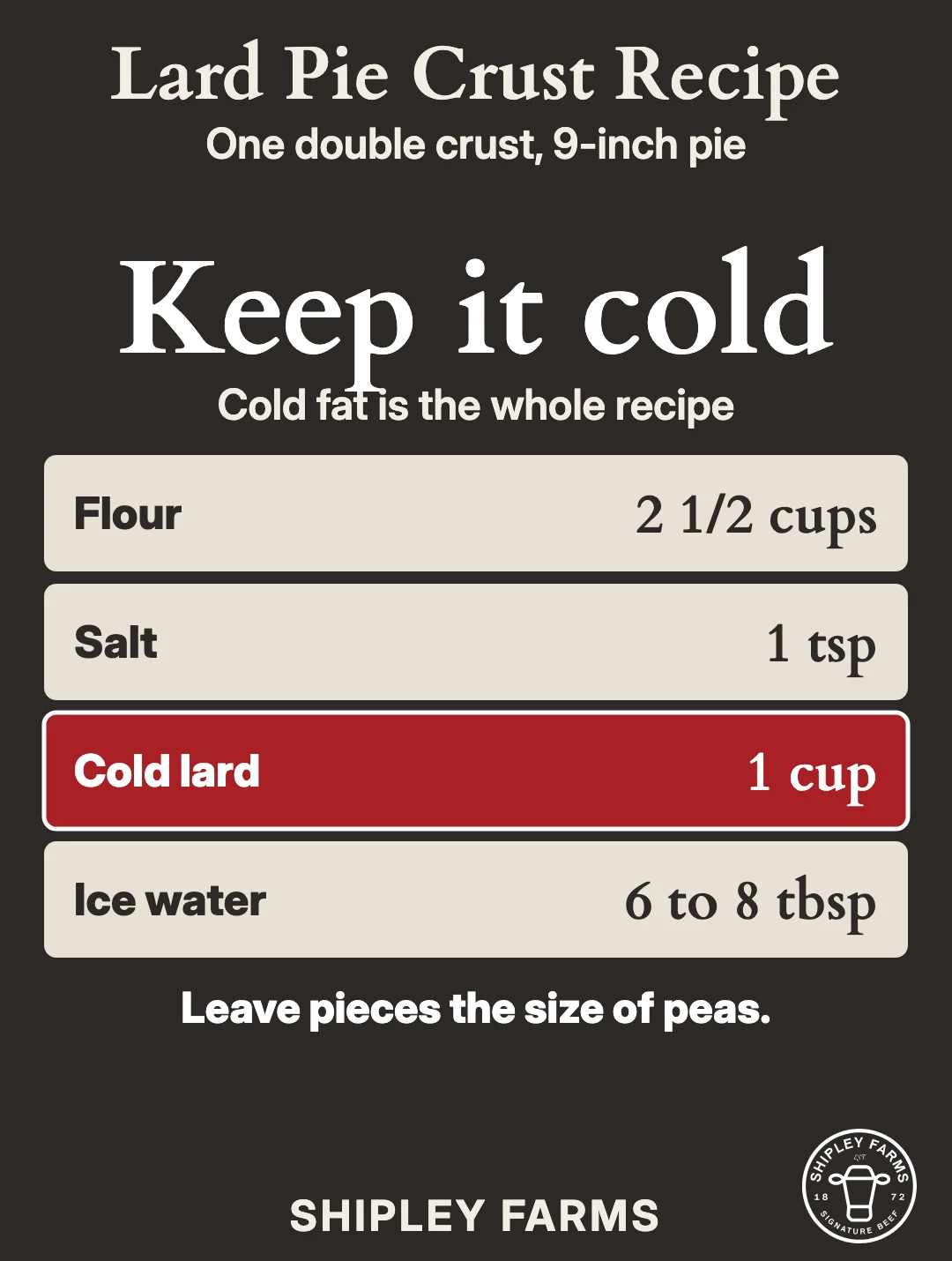
Lard pie crust recipe
Makes one double crust for a 9-inch pie, or two single crusts. Hands-on time 15 minutes, plus at least an hour to chill.
| 1 cup (about 200 g) cold lard, or 1/2 cup lard and 1/2 cup (113 g) cold unsalted butter, cut in pieces | 1 freeze the fat 10 minutes | 3 cut the fat in fast; leave some pieces the size of peas | 4 vinegar into the water; a tablespoon at a time until it holds | 5 two flat disks; chill an hour or up to two days | 6 roll a 12-inch round, ease into the plate | 7 bake as filling says: often 425 degrees F, then 350 degrees F |
| 2 1/2 cups (315 g) all-purpose flour | 2 whisk together in a wide bowl | |||||
| 1 teaspoon fine salt | ||||||
| 1 tablespoon sugar, for a sweet pie only | ||||||
| 6 to 8 tablespoons ice water | ||||||
| 1 tablespoon cider vinegar, optional |
Numbers show the order to work in. Each cell spans exactly the ingredients it uses.
- 2 1/2 cups (315 g) all-purpose flour
- 1 teaspoon fine salt
- 1 tablespoon sugar, for a sweet pie only
- 1 cup (about 200 g) cold lard, or 1/2 cup lard and 1/2 cup (113 g) cold unsalted butter, cut in pieces
- 6 to 8 tablespoons ice water
- 1 tablespoon cider vinegar, optional
- Chill everything. Put the lard, and the butter if you are using it, in the freezer for 10 minutes. Cold fat is the whole recipe.
- Mix the dry ingredients. Whisk the flour, salt and sugar together in a wide bowl.
- Cut in the fat. Use a pastry cutter, two knives or your fingertips, working fast. Stop when most of it looks like coarse crumbs and some pieces are still the size of peas. Those bigger pieces are your flakes.
- Add water slowly. Stir the vinegar into the ice water. Sprinkle it over a tablespoon at a time, tossing with a fork. Stop as soon as a handful holds together when you squeeze it.
- Rest it. Divide the dough in two, press each half into a flat disk, wrap it and refrigerate for at least an hour, or up to two days.
- Roll it out. On a floured counter, roll from the center outward into a 12-inch round, turning it a quarter turn every few strokes so it does not stick. Ease it into the pie plate rather than stretching it, or it will shrink in the oven.
- Bake as your filling calls for. Most fruit pies start hot, around 425°F for the first 15 to 20 minutes, then drop to 350°F to finish.
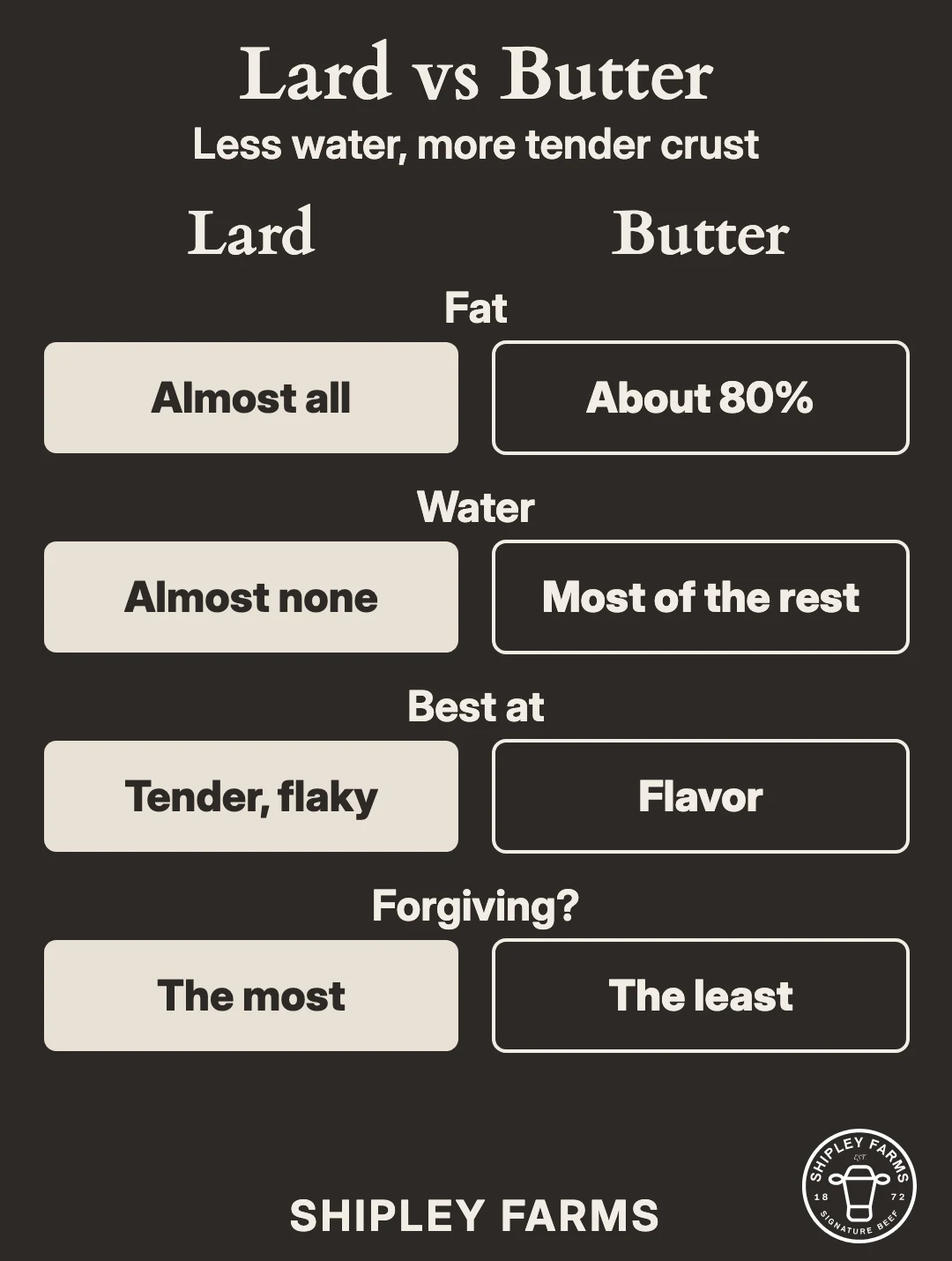
Lard, butter or both?
- All lard. The most tender crust and the most forgiving. Mild, a little savory. Best for meat pies, pot pies and apple pie. It is the crust we would put on a brisket pot pie or an Italian sausage pot pie.
- Half lard, half butter. The flakes of lard with the flavor of butter. The safest choice for a first pie.
- All butter. The most flavor, the least forgiving. It softens fast in a warm kitchen, so it rewards a cold counter and quick hands.
Leaf lard, fatback lard and tallow
Leaf lard comes from the soft fat around a hog's kidneys and is the mildest of all, which is why pastry books ask for it. Fatback lard comes from the firm fat along the back. It carries a little more pork flavor, which you will never notice in a pecan or apple pie and will enjoy in a savory one.
You can render your own from fatback in an afternoon, with nothing but a heavy pot and low heat: how to render lard from fatback walks through it, and how to cook fatback covers the crisp pieces left over.
Beef tallow is firmer than lard and tastes of beef. On its own it makes a sturdy, savory crust for hand pies and meat pies. For a dessert pie, use it for no more than half the fat and make up the rest with butter. If tallow is new to you, how beef tallow is made explains what it is.
Gray learned to cook watching his grandmother feed the whole family at the holidays. He put it this way:
“She was not a chef, she was a cook. A chef is elaborate and fancy and fancy and gourmet and making bechamel sauces and flambes and sous-vides and all sorts of techniques. She didn't do all that. She used food, real food that came from the farm, food made of food.”
Gray Shipley
Word for word, as recorded
She was not a chef she was a cook a chef is elaborate and fancy and fancy and gourmet and making bechamel sauces and flambes and sous-vides and all sorts of techniques she didn't do all that she used food real food that came from the farm food made of food.
Make it ahead
Pie dough is the easiest part of Thanksgiving to get out of the way early. Wrapped tightly, the disks keep two days in the refrigerator, or a couple of months in the freezer. Thaw a frozen disk overnight in the refrigerator, then let it sit on the counter for a few minutes until it rolls without cracking.
If you are planning the whole meal, a Thanksgiving menu for beginners puts the pie in its place on the calendar, which is the day before.
Asked what he is thankful for this year, Gray talked about the people who have started cooking this way:
“And thankful also that we're seeing, I think, a movement, or maybe a community, that's really growing around this idea that food should be made of food, and it's important to know where it comes from.”
Gray Shipley
Word for word, as recorded
And thankful also that we're seeing I think a movement or maybe a community that's really growing around this idea that food should be made of food and it's important to know where it comes from.
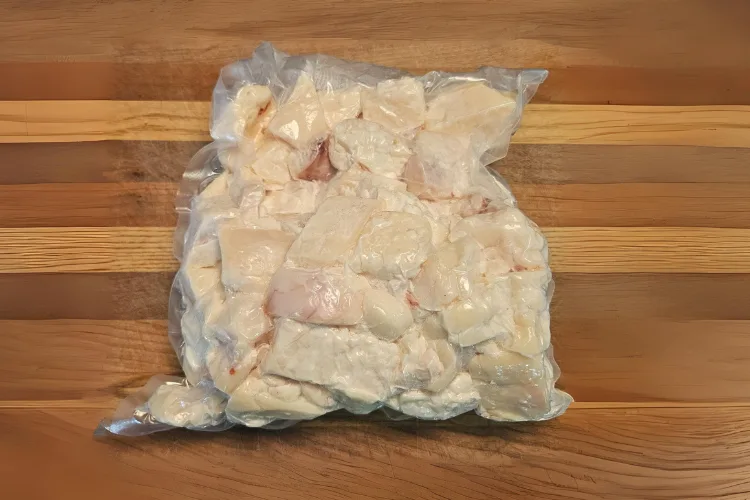
Firm pork back fat from the farm. Render it low and slow and you have lard for every pie this season.
View Product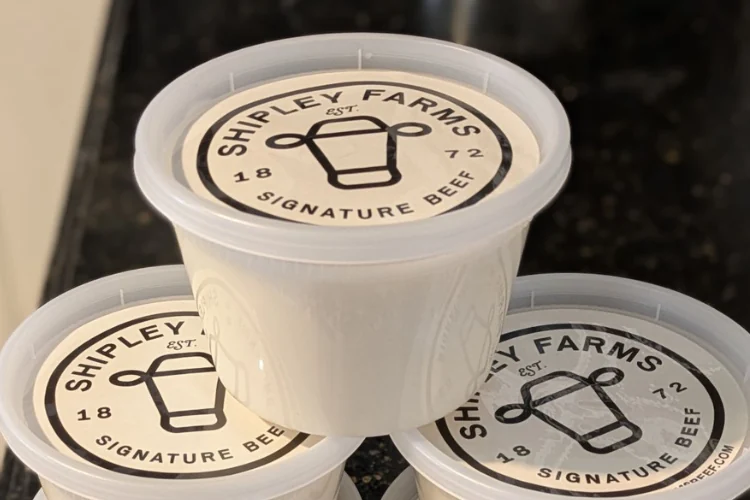
Rendered beef tallow, ready for frying, roasting or the savory half of a pie crust.
View ProductWritten at Shipley Farms in Vilas, North Carolina: a family cattle farm raising and dry-aging beef in the Appalachian Mountains, now in its fifth generation. No shortcuts since 1872.
Every quote on this page is Gray Shipley talking, the man who runs this farm. He recorded these answers himself, at the farm, in the autumn of 2026. The play button under each quote is that recording, exactly as he said it, and the words under it are a word-for-word transcript. In the written quotes, hesitations are trimmed so they read on the page. Nothing else is added or reworded, except where Gray revised his own words in review.
Reviewed 8 November 2026.
Shipley Farms
Stories, recipes and news from Shipley Farms.