Mean Cow: The Legend of Korea, Granddad's Fiercest Cow
A mean cow named Korea: the 1950s legend of the most aggressive cow on a fifth-generation North Carolina cattle farm, and why.
Asked which animal has caused the most trouble on the farm, Gray Shipley told a story from before he was born.
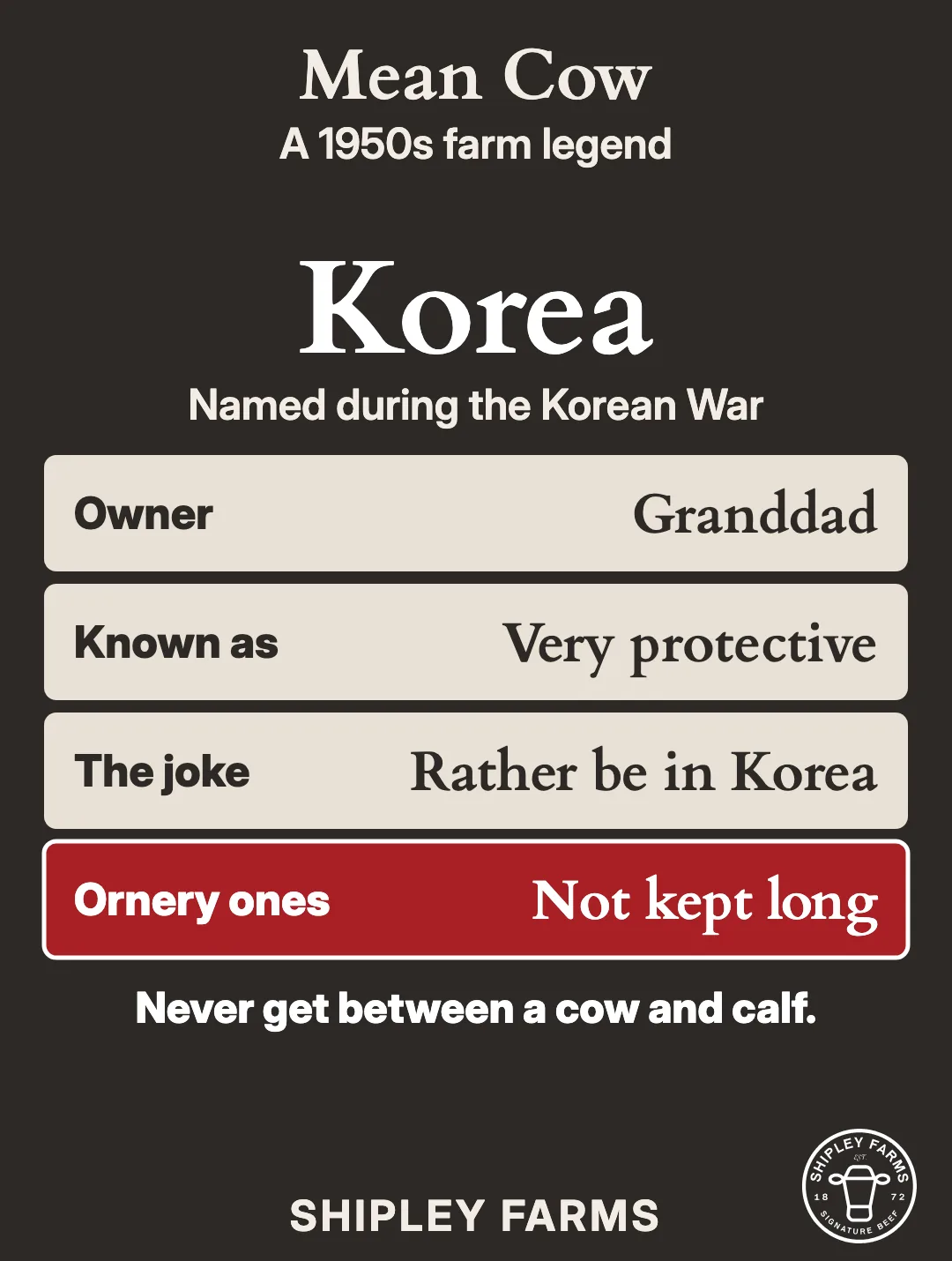
“And this cow, this was one of Grandad's cows, and apparently just a really mean, really protective, but very mean and very aggressive cow.”
Gray Shipley
Word for word, as recorded
And this cow this was one of Grandad's cows and apparently just a really mean really protective but very mean and very aggressive cow.
This was in the 1950s, when a family from Poland lived and worked on the farm after the Second World War. One of their boys gave the cow her name. It was during the Korean War, and he said he would rather be in Korea than in the pasture with that animal. So she became Korea.
She is still the legend, Gray says: the most difficult animal the family ever had to watch out for.
Ornery cattle do not stay long
“We've had some ornery steers and bulls here and there, but we try not to keep them around very long.”
Gray Shipley
Word for word, as recorded
We've had some ornery steers and bulls here and there but we try not to keep them around very long.
A mean animal is a danger to the people who work with it every day, and temperament runs in families. A cow that charges people is not a cow most farmers want to breed from.
What makes a cow mean
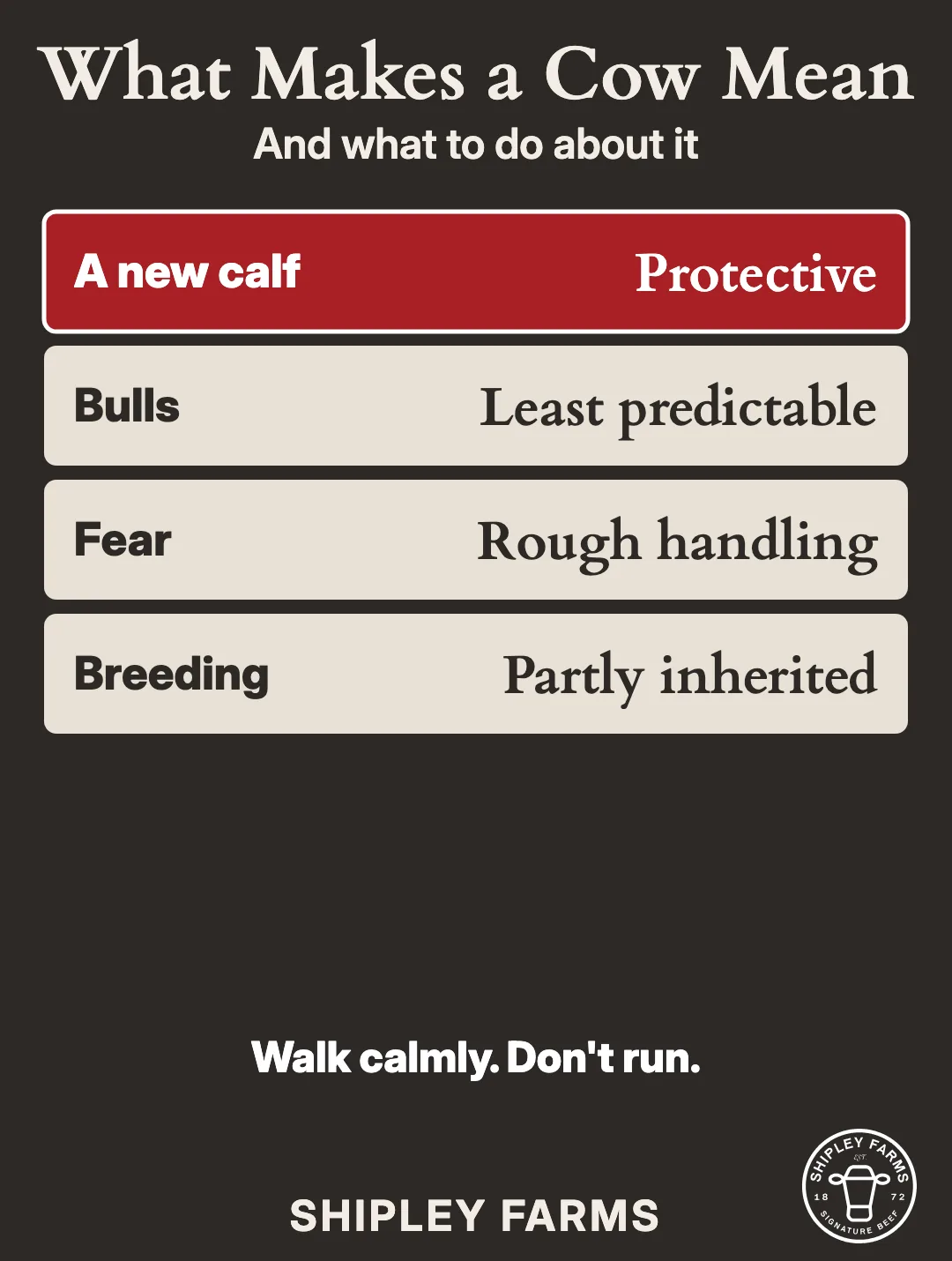
- A new calf. A mother cow protecting a young calf is the most common reason a quiet cow turns aggressive. Korea was described as protective first.
- Bulls. Bulls are bigger, stronger and less predictable than cows, and the most dangerous animals on most cattle farms.
- Fear. Cattle that have been chased, crowded or handled roughly learn to defend themselves.
- Some are just born that way. Temperament is partly inherited, which is why farmers cull for it.
- Cattle are prey animals. Their first instinct is to move away from anything that might be a threat, people included. When they cannot get away, they defend themselves by kicking, butting or charging.
Why are bulls so aggressive?
A bull is an intact male, and his hormones make him protective of his cows and his ground, most of all in breeding season. A bull raised as a pet or bottle calf can be more dangerous, not less, because he has lost his fear of people. Some bulls are calm, but no bull is safe to trust, which is why farmers keep a fence or a gate between themselves and him.
Are cows dangerous to people?
Most cattle are calm and would rather walk away from a person than toward one. But any cow is big enough to knock someone down, and a mother with a young calf, or a bull, will charge if threatened. Treat every animal in the pasture with respect, follow the rules below, and if anyone is hurt, call 911.
If you are ever in a pasture with cattle
- Never get between a cow and her calf.
- Walk calmly along the edge, and do not run.
- Keep dogs on a lead, or leave them out of the pasture.
- If a cow lowers her head and comes toward you, move away steadily toward the fence.
- Never walk into a field with a bull in it. If a bull comes toward you, do not turn your back or run. Move steadily to the nearest fence or gate, get it between you, and call 911 if anyone is hurt.
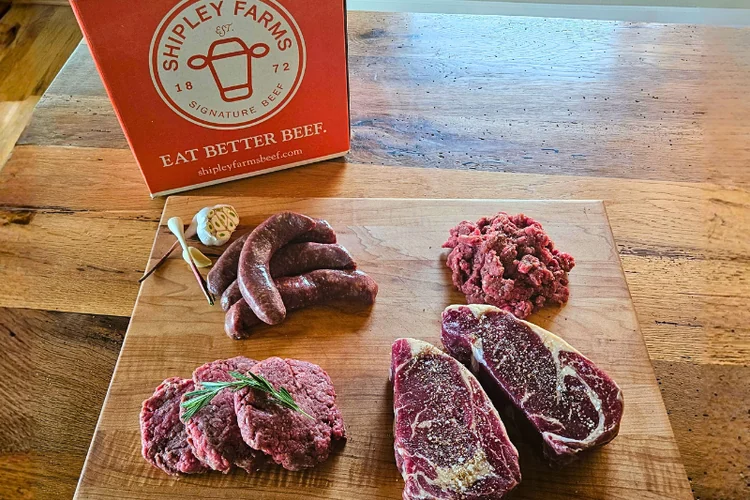
The easiest way to try beef raised here: one eighth of an animal.
View Product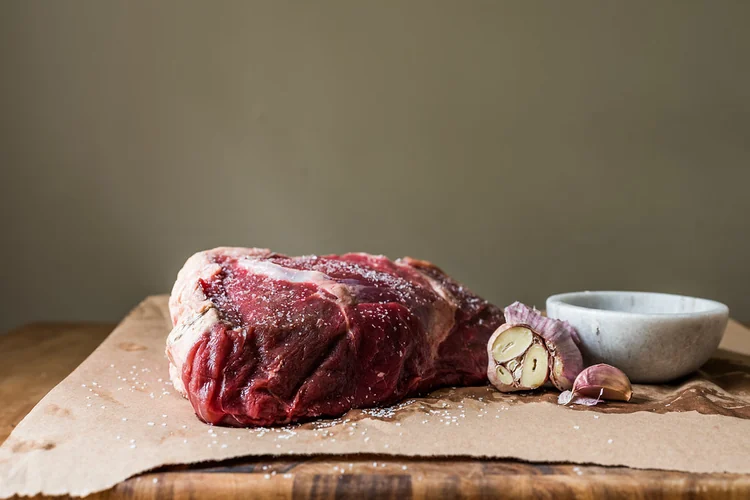
A roast feeds a table and asks very little of you once it is cooking.
View ProductWritten at Shipley Farms in Vilas, North Carolina: a family cattle farm raising and dry-aging beef in the Appalachian Mountains, now in its fifth generation. No shortcuts since 1872.
Every quote on this page is Gray Shipley talking, the man who runs this farm. He recorded these answers himself, at the farm, in the autumn of 2026. The play button under each quote is that recording, exactly as he said it, and the words under it are a word-for-word transcript. In the written quotes, hesitations are trimmed so they read on the page. Nothing else is added or reworded, except where Gray revised his own words in review.
Reviewed 9 November 2026.
Shipley Farms
Stories, recipes and news from Shipley Farms.