Steak Pasta With Garlic Cream Sauce
Steak pasta is at its best when the steak stays a steak. Sear a pair of strip steaks hard in a heavy skillet, let them rest, and build a garlic cream sauce in the same pan, using the browned bits the steak left behind. Toss the sauce with pasta, Parmesan and a few handfuls of spinach, then slice the steak thin and lay it on top so every bite still tastes of the sear.
Strip steak suits this well. It has a fine, tight grain, enough marbling to stay juicy when sliced thin, and a band of fat along one edge that renders into the pan and flavors the sauce. The whole dish takes about 45 minutes.
At a glance: serves 4 to 6. Prep 15 minutes, cook about 30 minutes, with the steak resting while the pasta cooks.
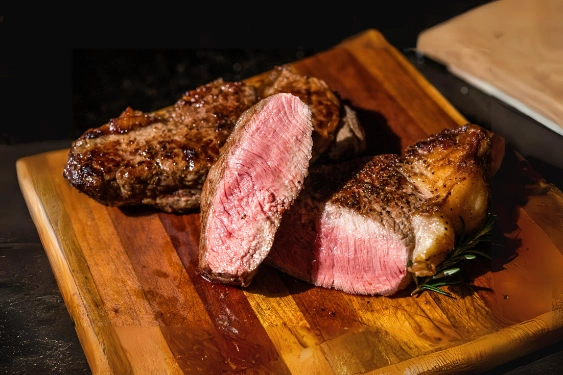
This recipe uses 2 strip steaks, sliced over pasta for four to six.
Add 2 strip steaks to cartView ProductCooking for a full freezer instead? See the 1/8 beef share subscription.
Gray Shipley, who runs the farm, was asked what matters most in a great meal. He talked about cooks who understand the meat they are working with:
“When you have a chef that really understands the meat, that can really be a game changer with what a chef can create with good ingredients. Where he doesn't have to, he or she doesn't have to try to do too much, but just let the meat speak for itself.”
Gray Shipley
He was talking about steak and the people who cook it, not about pasta, and a cream sauce is more than salt and pepper. So this recipe takes his point where it can. The steak is seasoned plainly and seared hard, it is sliced and laid on top rather than stirred into the sauce, and the sauce stays short: garlic, cream, cheese and a handful of greens.
Ingredients
- 2 strip steaks, 1 to 1 1/4 inches thick, 1 1/2 to 2 pounds in all
- 2 teaspoons kosher salt, plus more for the pasta water
- 1 teaspoon freshly ground black pepper, plus more to serve
- 1 pound fettuccine, penne or rigatoni
- 1 tablespoon neutral oil, such as canola or avocado
- 2 tablespoons unsalted butter
- 5 cloves garlic, finely minced
- 1 1/2 cups heavy cream
- 1/4 teaspoon red pepper flakes (optional)
- 1 cup finely grated Parmesan (about 3 ounces), plus more to serve
- 5 ounces baby spinach
- 2 tablespoons chopped fresh parsley, to serve
Instructions
- Pat the steaks dry with paper towels and season them all over with the salt and pepper. Let them sit at room temperature while you bring a large pot of well-salted water to a boil.
- Heat a 12-inch cast-iron or heavy stainless skillet over medium-high heat until very hot. Add the oil, then hold the steaks on their fat edge with tongs for about 1 minute to start the fat rendering. Lay them flat and sear without moving them for 4 to 5 minutes, until deeply browned, then turn and cook 3 to 5 minutes more, until a thermometer in the center reads your target. USDA FSIS sets 145 degrees F with a 3-minute rest as the safe minimum for beef steaks.
- Move the steaks to a cutting board to rest for 10 minutes. Drop the pasta into the boiling water and cook until just al dente.
- While the pasta cooks, pour off all but about 1 tablespoon of fat from the skillet, let it cool for a minute, then set it over medium-low heat. Add the butter and garlic and stir for about 1 minute, until fragrant but not browned.
- Pour in the cream, add the red pepper flakes, and scrape up the browned bits from the pan. Simmer gently for 3 to 4 minutes, until slightly thickened. Take the pan off the heat and stir in the Parmesan a handful at a time until smooth.
- Scoop out 1 cup of the pasta water, then drain the pasta and return it to its pot. Add the sauce, the spinach and 1/2 cup of the pasta water, and toss over low heat for 1 to 2 minutes, until the spinach wilts and the sauce clings to the pasta. Loosen with more pasta water if needed and taste for salt.
- Slice the steaks thinly across the grain. Tip any juices from the board into the pasta, divide it among bowls, and lay the steak on top. Finish with more Parmesan, black pepper and the parsley.
What steak is best for steak pasta?
You want a steak that is tender enough to eat in thin slices without much chewing and has enough fat to stay juicy once it is cut. Strip steak is a good middle ground: beefy, firm, easy to slice neatly. Ribeye is richer and a little softer, and works the same way. Top sirloin is leaner, so watch it closely and take it off the heat a little earlier. Avoid cuts that need long cooking, such as chuck or round, which stay tough when cooked fast. The guide below on ribeye, strip and filet compares the three steaks most people choose between.
Skirt steak pasta
Skirt steak makes a very good version of this dish with a looser, beefier bite. It is thin, so it needs high heat and very little time: about 2 to 3 minutes per side in a smoking-hot pan. Its grain runs across the width of the steak rather than its length, so cut it into pieces 5 or 6 inches long first, then turn each piece and slice it thinly across the grain. Make the sauce exactly as written. You will need about 1 1/2 pounds of skirt steak for four.
How to keep the steak tender
Three things matter. Rest the steaks for the full 10 minutes, which fits neatly into the time the pasta takes to cook. Slice them thin and across the grain, so each slice is made of short fibers. And keep the steak out of the hot sauce. Stirred in and simmered, the slices go gray and firm within a minute or two; laid on top, they stay pink and warm.
Many cooks take strip steak off the heat at 130 to 135 degrees F for medium rare. That is below the FSIS figure, and the choice is yours. The guide to pan-searing steak below has more on getting a deep crust without overcooking the middle.
Leftovers
A cream sauce thickens as it cools, so reheat leftover pasta gently in a skillet with a splash of water or milk, stirring until it loosens. FSIS advises reheating leftovers to 165 degrees F. The steak will be more done the second time around; if you want to keep it pink, store it separately and use it cold in a sandwich instead.
Food safety
USDA FSIS lists 145 degrees F, followed by a rest of at least 3 minutes, as the safe minimum internal temperature for beef steaks. Check it with an instant-read thermometer pushed into the center of the steak from the side. Refrigerate leftovers promptly. See the FSIS Safe Minimum Internal Temperature Chart.
- Safe Minimum Internal Temperature Chart, USDA FSIS
Food-safety temperatures on this page are cited to USDA FSIS rather than to us.
Published by Shipley Farms. The quote on this page is Gray Shipley, who runs the farm, in his own words from a recorded interview, quoted exactly, or as he revised it in review.
On food safety we follow USDA FSIS, linked above.